Indoor Setup
Do Grow Lights Work? A Beginner's Guide
Grow lights for indoor plants genuinely work — if you pick the right type and placement. Here's what you need to know before buying.
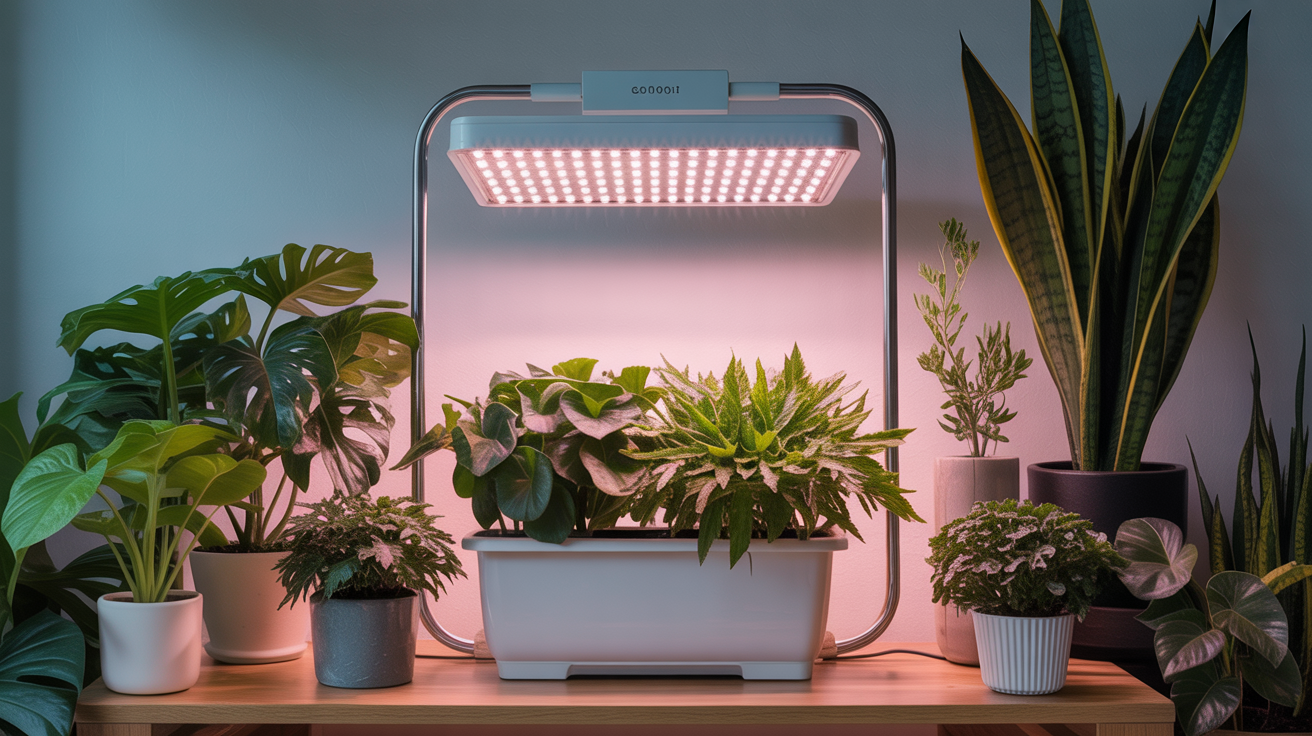
Yes, grow lights work, for the right plants, in the right conditions, set up correctly. A cheap panel pointed at a sun-starved fiddle-leaf fig won't save it, but a well-matched LED above a shelf of herbs or tropical foliage can genuinely substitute for a south-facing window. The key is understanding what grow lights actually do, and what they can't fix.
What Grow Lights Actually Do (and Don't Do)
Plants photosynthesize using light in two main wavelength bands: blue light (roughly 400–500 nm), which drives leafy, compact vegetative growth, and red light (roughly 620–700 nm), which matters more for flowering and fruiting. Full-spectrum grow lights try to hit both ranges, plus some green and far-red, to mimic sunlight more completely.
What a grow light cannot do: replicate the intensity of direct sunlight, which peaks around 100,000 lux on a clear day. Even a good home LED grow light delivers somewhere in the range of 5,000–20,000 lux at close range. University of Minnesota Extension's guide to lighting indoor plants notes that most foliage houseplants do well with roughly 100 to 250 µmol/m²/s of light delivered for 10 to 14 hours a day, which a decent LED panel can supply within a foot or two of the canopy. It's not enough for sun-loving cacti or vegetables that need 6+ hours of direct outdoor sun to produce well.
For most common indoor plants, pothos, philodendrons, ferns, snake plants, calatheas, a grow light genuinely does the job. If you're growing herbs like basil or cilantro indoors year-round, a grow light is close to essential unless you have a very sunny windowsill.
Types of Grow Lights: A Quick Comparison
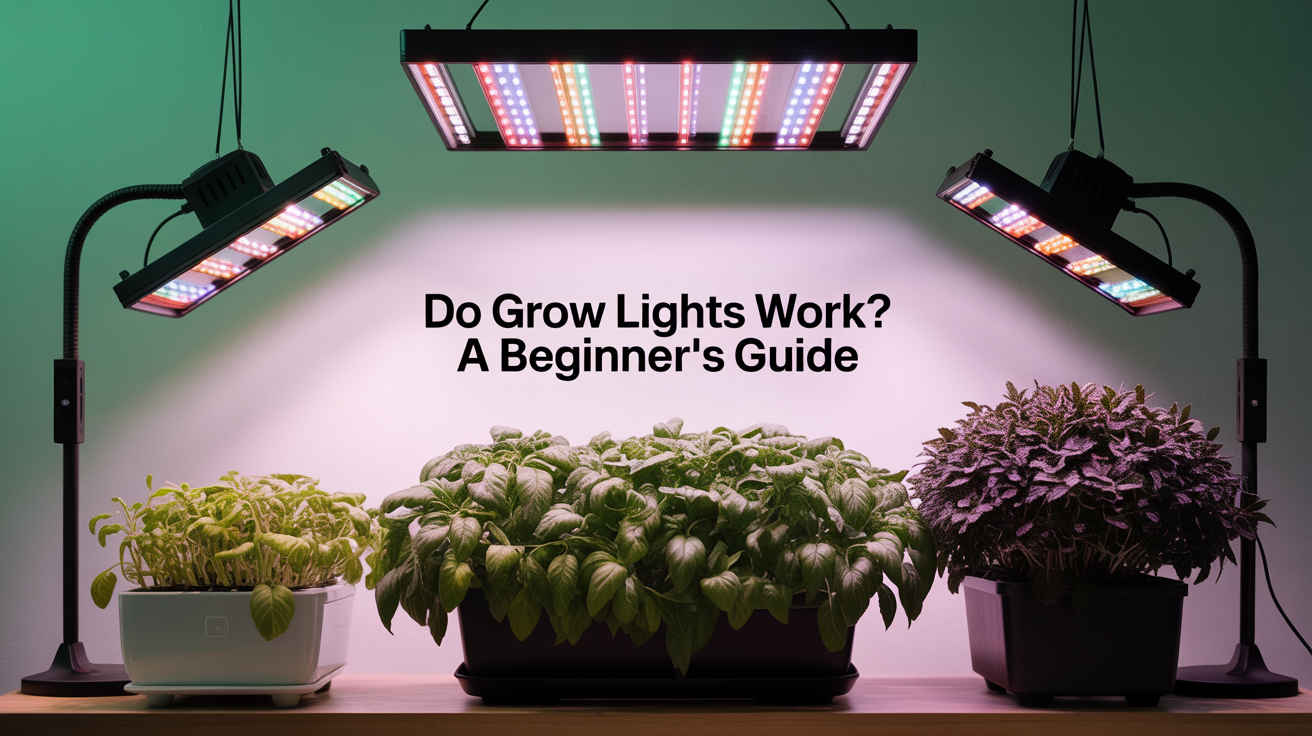
The market has shifted hard toward LED in the last few years, and for home growers that's mostly good news. Here's how the main types stack up.
| Type | Pros | Cons | Best for |
|---|---|---|---|
| Full-spectrum LED | Low heat, low energy use, long lifespan (50,000+ hrs) | Higher upfront cost | Most houseplants, herbs, seedlings |
| T5 fluorescent | Affordable, good coverage, proven for foliage | Shorter lifespan, slightly higher energy use | Leafy plants, propagation shelves |
| HID (HPS/MH) | Very high output | Hot, bulky, expensive to run | Not recommended for home use |
| Incandescent "grow bulbs" | Cheap to buy | Very inefficient, too much heat, poor spectrum | Skip entirely |
For a beginner, a full-spectrum LED panel or bar light is the best starting point. Brands like Spider Farmer, Mars Hydro, and Barrina make options in the $30–$150 range that work well for a shelf or small corner setup. Leaf and Loam is not affiliated with or sponsored by any of these brands; they're just commonly stocked and reviewed.
How Far Should Grow Lights Be from Plants?
Distance is probably the most commonly misconfigured variable. Too close and you bleach or burn leaves; too far and you're providing barely more light than a desk lamp.
A rough guide for LED grow lights:
- Low-light plants (pothos, ZZ plant, snake plant): 18–24 inches from the canopy
- Medium-light plants (most tropicals, herbs, ferns): 12–18 inches
- High-light plants (succulents, some orchids, seedlings): 6–12 inches
These numbers shift depending on the light's wattage and the manufacturer's PPFD (photosynthetic photon flux density) specs. If the manufacturer includes a PPFD map, aim for 100–200 µmol/m²/s for low-light species, 200–400 for medium-light plants, and 400–600+ for higher-light needs.
A practical test: hold your hand flat under the light at canopy height. If it feels warm after 30 seconds, move the light up. If leaves start showing bleached or crispy patches on the side facing the light, increase distance. If stems are getting long and leggy despite the light running 12+ hours, move the light closer.
How Long Should Grow Lights Run Each Day?
Plants need a dark period. Running a grow light 24 hours a day doesn't make plants grow faster, it actually disrupts flowering cycles in some species and can cause stress over time.
The standard guidance:
- Foliage houseplants (pothos, monsteras, philodendrons): 12–14 hours on, 10–12 hours off
- Herbs (basil, mint, parsley): 14–16 hours on
- Succulents and cacti: 12–14 hours on, though these usually prefer natural light anyway
A simple outlet timer (the kind with manual pins, available for under $15) handles the schedule automatically. Set it and forget it. Inconsistent light schedules are a real stressor for plants that track day length to regulate growth.
If you're supplementing natural light rather than replacing it entirely, run the grow light during the hours when your room gets the least natural light, typically early morning and late afternoon in winter.
Which Plants Respond Best to Grow Lights?
Not every plant needs or benefits equally from supplemental lighting. Here's a realistic breakdown.
High responders:
- Basil, cilantro, and most culinary herbs, they visibly sulk on dim windowsills and perk up fast under LEDs
- Monstera deliciosa and other aroids, more light means larger leaves and faster growth
- Seedlings started indoors, this is one of the clearest use cases; seedlings under inadequate light go leggy and weak within a week
- Calatheas and marantas, they do fine in lower light, but richer leaf coloration and denser growth show up under supplemental light
Moderate responders:
- Pothos, heartleaf philodendron, and other vining plants, they already tolerate low light, so a grow light just speeds things up rather than being essential
- Snake plants (Dracaena trifasciata), slow growers regardless; a grow light helps but won't transform them overnight
Low responders or not recommended:
- Cacti and most succulents, they need more intensity than a typical home LED provides, plus they're sensitive to the quality of light spectrum; a south-facing window beats a panel here
- Most orchids, Phalaenopsis does alright, but their light requirements are specific and a general grow light may not hit the right spectrum for reliable reblooming
For those just starting out, it's worth reading through our guide on the best houseplants for beginners, the plants listed there tend to be forgiving about light, which means a grow light gives you more room for error rather than being a strict requirement.
Setting Up Your First Grow Light Station
A basic setup doesn't require much. Here's what to gather before you start.
- Choose your light. For a single shelf (roughly 2 x 4 feet), a 45W–65W full-spectrum LED bar or panel is sufficient for medium-light plants.
- Pick your location. A wire shelving unit, a bookshelf with adjustable heights, or a dedicated plant cart all work. The key is being able to adjust the light's height as plants grow.
- Add a timer. Plug-in outlet timers are cheap and reliable. Set it before you place plants underneath.
- Position your plants. Group plants with similar light needs together. Put higher-light plants directly under the center of the panel where PPFD is highest; place lower-light plants toward the edges.
- Monitor for the first two weeks. Check for leaf bleaching (too close), leggy new growth (too far or too few hours), or soil drying out faster than expected (heat from the light can increase evaporation).
If you're thinking through other elements of your indoor setup, our guide on how to choose the right pot for your plant covers drainage and sizing, both of which affect how quickly soil dries under grow lights.
One note on plant safety: many common houseplants are toxic to pets and people. A grow light setup that makes your plants thrive is also one where curious cats or dogs might investigate. If you're working with any plants you're unsure about, confirm their safety before placing them at reachable heights. This is general plant-care information, not veterinary advice.
Frequently Asked Questions
Can grow lights replace sunlight completely?
For many houseplants, yes. Full-spectrum LED grow lights cover the wavelengths plants need for photosynthesis, and at appropriate distances and durations, plants can complete their entire growth cycle under artificial light. The exceptions are high-light plants that need very intense light (cacti, some fruiting vegetables), for those, supplemental lighting helps but rarely replaces a genuine sunny window.
Will a regular LED bulb work as a grow light?
Standard warm-white LED bulbs produce very little blue-spectrum light and almost no red spectrum. They're not effective for plant growth beyond the dimmest low-light species. Purpose-built full-spectrum grow lights are designed around plant-usable wavelengths and make a meaningful difference. The price gap between a cheap grow bulb and a real grow light has narrowed enough that it's worth getting the right tool.
Why are my plants still leggy even with a grow light on?
Etiolation (leggy, stretched growth) under a grow light usually means one of three things: the light is too far away, the duration is too short, or the wattage isn't sufficient for the plants you're growing. Try moving the light 4–6 inches closer and observe new growth over two to three weeks. If you're running it fewer than 12 hours per day, increase to 14.
Do grow lights run up my electricity bill?
A 45W LED panel running 14 hours a day uses about 0.63 kWh per day. At an average US electricity rate of around $0.16/kWh, that's roughly $0.10 per day, or about $3 per month. Running two or three lights for a larger setup stays well under $10/month for most households.
Are grow lights safe for low-light plants?
Yes, with the right setup. Plants labeled as "low light" tolerate low light but generally grow better with moderate light. A grow light placed 18–24 inches away and run 10–12 hours a day gives a low-light plant more than enough without stressing it. If you have a collection of low-light species and want to understand what they're actually capable of, take a look at the best low-light houseplants for dark rooms, the guide covers realistic light expectations for each.