Indoor Setup
How to Choose the Right Pot for Your Plant
Learn how to choose a plant pot that actually fits your plant — covering drainage, material, size, and common mistakes.
The pot you pick matters more than most people realize. A beautiful planter that's too big, lacks drainage, or holds moisture longer than a plant tolerates will cause slow decline that looks like a watering problem. Get the container right first, and everything else becomes easier.
At a Glance
- Drainage holes are non-negotiable; a decorative pot without them should hold a plain nursery pot as a liner, not the plant directly.
- Gravel in the bottom of a pot does not create drainage. It raises the waterlogged zone and can make things worse.
- Go up one pot size at a time, roughly 1-2 inches wider in diameter than the current pot.
- Match material to habit: terracotta dries fast (good for succulents), plastic holds moisture (good for ferns and calatheas).
- A pot that's too big keeps soil wet long after watering, which is the single most common repotting mistake.
- Spring is the safest season to repot; roots recover fastest during active growth.
Why Drainage Holes Are Non-Negotiable
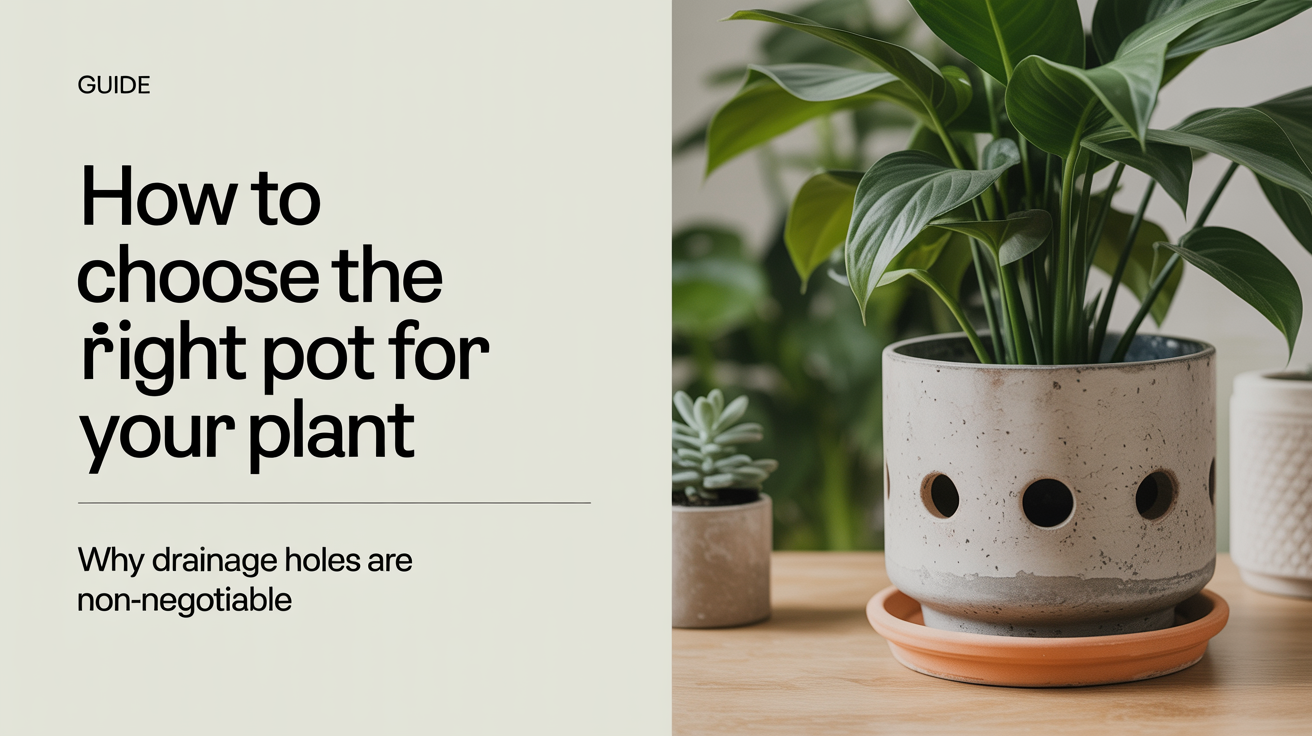
Before worrying about material or size, look for drainage holes. This is the single most important feature in any pot.
Without drainage, water pools at the bottom of the soil. Roots sitting in that stagnant zone suffocate and rot, often before you see any above-ground symptoms. By the time leaves droop or yellow, the damage is already significant.
A common workaround is adding a layer of gravel or pebbles at the pot's base to "create drainage." This doesn't work, and university extension programs have tested it directly. University of Illinois Extension's breakdown of container drainage options explains the mechanism: water moving down through potting soil doesn't pass freely into a coarser material like gravel. Instead it collects in the soil just above the gravel layer, a "perched water table," until that soil is fully saturated and only then drains further. Adding gravel doesn't remove that saturated zone, it just squeezes the usable soil depth and pushes the wet layer closer to the roots. Skip the gravel. Use a pot with holes.
If you love a decorative cache pot without holes, use it as a sleeve: keep your plant in a plain nursery pot with drainage, set that inside the decorative one, and empty the outer pot after watering.
Drilling Your Own Holes
Ceramic and terracotta pots without drainage can sometimes be drilled with a diamond-tipped drill bit and patience. Use slow speed, keep the bit cool with water, and mark your spot with tape so the bit doesn't skitter. Thick ceramic is easier to drill than thin glazed porcelain, which tends to crack.
Terracotta vs. Plastic vs. Ceramic, Which Material Fits Your Plant?
Material affects how quickly soil dries out, which directly affects how often you water. There's no single best material, it depends on your plant and your habits.
| Material | Moisture Retention | Weight | Best For |
|---|---|---|---|
| Terracotta | Low (dries fast) | Heavy | Succulents, cacti, Mediterranean herbs, drought-tolerant tropicals |
| Plastic | High (stays moist) | Light | Ferns, calatheas, moisture-loving tropicals |
| Glazed ceramic | Medium-high | Heavy | Most tropicals; depends on glaze thickness |
| Fabric/grow bags | Very low | Light | Tomatoes, fast-draining annuals; less common indoors |
| Self-watering planters | Very high, regulated | Varies | Plants that tolerate consistent moisture: peace lilies, pothos |
Terracotta is porous, so air and water move through the walls. The soil surface and root zone dry out faster, a genuine advantage for plants that hate sitting in moisture, like ZZ plants, snake plants, and most cacti and succulents. The downside: in a warm, dry apartment, a small terracotta pot may need watering every 4-5 days in summer.
Plastic retains moisture well because water can only exit through the drainage holes. This suits calatheas, ferns, nerve plants, and other humidity-loving species that punish you for letting the soil go completely dry. Plastic is also lighter, which matters when you're moving large floor plants.
Glazed ceramic splits the difference but leans toward moisture retention. The glaze seals the clay, so it behaves more like plastic than terracotta. Weight is a real consideration, a glazed ceramic pot large enough for a monstera can weigh 15-20 lbs before soil and water.
How to Choose the Right Pot Size
Pot size is probably the most misunderstood variable. Bigger is not better.
When you move a plant into a pot that's much larger than its root ball, the excess soil stays wet long after watering because the roots aren't there yet to absorb it. That wet, root-free soil becomes a perfect environment for fungal pathogens and root rot.
The standard sizing rule: go up one pot size at a time, choosing a pot roughly 1-2 inches wider in diameter than the current one. Clemson Cooperative Extension's guide to transplanting and repotting indoor plants uses this same 1-2 inch benchmark and adds a useful timing rule: repot only during active growth, in spring or summer, and hold off on plants that are dormant, ailing, or currently flowering. For example, a plant in a 4-inch pot moves to a 6-inch pot, not a 10-inch pot.
Signs a Plant Needs a Bigger Pot
- Roots circling the bottom of the pot or emerging from drainage holes
- The plant drying out within a day or two of watering, even in a plastic pot
- Roots visibly pushing up the soil surface
- Stunted growth during the active growing season (spring through summer)
When to Keep the Same Size Pot
Some plants genuinely prefer to be rootbound. Peace lilies bloom more reliably when slightly pot-bound. Spider plants produce more offsets. And some slow growers, like most cacti, won't need repotting for years, sometimes going two to three seasons between moves. If a plant looks healthy and is draining and drying appropriately, there's no reason to upsize.
If you're setting up a low-light corner and matching pots to plants, see our guide to the best low-light houseplants for dark rooms, the sizing advice there applies directly, since dim-light plants often grow slowly and need repotting less often.
Quick Reference: Current Pot to Next Pot
| Current Pot Diameter | Next Pot Diameter | Typical Plant Stage |
|---|---|---|
| 2-3 in | 4 in | Rooted cutting or small propagation |
| 4 in | 6 in | Young established houseplant |
| 6 in | 8 in | Maturing tropical (pothos, philodendron) |
| 8 in | 10 in | Established floor-adjacent plant |
| 10 in+ | +2 in per move | Large floor plant (fiddle-leaf fig, monstera) |
Matching Pot Choice to Plant Type
Different plant families have different needs, and thinking in categories makes pot selection fast.
Succulents and cacti: Small terracotta pots, sized snugly. These plants actively prefer to dry out completely between waterings. A succulent in an oversized plastic pot in a low-light corner is almost guaranteed to develop root rot.
Tropical foliage plants (pothos, philodendron, monstera): Plastic or glazed ceramic in a standard 1-2 inch upsize. These are adaptable and forgiving, but they do want consistent moisture without waterlogging. If you tend to underwater, plastic helps; if you overwater, terracotta compensates.
Ferns and calatheas: Plastic pots with drainage holes, or self-watering planters. These plants are punishing about dryness, they'll brown and crisp at the edges if you let them dry out fully. Retentive materials keep the buffer you need.
Orchids: Clear plastic nursery pots with multiple side holes, or specialty orchid pots with slotted sides. Orchid roots photosynthesize and need air. A solid opaque pot with just one bottom drain hole is wrong for most orchids.
Herbs on a windowsill: Terracotta or unglazed clay, sized to the plant. Basil tolerates moisture but Mediterranean herbs (rosemary, thyme, oregano) want their roots to breathe. A small terracotta pot near a sunny window is close to ideal.
If you're figuring out which plants to start with before worrying about pots, the list in our best houseplants for beginners guide covers species that are forgiving of imperfect container choices while you find your footing.
Practical Tips Before You Buy
A few things that save money and frustration:
Check what you already own. Nursery plants often come in functional plastic nursery pots that work fine for another year. You don't need to repot a healthy plant immediately, repot when the roots are cramped, not on a schedule.
Measure before you buy. Pot sizes are listed as diameter at the widest point, usually the top. Measure your current pot and add 1-2 inches. Don't guess.
Consider weight for large plants. A 12-inch glazed ceramic pot with soil and a fiddle-leaf fig can exceed 40 lbs. If you ever move or rotate the plant, a lightweight plastic pot or one on a rolling plant caddy is easier to manage.
Season matters for repotting. Spring is the safest time to repot, plants are entering active growth and will recover quickly. Repotting in winter stresses dormant or slow-growing plants and takes much longer for the root system to establish in new soil.
Budget for the whole switch, not just the pot. A repot usually also means fresh potting mix, since old soil compacts and loses structure over time. Plan on replacing most or all of the soil rather than just tucking the existing root ball into a bigger container with a thin layer of new mix around the edges.
If you're also thinking about supplementing light for newly repotted plants, our guide on whether grow lights actually work covers the basics on spectrum, distance, and duration.
Frequently Asked Questions
Do I really need drainage holes, or can I make it work without them?
You need drainage holes. The "layer of gravel" trick doesn't create drainage, it raises the waterlogged zone. Without holes, every watering adds more water with nowhere to go, and root rot follows. Use a nursery pot inside a decorative cache pot if you want the look without the risk.
My pot has one small drainage hole. Is that enough?
One hole is often sufficient for small to medium pots if you're not overwatering. For large pots (10 inches and above), a single small hole can be a bottleneck, and water may not drain freely through dense soil. If you notice water pooling on the surface for more than a minute after watering, the drainage is inadequate.
How do I know if I've chosen a pot that's too big?
The clearest sign is soil that stays wet for more than a week. You'll also notice slow or no growth despite the plant looking otherwise healthy, and potentially yellowing of lower leaves as root oxygen is reduced. If you've just repotted and the soil is staying wet too long, you can't really fix this without repotting again into the correct size.
Is terracotta always better for succulents?
Terracotta is safer for succulents because it dries faster, but it's not the only option. A small plastic pot with a well-draining cactus mix and disciplined watering can work. The key variable is how quickly the soil dries, not the material alone. In a warm, bright location where you water infrequently, plastic is fine. In a dim spot where soil takes a long time to dry, terracotta is a meaningful safety margin.
Can I reuse old pots from dead plants?
Yes, but wash them first. Old soil can harbor fungal spores, pests, or bacteria that contributed to the previous plant's decline. Scrub the pot with hot soapy water, then soak terracotta in a diluted bleach solution (1 part bleach to 9 parts water) for 30 minutes and rinse thoroughly. Let it dry fully before repotting.
What happens if I skip a pot size and jump straight to a much bigger container?
The soil around the root ball stays wet far longer than the roots can use, since there's nothing there yet to absorb it. That excess moisture is exactly the environment fungal pathogens and root rot need. If you already own the bigger pot, you can still use it safely by filling the gap around a smaller inner nursery pot with packing material rather than soil, but the straightforward fix is simply following the one-size-up rule and repotting again later as the plant grows into it.
Are self-watering planters a shortcut worth using?
For the right plants, yes. Self-watering planters use a reservoir to keep the soil at a steady moisture level, which suits peace lilies, pothos, and other plants that dislike drying out completely but also don't want soggy roots. They're a poor match for succulents, cacti, and other plants that need a real dry-down between waterings, since the constant moisture works against what those roots evolved for.
Does pot color or shape matter, beyond looks?
A little, mostly through heat. A dark-colored pot sitting in direct sun absorbs more heat than a light-colored one, which can warm the root zone noticeably on a hot windowsill and speed up how fast the soil dries. Shape matters more for stability and root health than temperature: a wide, shallow pot suits plants with shallow, spreading roots (many succulents), while a deep, narrow pot suits plants that send roots straight down (some palms and dracaenas). Neither factor overrides drainage or sizing, but they're worth a glance once those basics are settled.