Plant Care
How to Clean Houseplant Leaves the Right Way
Dusty houseplant leaves absorb less light and attract pests. Learn how to clean houseplant leaves safely for smooth, fuzzy, and succulent textures.
Dust is easy to ignore on plants. Unlike a grimy countertop, a fine layer of household dust on foliage doesn't scream for attention. But that layer does something concrete: it sits between your plant and its light source, reducing how much photosynthetically active radiation actually reaches the leaf surface. Mississippi State University Extension's guide to indoor plant selection and care puts it plainly: a layer of dust on a plant's foliage interferes with its ability to photosynthesize and function properly, on top of simply making the plant look unattractive.
For a plant sitting near a window that already gets moderate to bright indirect light, this might not matter much in summer. In a dim corner or during winter months when light angles drop, though, even a modest reduction can slow growth noticeably. Beyond light loss, dusty leaves create micro-environments that spider mites and fungus gnats find hospitable. A clean leaf is simply a less attractive landing pad.
Cleaning houseplant leaves takes about five minutes and no special tools. The tricky part is matching your method to the specific leaf texture, because a technique that works beautifully on a fiddle-leaf fig can damage the velvet coating on a purple velvet plant.
At a Glance
- Dust blocks light and gives pests a place to hide; it's a maintenance task with a real payoff, not just cosmetic upkeep.
- Smooth, waxy leaves (monstera, pothos, rubber plants) take a damp cloth or a lukewarm shower rinse.
- Fuzzy leaves (African violets, purple velvet plant) should stay dry; use a soft brush, never water.
- Farina-coated succulents lose their powdery bloom permanently if wiped; brush off debris only, and never with a cloth.
- Clean most houseplants every 2-3 months; more often in dusty homes, less often in a clean environment.
- Skip leaf shine sprays and oils. They clog the stomata a plant uses for gas exchange and trap dust faster than a clean leaf would.
Reading Your Plant's Leaf Texture
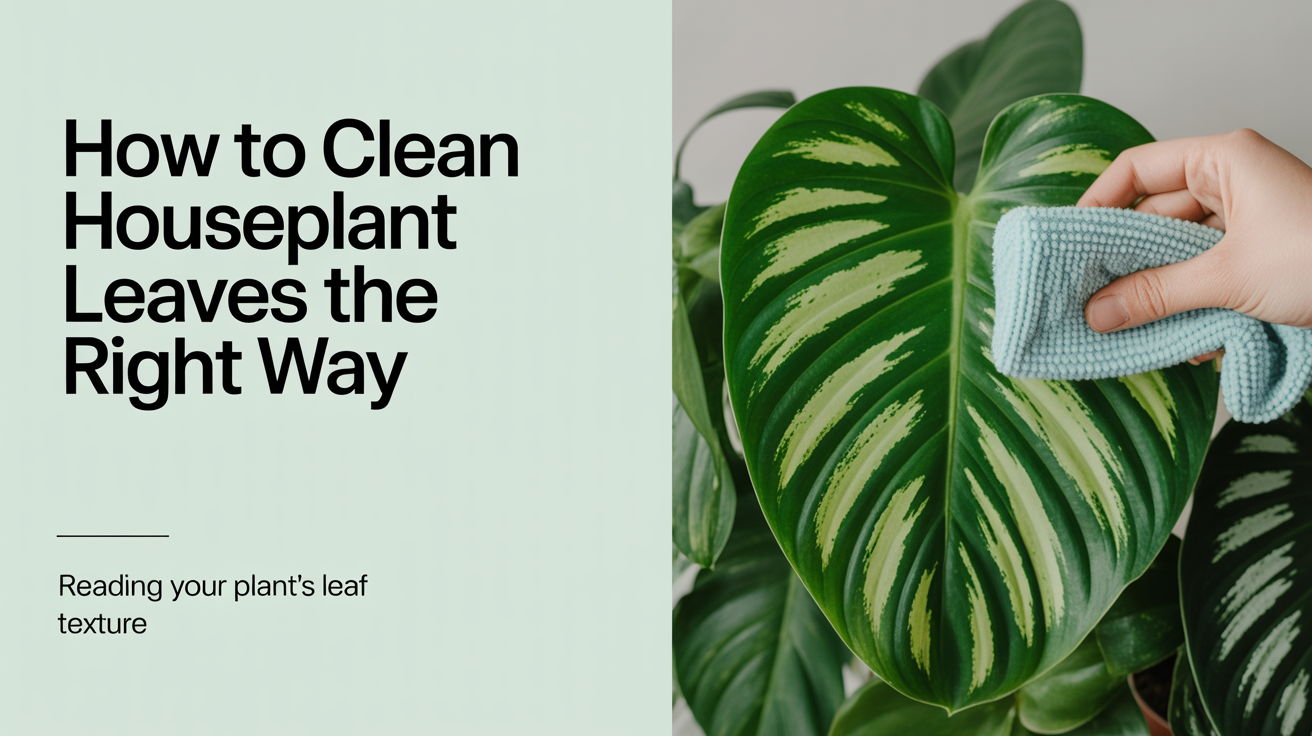
Before reaching for a cloth, look at what you are working with. There are three broad texture categories that each call for a different approach.
Smooth and Waxy Leaves
This group covers most popular houseplants: monstera, pothos, philodendrons, rubber plants, peace lilies, snake plants, and ZZ plants. Their leaves have a waxy cuticle that protects against moisture loss and pest damage. The cuticle is resilient but not indestructible. Rough scrubbing, abrasive cloths, or oily sprays can strip or clog it over time.
Fuzzy and Velvety Leaves
African violets, purple velvet plants (Gynura aurantiaca), and certain begonias have fine surface hairs called trichomes. These hairs serve real purposes: they trap humidity near the leaf, reflect harsh direct light, and deter small insects. Water sitting in them, especially in low-airflow conditions, can lead to fungal spots. This texture demands the gentlest treatment of the three.
Thick Succulent Leaves with Farina
Many succulents and cacti carry a powdery coating called farina, or epicuticular wax. It appears as a chalky blue-grey bloom on plants like echeveria, certain aloes, and blue chalk sticks. This coating protects against intense sun and water loss. Once removed by handling or wiping, it does not grow back. Cleaning for this group is essentially about removing debris without touching the coating itself.
Methods by Leaf Type
Smooth and Waxy Leaves: The Damp Cloth Method
This is the workhorse technique and suits the majority of common houseplants.
Dampen a soft cloth with plain, room-temperature water. Tap water is fine for wiping (unlike watering, where mineral buildup in the soil is the bigger concern). Support the leaf from underneath with one hand so you do not accidentally snap it at the petiole, then wipe gently from the base of the leaf toward the tip. Work with the leaf's natural direction rather than scrubbing back and forth, which can stress the surface.
Rinse or swap your cloth regularly as you move through the plant. You are lifting dust, not redistributing it, so a dirty cloth undoes the work quickly.
For large-leaved plants with many leaves, a shower rinse works well as an alternative. The University of Wisconsin Extension's houseplant care guide recommends periodically running lukewarm water over houseplants in the sink or shower, which clears dust and insects off the leaves and also leaches excess fertilizer salts out of the soil in the process. Set the water to lukewarm, move the pot to the shower tray, and let a gentle spray wash over the foliage. Let the plant drain fully before returning it to its spot. Aim to do this on a warmer day so the leaves dry within an hour or two.
Fuzzy and Velvety Leaves: The Dry Brush Method
No water here. Instead, use a soft, dry brush: a clean watercolor brush, a makeup blending brush, or a dedicated soft pastry brush all work. Brush lightly from base to tip, letting dust fall away rather than pushing it deeper into the hairs.
If dust is genuinely caked on after months of neglect, a brief puff from a can of compressed air can loosen it before brushing. Hold the can at least 20 centimeters (about 8 inches) from the leaf and use short bursts. Blasting from close range can damage the trichomes and introduce cold propellant onto the tissue.
African violets are especially sensitive to water contact on their leaves. Even room-temperature water leaves white mineral spots and can cause the hairy surface to rot in patches. Dry methods only for this group.
Succulents and Cacti with Farina: Minimal Intervention
The honest answer here is that a light dust layer on a farina-coated succulent matters less than it does on a large-leafed tropical. Succulents store resources efficiently, and a modest dust coat rarely affects them noticeably.
When debris is significant (soil splashed up during watering, for example), use a soft brush to remove it without pressing against the coating. For cacti with dense spines, a brush on a longer handle lets you reach between spines without risk to your hands.
Never wipe farina-coated succulents with a cloth. The farina smears and transfers to the cloth permanently, leaving visible marks on the plant that will not recover.
Cleaning Method Quick Reference
| Leaf Type | Tool | Water? | Frequency | Watch Out For |
|---|---|---|---|---|
| Smooth/waxy (monstera, pothos, rubber plant) | Soft damp cloth or shower rinse | Yes, room temp/lukewarm | Every 2-3 months | Scrubbing back and forth; leaf shine sprays |
| Fuzzy/velvety (African violet, purple velvet plant) | Soft dry brush, occasional compressed air | No | Every 1-2 months | Any water contact; brushing too hard against trichomes |
| Farina-coated succulents (echeveria, blue chalk sticks) | Soft brush only | No | As needed for visible debris | Wiping, which removes the bloom permanently |
| Many small leaves (fittonia, trailing pothos, ferns) | Sink or shower rinse, 30-60 seconds | Yes, lukewarm, low pressure | Every 2-3 months | Leaving the plant sitting in standing water afterward |
Products to Avoid
The plant care market sells leaf shine sprays, coconut oil treatments, and various DIY formulas. The appeal is clear: glossy, vibrant leaves that look freshly tended. The practical reality is less flattering.
Leaf shine sprays typically contain silicone or petroleum-based compounds. They produce short-term gloss, but the coating they leave traps fresh dust faster than a clean leaf does and can interfere with the stomata that the plant uses for gas exchange and transpiration. A plant sealed under a silicone film cannot regulate itself efficiently.
Oil treatments carry the same risks. Rubbing coconut oil or mineral oil into leaves clogs the leaf surface just as effectively. Some growers use a small amount of diluted neem oil specifically as a pest deterrent. The National Pesticide Information Center's neem oil fact sheet describes neem's active ingredient, azadirachtin, as working by reducing insect feeding and interfering with insect hormone systems rather than killing on contact, which is a real functional rationale, but neem is a pest management tool with its own application schedule and dilution rate. It is not a routine cleaning product, and wiping it onto every leaf every week will do more to stress the plant than protect it.
The cleanest approach is also the simplest: water and a soft cloth. A naturally waxy leaf looks shiny precisely because the cuticle is clean. No product improves on that.
How Often to Clean Your Plant's Leaves
There is no universal schedule, but a reasonable default lines up with what extension guidance recommends: roughly every 2-3 months for most smooth-leaved houseplants. In a dust-prone home (near a busy road, in a dry climate with recirculated heat, or in a room with carpet or rugs), monthly cleaning is more appropriate. In a cleaner environment, every two to three months is usually enough.
A practical cue: run your fingertip along the upper surface of a large leaf. A visible grey smear means it is time. Leaves that catch some dust but show no signs of stress can wait a little longer.
Cleaning is also a good excuse for a thorough inspection. While wiping each leaf, look at both surfaces for the fine webbing, stippling, or tiny moving dots that can indicate spider mites. Catching an infestation early, before it spreads to neighboring plants, is far easier than treating a colony that has had several weeks to settle in.
Frequently Asked Questions
Can I use a banana peel to shine plant leaves?
The banana peel trick circulates widely. The inside of the peel does deposit a thin layer of potassium and natural sugars, which gives a brief shine. The residue also attracts fresh dust and, in warm conditions, can begin to break down on the leaf surface. A damp cloth does the same job without any residue, so there is no practical reason to reach for the peel.
Is misting leaves a good way to clean them?
Misting adds water droplets but doesn't lift dust. What usually happens is muddy speckles once the water evaporates, especially with hard tap water. For cleaning, a direct wipe or a proper rinse under running water is more effective than a fine mist.
My plant has dozens of tiny leaves and wiping each one is unrealistic. What should I do?
Plants with many small leaves (fittonia, certain ferns, trailing pothos) respond well to a gentle shower rinse. Place the pot in a sink or shower, use lukewarm water at low pressure, and let it run over the foliage for 30 to 60 seconds. Drain well afterward and return the plant to its spot. This is faster than leaf-by-leaf wiping and equally effective.
Will cleaning leaves actually help my plant grow?
Clean leaves absorb light more efficiently, which supports photosynthesis. Whether that translates to noticeably faster growth depends on how dusty the leaves were and how much light the plant was already receiving. A heavily coated plant in moderate indoor light may respond visibly after cleaning. A lightly dusty plant in a bright room probably won't show a dramatic difference, though the inspection habit alone is worth building.
Should I clean the undersides of leaves too?
Yes, and it is worth the extra effort. The undersides are where many pests prefer to feed and lay eggs, because they are sheltered from air movement and less exposed. Wiping both surfaces removes dust and gives you a chance to spot early pest activity before it becomes a real problem.
Is tap water safe for wiping leaves, even if it's hard water?
For wiping, yes. The concern with hard tap water (mineral buildup) mostly applies to watering the soil over months, where minerals accumulate and can eventually cause tip burn. A quick wipe or rinse that drains away doesn't give minerals time to build up on the leaf. If you notice chalky white spots forming after rinses, especially on fuzzy-leaved plants, switching to distilled or filtered water for that specific plant solves it.
Can dusty leaves actually attract more pests, or is that just folklore?
It's grounded in something real. A dust layer traps a bit of extra humidity right at the leaf surface and gives pests like spider mites a less exposed surface to settle on undisturbed. Regularly wiping or rinsing leaves also means you're physically disturbing and inspecting the plant often enough to catch an early infestation before it spreads, which matters at least as much as the dust itself.