Pests & Problems
How to Identify and Treat Spider Mites
Spider mites on houseplants cause stippled leaves and fine webbing. Learn to spot them early and eliminate them with proven treatments.
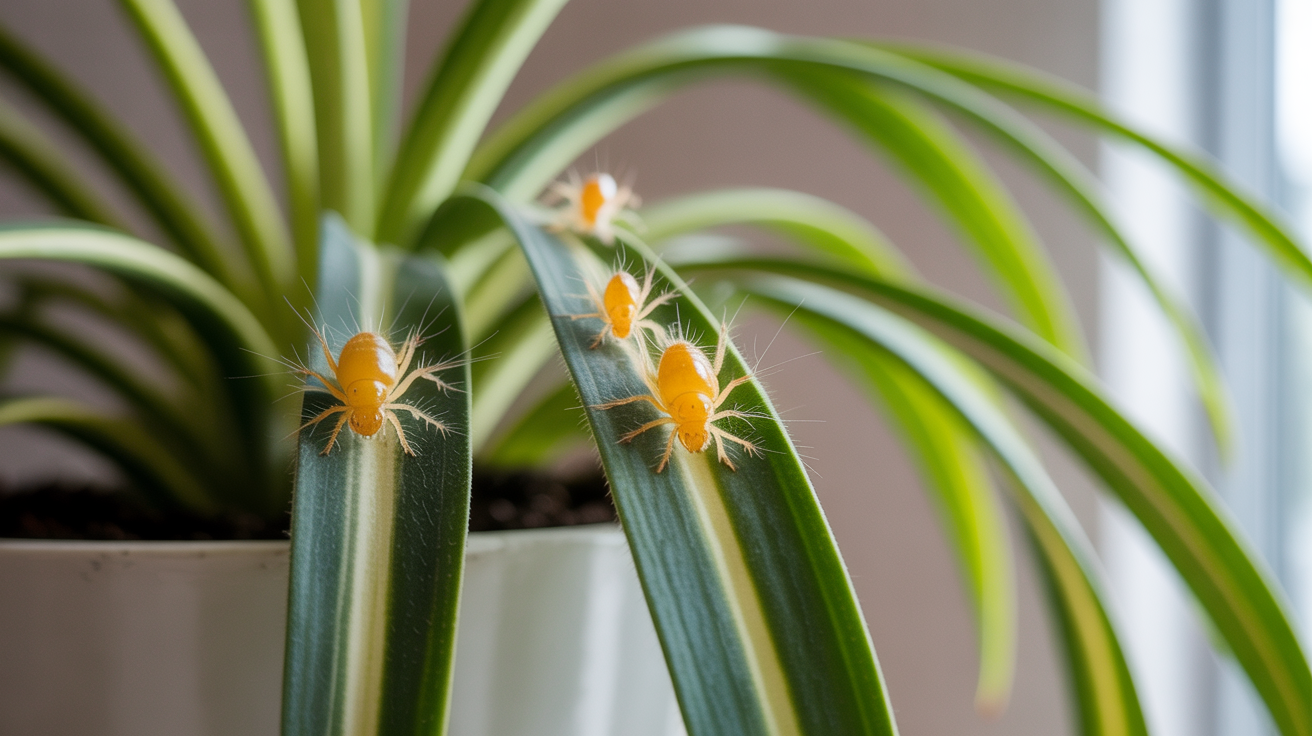
Spider mites are one of the more frustrating pests houseplant owners encounter, partly because they're so small you can miss them until the damage is already widespread. They're not insects, they're arachnids, closer to ticks than to aphids, and they reproduce fast enough that a mild infestation can become a serious problem within two weeks. The good news: caught early, they're manageable with treatments you probably already have or can find at any garden center.
How to Tell If You Have Spider Mites
The mites themselves are tiny, roughly 0.5 mm, and range from pale yellow to red-brown depending on species and life stage. You're more likely to notice their damage first. University of Minnesota Extension's guide to spider mites describes the classic signs as stippled, mottled leaves and, in heavier infestations, visible webbing across the foliage.
Key signs to look for:
- Stippling on leaves. The upper surface develops a fine, speckled pattern of pale dots or a general bronze or silvery cast. Each dot is where a mite has pierced the leaf and drained the cell contents. On plants with darker foliage like Ficus elastica or Calathea orbifolia, this shows up as a dusty, dull wash over what should be glossy leaves.
- Fine webbing. Spider mite webbing tends to appear in leaf axils, along stems, and on the undersides of leaves. It's much finer than spider silk and often has a dusty look because mites, shed skins, and egg cases get caught in it. Heavy infestations can web over entire shoot tips.
- Tiny moving dots on the underside. Hold a white sheet of paper under a suspicious leaf and tap it firmly. Any specks that move are almost certainly mites.
- Rapid leaf decline. Heavily infested leaves turn pale, then yellow, then drop. If you're seeing unexplained yellowing across multiple plants, check undersides carefully before assuming a watering or light issue, see our guide on why plant leaves turn yellow to rule out other causes.
Which Plants Are Most Vulnerable
Spider mites favor warm, dry conditions and plants with thin, smooth leaves. In a home environment, Hedera helix (English ivy), Schefflera, Hibiscus, Dracaena, and most succulents are frequent targets. Calathea and Maranta species also attract them despite preferring humidity. Basically, if the air in your home is dry and the plant is stressed from under-watering or poor light, mites will find it.
The Spider Mite Life Cycle (Why Speed Matters)
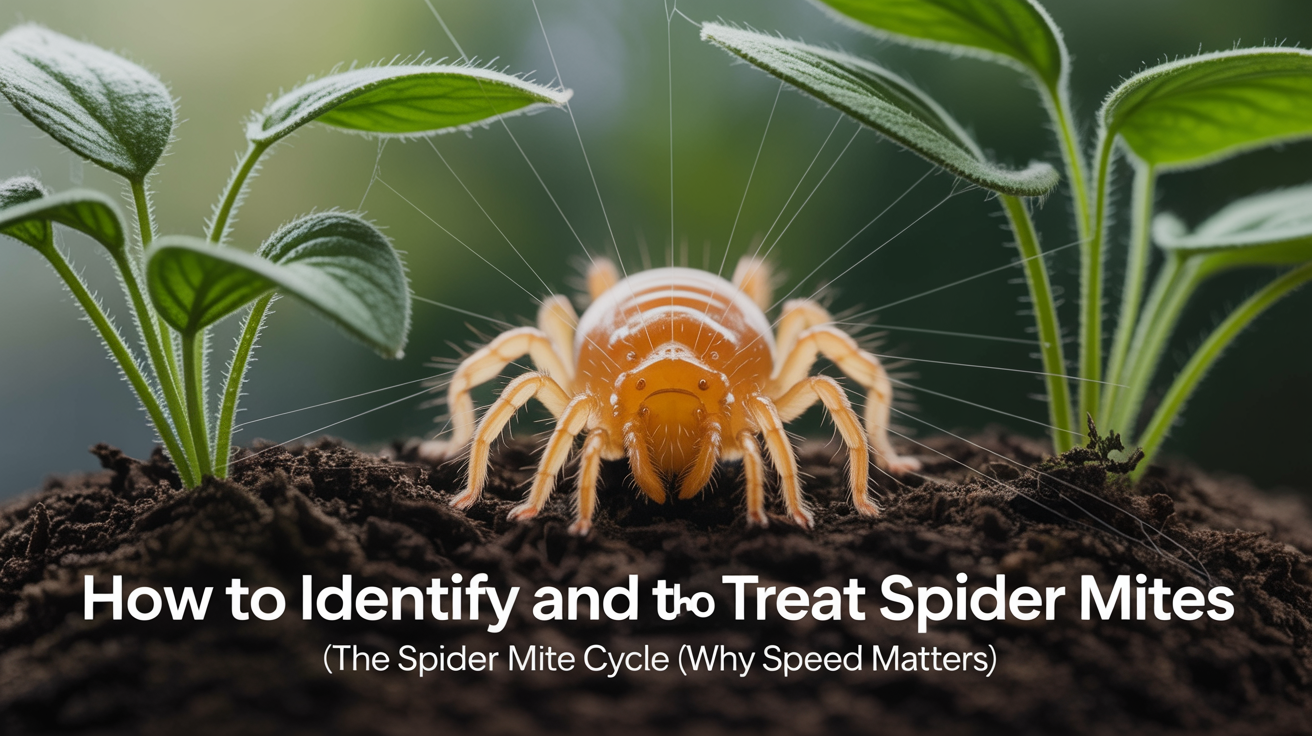
A female two-spotted spider mite (Tetranychus urticae, the most common houseplant species) can lay 100–200 eggs over her two-to-four week lifetime. At room temperature around 70°F (21°C), eggs hatch in about a week. At 85°F (29°C), that drops to three days. This exponential pace is why an infestation you notice on Monday can look dramatically worse by Friday, and why a single overlooked plant can reinfest everything nearby.
Mites spread by crawling between plants that are touching, by riding air currents, and occasionally by hitching rides on your hands or clothing after you've handled an infested plant.
How to Treat Spider Mites on Houseplants
Treatment works best in stages: isolate, physically remove as many mites as possible, then apply a miticide. Repeat applications matter more than any single treatment, because most products don't reliably kill eggs.
Step 1: Isolate the Plant
Move the affected plant away from everything else immediately. Mites spread readily, so even if neighboring plants look fine, inspect them closely before returning anything.
Step 2: Physical Removal
Take the plant to a sink or shower and spray the foliage, paying close attention to leaf undersides where mites concentrate. Use a moderately strong stream, you want to dislodge mites and webbing without bruising the leaves. For plants with robust foliage like Ficus or Schefflera, this can be done fairly aggressively. For delicate ferns or Calathea, use a gentler flow.
Wipe each leaf with a damp cloth to remove residual mites, eggs, and webbing. This step alone can cut the population significantly before you apply any chemical treatment.
Step 3: Apply a Miticide
Insecticidal soap is a reliable first-line option, and it's one of the treatments UMN Extension recommends for home growers. Mix 1 teaspoon of pure liquid Castile soap per quart of water and spray the plant thoroughly, especially leaf undersides. Soap kills mites on contact by disrupting their cell membranes, but it has no residual activity, so you need to coat the mites directly. Reapply every 3–5 days for at least three rounds.
Neem oil for spider mites is another widely used treatment. Cold-pressed neem oil contains azadirachtin, which disrupts mite feeding and reproduction. Mix 2 tablespoons of neem oil with 1 teaspoon of dish soap and 1 quart of warm water. Apply as a spray in the same thorough way. Neem can leave an oily residue and has a distinct smell; test it on a small area first, especially on plants with sensitive foliage like Calathea or ferns.
Rubbing alcohol (70%) diluted to a 1:1 ratio with water works well for spot treatment. Apply with a cotton ball directly to visible mites and webbing. This is particularly useful for succulents and cacti, which tolerate alcohol better than soap or oil.
Pyrethrin-based sprays (derived from chrysanthemum flowers) are more potent and appropriate for heavy infestations. They kill mites on contact and have a short residual window. Follow label directions carefully and keep treated plants out of direct sun until the spray dries to avoid leaf burn.
Treatment Schedule
| Week | Action |
|---|---|
| Day 1 | Isolate plant, shower off mites, first soap or neem spray |
| Day 4–5 | Second spray application |
| Day 8–10 | Third spray; inspect closely for active mites |
| Day 14 | Final check; if clear, return plant to collection with caution |
Three applications spaced 4–5 days apart catches newly hatched mites before they reproduce. If you still see activity at the two-week mark, switch to a different product since some mite populations have developed resistance to specific treatments.
Adjusting Growing Conditions
Spider mites thrive in dry heat. Raising humidity around your houseplants creates an environment they dislike. A humidifier running at 50–60% RH makes a meaningful difference, especially in winter when central heating dries out indoor air significantly.
Avoid dry stress. Plants that go too long between waterings are more susceptible, as are those sitting in poor light where they can't photosynthesize efficiently. A mite infestation is sometimes a signal that growing conditions need attention, not just that the pest arrived.
Regular misting is sometimes suggested as a deterrent, but the effect is temporary. More reliable: group plants together to create a localized humidity buffer, or place pots on trays with pebbles and water.
Preventing Reinfestation
Once you've cleared mites from a plant, the colony can re-establish from survivors you missed, from nearby plants, or from new plants you bring into the home. A few practices reduce the odds significantly.
Quarantine any new plant for 2–4 weeks before adding it to your collection. This catches mites (and other pests like fungus gnats or mealybugs) before they spread. For more on managing other common invaders, see our guides on getting rid of fungus gnats and eliminating mealybugs.
Inspect plants monthly, especially those known to attract mites. A quick look at leaf undersides with a magnifying glass takes less than a minute per plant and catches problems before they escalate.
Clean your tools. Pruning shears and trowels can carry mite eggs between plants. Wipe them down with rubbing alcohol between uses.
Frequently Asked Questions
Can spider mites survive in soil?
Occasionally, yes. Two-spotted spider mites (Tetranychus urticae) sometimes overwinter in soil or leaf debris, but they primarily live and feed on leaf surfaces. If you've treated the foliage thoroughly and an infestation keeps returning, you can replace the top inch or two of soil as an extra precaution, though this is rarely necessary.
Are spider mites harmful to people or pets?
Spider mites don't bite people or animals, and they pose no health risk in that direct sense. However, keep in mind that many houseplants commonly affected by mites, including certain Dracaena and Schefflera species, are toxic to cats and dogs. If you're treating plants with neem oil or insecticidal soap, keep pets away from sprayed foliage until it dries completely, and verify the safety of any specific plant before bringing it into a home with animals.
How long does it take to get rid of spider mites completely?
With consistent treatment (three applications over two weeks), most infestations are under control within 14–21 days. Very heavy infestations on large plants may require four to five treatments. The key is not stopping after the first round because the first spray rarely reaches every egg.
Will neem oil kill spider mite eggs?
Neem oil has some ovicidal effect, but it's not reliable against all eggs. That's why spacing applications 4–5 days apart is important, you want to catch newly hatched mites before they reach reproductive maturity. Insecticidal soap has essentially no egg-killing activity, so the spacing schedule matters even more when using it.
My plant is severely infested, should I just throw it away?
It depends on how much of the plant is still healthy. If more than 60–70% of the foliage is damaged or the stems are affected, the energy required to nurse it back may not be worth the reinfestation risk to your other plants. For a plant you're attached to, try the full treatment protocol in isolation. For a common variety or one with extensive damage, replacing it is often the practical call.