Pests & Problems
How to Get Rid of Mealybugs on Houseplants
Learn how to get rid of mealybugs on houseplants using rubbing alcohol, neem oil, and other practical methods that actually work.
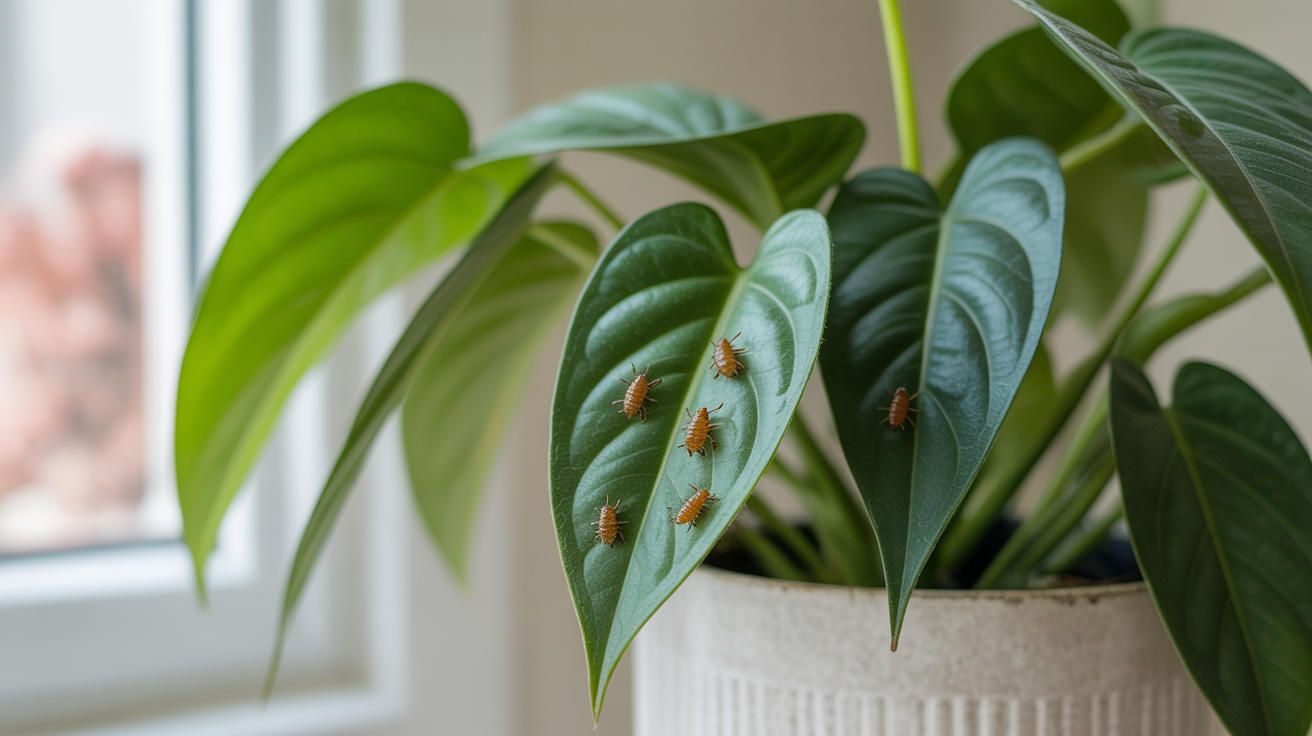
Mealybugs are soft, white, waxy-looking insects that cluster in leaf axils, along stems, and on the undersides of leaves. If you've spotted what looks like tiny cotton balls tucked into the crevices of your houseplant, you're almost certainly dealing with mealybugs. The good news: they're treatable. Catch them early, treat consistently, and most plants recover fully.
At a Glance
- Mealybugs are soft-bodied, wax-covered insects, usually 1 to 4 mm, that cluster in leaf axils and stem joints.
- 70% isopropyl alcohol dabbed directly on the insects is the fastest first-line treatment, and it's what university IPM programs recommend for small to moderate infestations.
- Eggs hatch over 7 to 14 days at typical indoor temperatures, so a single treatment never catches everything. Plan on repeat passes for 3 to 6 weeks.
- Their waxy coating repels most contact insecticides, which is why spraying once and moving on rarely works.
- Root mealybugs live below the soil line and cause unexplained decline that looks like nothing is wrong above ground.
- Quarantine new plants for 2 to 4 weeks before shelving them with your existing collection; nursery stock is a common source.
What Are Mealybugs and Why Are They a Problem?
Mealybugs belong to the family Pseudococcidae. The most common species on indoor plants is Planococcus citri (citrus mealybug), though Pseudococcus longispinus (longtailed mealybug) also shows up regularly. Both feed by piercing plant tissue and sucking sap, which causes leaves to yellow, distort, and eventually drop.
As they feed, mealybugs excrete a sticky substance called honeydew. Left untreated, honeydew coats leaves and becomes a growing medium for sooty mold, a black fungal film that blocks light and makes the plant look far worse than the mealybugs themselves. A heavy infestation can weaken a plant enough that it stops producing new growth entirely.
They spread fast. A single plant can harbor hundreds of adults and eggs at different life stages, and moving or brushing against an infected plant can transfer crawlers (newly hatched juveniles) to healthy ones nearby. According to the University of California Statewide IPM Program's mealybug management guidelines, houseplants that commonly carry infestations include aglaonema, coleus, cactus, dracaena, ferns, ficus, hoya, jade, orchids, palms, philodendron, and schefflera, a useful checklist if you're trying to figure out which plant introduced the problem.
How to Identify Mealybugs
The most obvious sign is the white, cottony fluff. But mealybugs can look a little different depending on where they're hiding:
- On leaves and stems: Small, oval, 1 to 4 mm, with a powdery white wax coating and short waxy filaments around the edges.
- In the soil: Root mealybugs (Rhizoecus spp.) are smaller, pale, and almost translucent. You'll find them on or around roots when you unpot the plant.
- Egg masses: Dense, cottony white clusters, often tucked into a leaf axil or wound around a stem junction.
- Honeydew residue: A sticky, shiny film on leaves below where mealybugs are feeding.
Don't confuse mealybugs with woolly aphids or scale insects. Woolly aphids tend to cluster on stems and move if disturbed; scale insects are harder and more shell-like rather than fuzzy. If you see white fuzzy bugs on your plants and they're stationary, not moving around freely, mealybugs are the likely culprit.
How to Get Rid of Mealybugs: Step-by-Step
Isolate the Plant First
Before doing anything else, move the infected plant away from your other houseplants. Mealybug crawlers can walk between pots that are touching, and they can hitch rides on your hands or tools. Keep the plant isolated until you've confirmed it's clean through two or three full inspection cycles.
Manual Removal with Rubbing Alcohol
Rubbing alcohol (isopropyl alcohol, 70%) is the most reliable first-line treatment for mealybugs. It dissolves the waxy coating that protects them and kills on contact. This isn't a home remedy of unclear origin either; UC IPM's own guidelines specifically recommend "a 70% or less solution of isopropyl (rubbing) alcohol in water" dabbed on with a cotton swab for exactly this purpose.
Dip a cotton swab in 70% isopropyl alcohol and dab it directly onto each mealybug. For larger infestations, pour the alcohol into a spray bottle and apply directly to affected areas. Let the plant dry in a well-ventilated spot. The alcohol evaporates quickly and won't sit on the leaves long enough to cause damage at 70% concentration, but test on one leaf first if you're dealing with a sensitive plant like a fern or a thin-leaved Calathea.
Repeat every 3 to 4 days for at least two weeks. Mealybug eggs hatch in 7 to 14 days at typical indoor temperatures (65 to 80°F), so you need multiple passes to break the cycle.
Neem Oil Spray
Neem oil works differently than alcohol: it disrupts the mealybug's hormonal system and makes it difficult for them to feed and reproduce. According to the National Pesticide Information Center, a joint project of Oregon State University and the EPA, neem oil's active ingredient azadirachtin "interferes with insect hormone systems, making it harder for insects to grow and lay eggs." It won't kill on contact as reliably as alcohol, but it provides longer-lasting residual protection, and NPIC notes it's considered practically non-toxic to birds, mammals, bees, and plants when used as labeled.
Mix 1 tablespoon of cold-pressed neem oil with 1 teaspoon of liquid dish soap and 1 liter of warm water. Shake well and spray the plant thoroughly, including the undersides of leaves and stem joints. Apply in the evening to avoid leaf burn under direct sun or grow lights. Repeat weekly for 3 to 4 weeks.
Neem oil has a strong smell that most people find unpleasant indoors, and it can be mildly irritating to skin and eyes on contact, so wear gloves when mixing and spraying it. If the smell is a dealbreaker, insecticidal soap spray is a reasonable alternative. Mix 1 to 2 teaspoons of pure castile soap per liter of water and apply the same way.
Horticultural Oil or Systemic Insecticide
For severe infestations or plants with root mealybugs, stronger options may be necessary. Horticultural oil (also called dormant oil or summer oil) smothers mealybugs and their eggs by coating them.
Systemic insecticides containing imidacloprid are absorbed through the roots and make plant tissue toxic to sap-sucking insects. These work well for persistent cases or for mealybugs that are hiding in spots you can't easily reach. Follow label directions exactly. Note that systemic insecticides are not appropriate for edible plants and have significant implications for pollinators, so they're a last resort for indoor ornamentals. For a genuinely severe, repeatedly-relapsing infestation on a low-value plant, discarding it outright and starting over with clean stock is a legitimate option, and one that IPM guidelines for houseplants explicitly list alongside chemical treatment.
Treating Root Mealybugs
Root mealybugs require a different approach. Unpot the plant, rinse the roots under lukewarm water to remove as much of the infestation as possible, and inspect the root ball carefully. Soak the bare roots in a diluted neem oil solution for 15 to 20 minutes, or drench the soil with an imidacloprid solution after repotting. Dispose of the old potting mix rather than reusing it. When you're ready to repot, starting with a fresh, well-draining mix gives the roots a clean slate and removes any hidden eggs or crawlers still clinging to the old soil. Our overview of choosing the right houseplant soil walks through which blends suit different plant types and drain well enough to support recovery.
Treatment Method Comparison
| Method | Best For | How Often | Notes |
|---|---|---|---|
| Rubbing alcohol (70%) | Small to moderate infestations, spot treatment | Every 3 to 4 days for 2 to 3 weeks | Fast-acting; test on sensitive plants first |
| Neem oil spray | Ongoing prevention, mild to moderate infestations | Weekly for 3 to 4 weeks | Residual protection; strong smell |
| Insecticidal soap | General spray coverage | Weekly for 3 to 4 weeks | Gentler alternative to neem |
| Horticultural oil | Heavy infestations, egg masses | Every 10 to 14 days | Smothers eggs and adults |
| Systemic insecticide (imidacloprid) | Severe or root mealybugs | Per label (often once per season) | Last resort; not for edibles |
| Discard the plant | Repeated, severe relapse on a low-value plant | One-time decision | Sometimes cheaper than months of treatment |
Preventing Mealybugs from Coming Back
A few habits significantly reduce the odds of reinfestation.
Quarantine new plants. Keep any newly purchased plant in a separate room for 2 to 4 weeks before introducing it to your collection. Mealybugs are common on nursery plants, and a quarantine period lets you catch an infestation before it spreads.
Inspect regularly. Make it part of your watering routine to flip a few leaves and check the stem joints. Early detection is the difference between a 10-minute alcohol treatment and a month-long ordeal.
Avoid over-fertilizing with nitrogen. Soft, lush growth produced by excessive nitrogen feeding is more attractive to sap-sucking insects. If your plants push lots of tender new growth quickly, cut back on fertilizer and let them grow at a steadier pace.
Keep plants healthy. Stressed plants are more susceptible to pest problems. Mealybugs tend to pile on when a plant is already struggling from overwatering, poor light, or root problems. If you're seeing pests repeatedly on the same plant, check whether yellowing leaves might point to an underlying care issue worth fixing.
Other common houseplant pests behave differently and require different approaches. If you're also seeing tiny webs or stippled leaves, it's worth reading up on how to identify and treat spider mites to rule that out. And if you've got tiny flies around your soil, those are a separate issue entirely, our guide on getting rid of fungus gnats covers that.
Which Houseplants Are Most Susceptible?
Mealybugs aren't picky, but some plants attract them more than others. Succulents (especially cacti, Echeveria, and Aloe) are prime targets because the waxy coating on succulent leaves makes it easy for mealybugs to establish themselves in the tight leaf rosettes. Other commonly affected plants include:
- Monstera deliciosa and other aroids
- Pothos and Philodendron species
- Citrus trees grown indoors
- Gardenias
- Hoya species
- Jade plants (Crassula ovata)
- African violets (Saintpaulia spp.)
Soft-stemmed tropicals with lots of leaf axils give mealybugs plenty of hiding spots, which is why dense plants can be especially tricky to treat completely.
Note that some of the houseplants listed above are toxic to cats, dogs, or children. If you're treating a plant in a home with pets or small children, check the ASPCA's searchable toxic and non-toxic plant list before assuming a plant is safe, and keep treated plants out of reach while you're applying any pest control products. Alcohol and neem sprays should also be allowed to dry fully before pets or kids are near the foliage.
Frequently Asked Questions
Can mealybugs live in soil?
Yes. Root mealybugs are a different (but related) species that live in the soil and feed on roots. They're harder to spot than above-ground mealybugs because you won't notice them without unpotting the plant. Signs include unexplained wilting or decline even when watering and light seem right. Unpot the plant and inspect the root ball, root mealybugs appear as small, white, powdery insects on or around the roots.
Will mealybugs go away on their own?
No. Mealybugs don't disappear without intervention. A small infestation might appear to stabilize, but it will almost certainly grow over time as eggs hatch and crawlers spread. Treat as soon as you spot them rather than waiting to see if they get worse.
Is rubbing alcohol safe to spray on all houseplants?
70% isopropyl alcohol is safe for most houseplants when used as a spot treatment or light spray. Some thin-leaved or soft-foliaged plants (ferns, Calatheas, Maidenhair ferns) can be more sensitive. Test on one leaf and wait 24 hours before treating the whole plant. Higher concentrations (91 to 99%) evaporate faster but can be more likely to cause damage on delicate foliage.
How long does it take to get rid of mealybugs?
Expect 3 to 6 weeks of consistent treatment before an infestation is fully under control. Mealybug eggs hatch over 7 to 14 days, so a single treatment won't catch all life stages. Most people see significant improvement within 2 weeks if they're treating every 3 to 4 days, but continuing through the full cycle is important to prevent a quick rebound.
Do mealybugs bite humans?
No. Mealybugs are plant pests and have no interest in humans. They can't bite and pose no risk to people. They are, however, annoying to deal with barehanded, the waxy residue clings to skin. Wear disposable gloves when treating heavily infested plants.
Why do insecticide sprays sometimes fail against mealybugs?
The waxy coating that gives mealybugs their cottony look also repels most contact insecticides, so a single spray often kills only the exposed adults while eggs and insects tucked into leaf axils survive untouched. That's the reason treatment protocols call for repeated applications over several weeks rather than a one-time spray, and why alcohol (which actively dissolves the wax) tends to outperform sprays for visible, reachable colonies.