Pests & Problems
Why Are My Plant's Leaves Turning Yellow
Plant leaves turning yellow? This guide covers the 7 most common causes, how to tell them apart, and exactly what to do about each one.
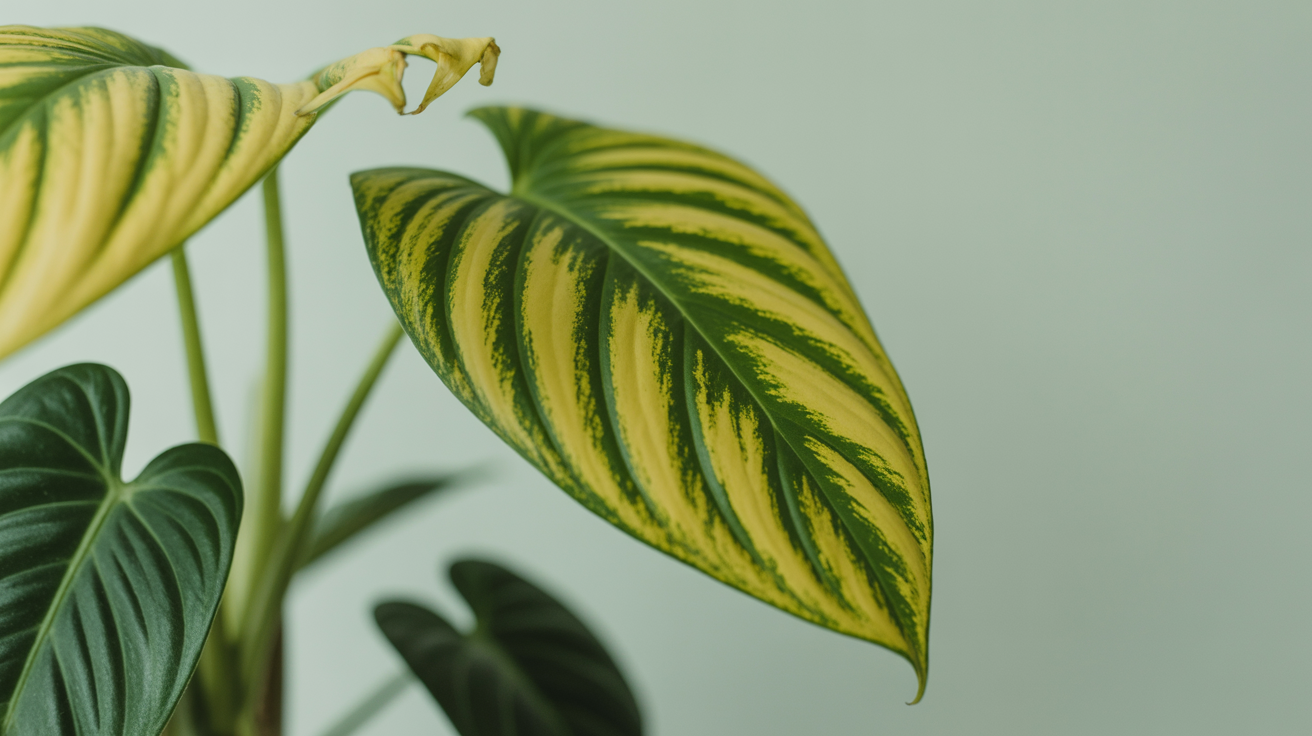
Yellow leaves are one of the most common distress signals a houseplant sends, and the frustrating part is that a dozen different problems all produce the same symptom. The fix depends entirely on the cause. Before you assume the worst, read through these causes carefully, most yellowing is reversible once you identify the real culprit.
At a Glance
- Overwatering is the single most common cause: yellowing starts at the bottom of the plant and roots turn brown or black and mushy.
- Underwatering yellows leaf tips first, then turns them crispy, and the soil pulls away from the pot edges.
- Uniform pale yellowing across the whole plant usually points to too little light; bleached patches point to too much direct sun.
- Nitrogen deficiency yellows older lower leaves while new growth stays green; iron deficiency yellows new leaves between the veins.
- Spider mites, mealybugs, and fungus gnat larvae all cause yellowing as a side effect of feeding on the plant.
- One or two yellow leaves at the bottom, with healthy new growth up top, is usually just normal leaf turnover, not a problem.
The Most Common Cause: Overwatering
Overwatering is behind yellow leaves more often than anything else. When soil stays wet too long, roots suffocate and begin to rot. They can no longer pull nutrients up to the leaves, so the foliage turns yellow from the bottom up. New growth is often pale or stunted at the same time.
To check: pull the pot and look at the roots. Healthy roots are white or tan and firm. Rotten roots are brown or black, mushy, and may smell sour. If that's what you find, you're dealing with root damage, and the treatment is more involved than just cutting back on water.
What to do: Let the soil dry out fully before watering again. If the roots are already rotting, repot into fresh, dry potting mix and trim away any dead roots with clean scissors. Most plants bounce back within a few weeks once drainage improves, though a plant that lost more than half its root mass to rot can take 2–3 months to look fully recovered.
A pot with drainage holes is non-negotiable. Sitting in a saucer of water replicates the same problem even if you water sparingly.
Underwatering
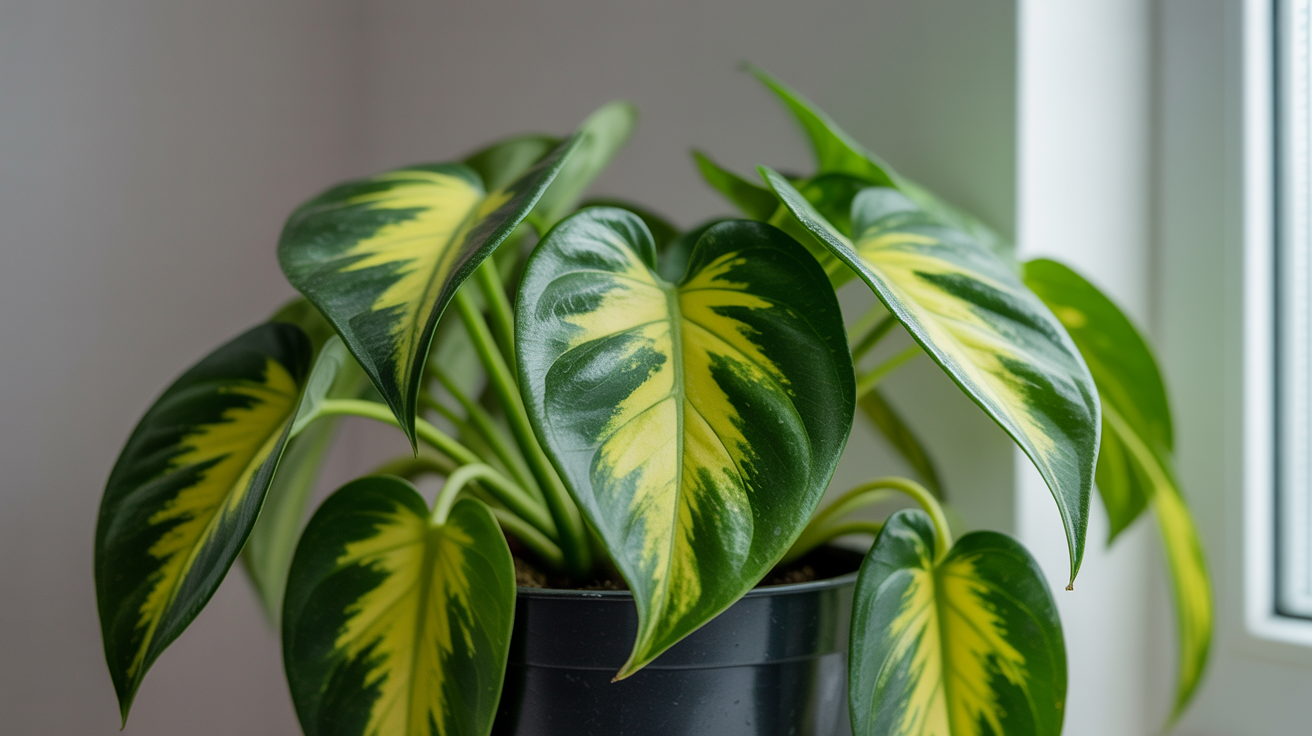
Underwatering also causes yellowing, though the pattern differs. Leaves typically yellow at the tips first, then turn crispy brown rather than soft and limp. The whole plant may look wilted and the soil will be bone-dry, pulling away from the pot edges.
Soak the pot thoroughly when you water, until water runs from the drainage holes, rather than giving small sips. Tropical houseplants like pothos (Epipremnum aureum), philodendrons, and peace lilies (Spathiphyllum spp.) prefer consistent moisture and will start to yellow quickly when they dry out for too long, often within a week of the soil going fully dry in a warm room.
Light Problems
Too little light is a slow yellower. Leaves fade gradually to pale yellow-green across the whole plant, not just certain sections. Low-light plants tolerate shade better than most, but no houseplant thrives in a truly dark corner indefinitely.
Too much direct sun does the opposite: it scorches leaves, creating bleached yellow patches or brown crispy edges rather than uniform fading.
Diagnosing light issues
- Uniform pale yellow across older leaves: likely not enough light
- Bleached or papery patches on sun-facing leaves: too much direct sun
- Yellow on lower leaves only, new growth looks normal: probably not a light issue
Move the plant gradually toward brighter indirect light rather than shifting it from a dark corner directly to a sunny windowsill, which can cause additional shock. A two-week transition, a few extra feet closer to the window every few days, gives the leaves time to adjust without scorching.
Nutrient Deficiency
Houseplants in containers can exhaust the nutrients in their potting mix within a few months, especially fast-growing species. Nitrogen deficiency is the most common: older lower leaves turn uniformly yellow while newer growth stays green. Iron deficiency looks different, new leaves yellow between the veins, but the veins themselves stay green (a pattern called interveinal chlorosis). University of Maryland Extension's factsheet on nutrient deficiency in indoor plants identifies iron chlorosis as the most common nutrient problem houseplant owners run into, and points to acid-loving houseplants as particularly susceptible.
What to do: Feed with a balanced liquid fertilizer (look for an NPK ratio like 10-10-10 or 20-20-20) every 2–4 weeks during the growing season (roughly March through September). Cut back to once a month or stop entirely in winter when growth slows. If you suspect iron deficiency, a fertilizer with chelated iron will address it more directly, and most plants show greener new growth within 3–4 weeks of starting treatment.
Avoid the temptation to over-fertilize as a fix for yellowing, salt buildup from excess fertilizer burns roots and causes its own version of yellow, crispy leaves. If white crust appears on the soil surface or pot rim, flush the soil thoroughly with water (roughly three times the pot's volume, poured through slowly) to rinse excess salts out.
Temperature Stress and Drafts
Most tropical houseplants prefer temperatures between 60°F and 85°F (15°C–29°C). Exposure to cold drafts from windows in winter, or placement near an air conditioning vent in summer, causes sudden yellowing that often targets leaves closest to the cold source.
Check the spots where you've placed your plants. A leaf pressing against a cold window in January, or sitting two inches from a ceiling vent blasting 65°F air, will yellow and drop faster than any other stress factor in that list.
Pests
Several common houseplant pests cause yellowing as a side effect of their feeding. Spider mites, fungus gnats, and mealybugs are the usual suspects.
Spider mites leave tiny yellow stippling (dots) on leaf surfaces, hold a piece of white paper under a leaf and tap; if you see tiny moving specks, you have mites. Colorado State University Extension's spider mite resource notes that mature females can lay roughly a dozen eggs a day and reach full-grown in as little as a week under warm conditions, which is why an early, minor infestation can become a serious one within days if it's ignored. Mealybugs cluster in leaf axils and along stems, and their feeding drains the plant of sap, which yellows leaves over time. Fungus gnats don't feed on leaves directly, but their larvae eat root hairs, weakening the plant's ability to uptake water and nutrients. If your plant is yellowing and you've also noticed small flies around the soil, check out our guide on getting rid of fungus gnats in houseplants.
For spider mites specifically, early identification matters a lot, mite populations can double within days in warm, dry indoor conditions. See our guide on identifying and treating spider mites before the infestation spreads to nearby plants.
If you spot white cottony clusters, mealybugs are the likely culprit and require their own approach, we cover the full treatment process in our guide on getting rid of mealybugs.
Natural Leaf Drop (Nothing Is Wrong)
Plants shed older leaves as a normal part of their growth cycle. If the yellow leaves are the oldest, lowest leaves on the plant, and the new growth at the top looks healthy and green, this is probably just natural turnover. A single yellowing leaf every few weeks on an otherwise thriving pothos or rubber plant (Ficus elastica) is not a crisis.
You can help the plant by removing yellowed leaves cleanly so the plant stops directing energy toward them. Use clean scissors or just pinch them off at the petiole.
Quick Diagnosis Table
| Symptom | Most Likely Cause | First Check |
|---|---|---|
| Yellow from bottom up, soft leaves, mushy roots | Overwatering / root rot | Check roots, improve drainage |
| Yellow tips turning brown and crispy | Underwatering or low humidity | Check soil moisture, soak thoroughly |
| Uniform pale yellow-green across plant | Low light | Move closer to a window |
| Bleached, papery yellow patches | Too much direct sun | Move out of harsh direct light |
| Yellow older leaves, new growth green | Nitrogen deficiency | Start a regular fertilizing schedule |
| New leaves yellow between veins | Iron deficiency | Use chelated iron fertilizer |
| Yellow stippling, tiny dots | Spider mites | Inspect undersides of leaves |
| Yellow leaves near window or vent | Temperature / draft stress | Relocate plant |
| 1–2 old lower leaves, new growth healthy | Natural leaf drop | No action needed |
How Long Recovery Takes
Once you've fixed the underlying cause, new growth is the real sign of recovery, not the yellow leaves themselves, which won't turn green again. Here's roughly what to expect once the fix is in place.
| Cause | Typical time to see improvement | What "improvement" looks like |
|---|---|---|
| Overwatering (no rot yet) | 1–2 weeks | No new yellow leaves, soil dries appropriately |
| Root rot (repotted) | 4–8 weeks | New leaf or root growth resumes |
| Underwatering | 3–7 days | Leaves firm back up, no further crisping |
| Low light | 3–6 weeks | New leaves emerge darker green |
| Nutrient deficiency | 3–4 weeks | New growth comes in a normal green |
| Pest infestation | 2–4 weeks | No new stippling or sticky residue after treatment |
Frequently Asked Questions
Can yellow leaves turn green again?
In most cases, no. Once a leaf has lost its chlorophyll and turned yellow, the color change is permanent. The goal is to correct the underlying problem so that new growth comes in green and healthy, not to revive the individual leaf. Remove yellow leaves once they've fully yellowed to redirect the plant's energy.
How do I know if it's overwatering or underwatering?
Feel the soil and check the roots. Overwatered plants have wet or soggy soil and may have soft, dark roots. Underwatered plants have dry, compacted soil and roots that are dry and wiry. The leaves may look similar from the surface, but the soil tells the story quickly.
Should I cut off yellow leaves?
Yes, generally. Yellow leaves won't recover, and leaving them on can create entry points for fungal problems. Snip them off close to the stem with clean scissors. If you're losing more than a few leaves a week, that's a sign to look more carefully at conditions, not just to keep pruning.
My plant is in a bright spot and getting water, why are leaves still yellow?
Check for pests, particularly spider mites (look at leaf undersides) and mealybugs (check stem joints and leaf axils). Also consider whether the pot has drainage holes, whether the plant is root-bound, and whether you've fertilized recently. Sometimes a combination of small stressors adds up.
Is it normal for new growth to come in yellow?
New growth that is consistently pale or yellow (rather than the bright lime-green of fresh leaves) often signals a nutrient deficiency, most commonly iron or nitrogen, especially in plants that have been in the same potting mix for a year or more. Repotting into fresh mix or beginning a fertilizer routine usually resolves it within a few weeks.
Can tap water cause yellow leaves?
Sometimes. Fluoride, chlorine, and softened water (high in sodium) can cause tip yellowing or browning in sensitive species like spider plants, dracaenas, and peace lilies over time. If you suspect this, let tap water sit uncovered for 24 hours before using it, which lets some chlorine dissipate, or switch to filtered or distilled water for a few weeks and watch whether new growth improves.
I fixed the watering but the plant is still dropping yellow leaves. Why?
Recovery isn't instant, a plant continues shedding leaves that were already damaged even after the underlying cause is corrected, since that damage doesn't reverse. Expect the yellowing to taper off over 1–3 weeks rather than stop immediately. If it's still producing new yellow leaves a month after the fix, revisit your diagnosis, more than one stressor may be at play.