Propagation
How to Propagate Succulents from Leaves and Cuttings
Learn how to propagate succulents from leaves and cuttings with step-by-step guidance on rooting, callusing, and getting new plants to thrive.
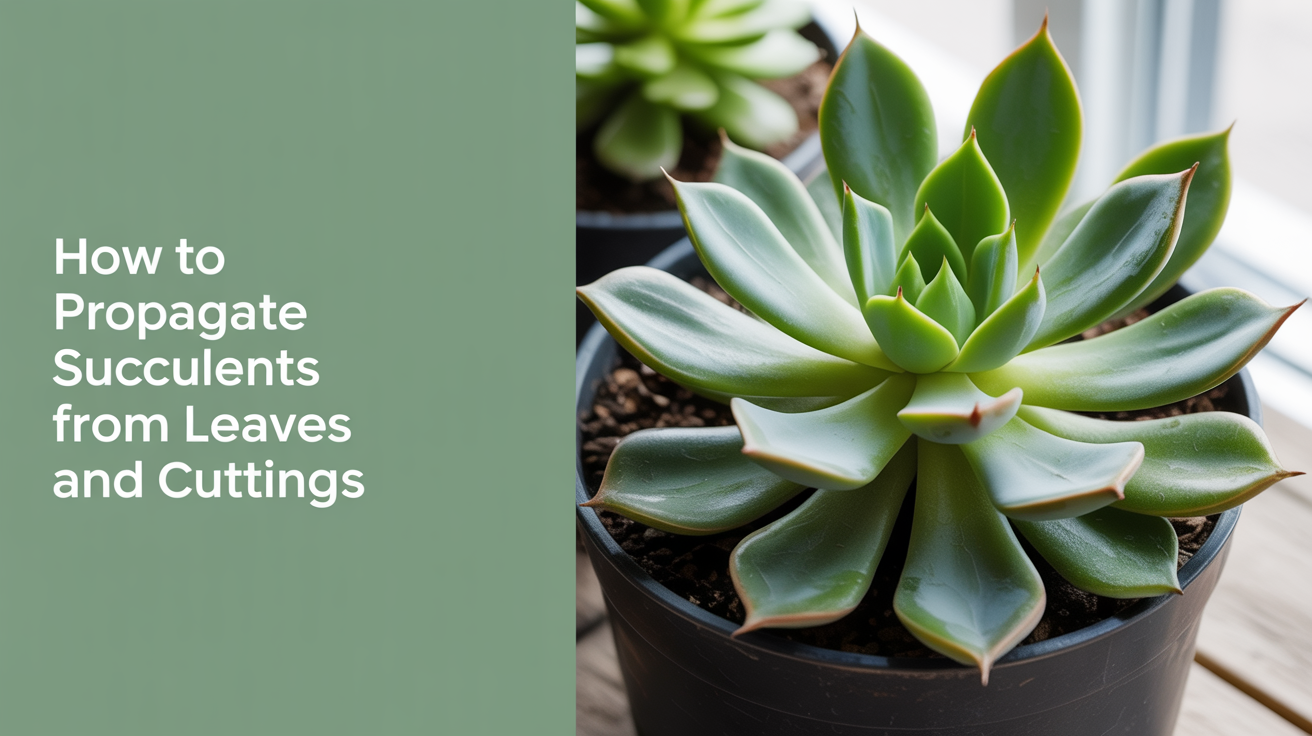
Succulents are some of the most rewarding plants to propagate. A single healthy Echeveria or Sedum can produce dozens of new plants from spare leaves, and stem cuttings root fast enough that you can have a full tray of babies within a few weeks. Here's how to do it well, whether you're starting from a single fallen leaf or a trimmed stem.
Two Methods, Two Timelines
Succulent propagation splits into two main approaches: leaf propagation and stem cuttings. Both work, but they suit different situations.
Leaf propagation is slower (6–12 weeks to see a plantlet with roots) but scales easily. Pull a few leaves off a rosette-type succulent like Echeveria, Graptopetalum, or Pachyphytum, lay them on dry soil, and wait. It's almost passive once the leaves are set out.
Stem cuttings are faster and give you a larger plant sooner. Trim a stem 3–6 inches long from a leggy succulent, let it callus for a few days, then plant it. Genera like Sedum, Crassula, Kalanchoe, and Aeonium all propagate reliably this way. Rosette types can also be propagated by cutting the rosette head off a stretched stem.
One thing to know upfront: not every succulent propagates from leaves. Aloe and Haworthia, for example, don't produce viable plantlets from individual leaves the way Echeveria does. Stem cuttings or offsets are the right approach for those.
Leaf Propagation Step by Step
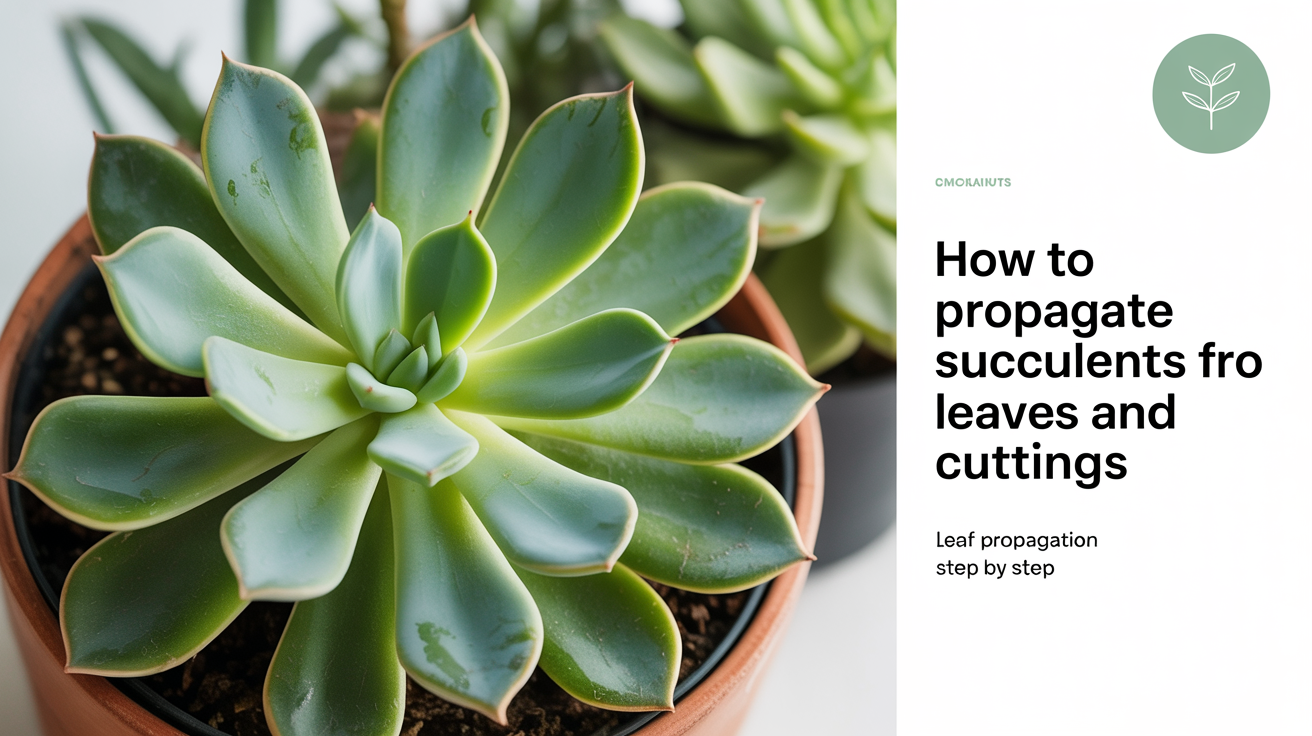
Picking and Removing Leaves
Choose leaves that are plump and unshriveled, from a plant that's been watered in the last week or two. Dry, papery leaves often fail.
Grip the leaf close to the stem and twist gently side to side while pulling. The goal is a clean snap at the base, with no part of the leaf left on the stem. A leaf torn in half or still attached at the base won't callus and root properly. Discard any leaf with a damaged base.
The Callusing Period
Lay the leaves on a dry surface, out of direct sun, for 1–3 days. The cut end should form a slight skin over it before it touches soil. Iowa State University Extension's guide to propagating succulents makes the same point for stem cuttings: skipping this callusing step and placing a fresh cut directly on damp soil invites rot before roots ever form.
Setting Them Out to Root
Place the callused leaves on top of a tray of dry, well-draining succulent mix. Don't bury them. Lay them flat or prop the cut end lightly on the soil surface.
Set the tray somewhere bright but not in harsh direct sun. A windowsill with morning light works well. At this point, don't water. The leaves have enough stored moisture to begin rooting on their own.
After 1–2 weeks, you'll start to see tiny pink or white roots emerging from the base. Within another 1–3 weeks, a small rosette of new leaves will appear. Once the plantlet has a few leaves of its own and the mother leaf has shriveled up, you can gently detach the mother leaf and pot the plantlet individually.
Watering Leaf Props
Once roots appear, mist or lightly water the soil every few days, just enough to keep the top inch of mix barely moist. Don't soak it. As the plantlet develops, gradually water more like you would a mature plant, letting the soil dry out between sessions.
Propagating from Stem Cuttings
Taking a Good Cutting
Use clean, sharp scissors or pruning shears. Cut 3–6 inches of healthy stem, ideally one with several sets of leaves. If the succulent has become leggy (long stem, leaves spaced far apart), that's a sign it's been reaching for light, but the stem is still usable for propagation.
Remove the lower 1–2 inches of leaves from the stem so there's a bare section to plant. Those removed leaves can go in a tray as leaf props if they came off cleanly.
Callusing the Cut End
Set the cutting on a dry surface for 2–5 days, with the cut end exposed to air. In a humid environment or during summer heat, 2–3 days is usually enough. The end should look sealed, not wet or green. This callus prevents rot when the cutting goes into soil.
Planting and Rooting
Fill a small pot with dry succulent or cactus mix, or make your own by combining standard potting soil with coarse perlite at roughly a 1:1 ratio. Insert the bare section of stem about 1–2 inches into the mix and firm the soil around it so the cutting stands upright.
Place the pot in bright indirect light. Don't water yet. Leave it for 5–7 days to encourage the roots to go searching. After that initial dry period, water sparingly, about once a week, letting the soil dry fully between waterings.
Roots typically establish within 2–4 weeks. You can check by giving the stem a very gentle tug. Resistance means roots have formed. Once rooted, treat it as you would a mature succulent.
Light and Environment During Propagation
Strong, direct midday sun can stress cuttings and leaf props before they've had a chance to root. Bright indirect light, or a spot with a few hours of direct morning sun, is a better environment.
Temperature matters too. Most popular succulents root fastest at 65–80°F (18–27°C). Propagating in a cold room in winter slows everything down considerably. If you're propagating in a dim winter environment, a grow light positioned 4–6 inches above the tray for 12–14 hours a day makes a real difference.
Quick Reference: Leaf Props vs. Stem Cuttings
| Leaf Propagation | Stem Cuttings | |
|---|---|---|
| Best for | Echeveria, Sedum, Graptopetalum, Pachyphytum | Sedum, Crassula, Kalanchoe, Aeonium, leggy rosettes |
| Time to roots | 2–4 weeks | 2–4 weeks |
| Time to usable plant | 6–12 weeks | 4–8 weeks |
| Callus time needed | 1–3 days | 2–5 days |
| Initial watering | None until roots visible | None for first 5–7 days |
| Main failure mode | Wet soil before callusing | Planting before callus forms |
Troubleshooting Common Problems
Leaves aren't producing roots after 4+ weeks. This usually means the base of the leaf was damaged during removal, or the leaf dried out too much before roots could form. Start fresh with a new batch.
Leaves are shriveling before plantlets appear. Some shriveling is normal. If the leaf collapses completely before producing a plantlet, it may have started in too dry a condition. Try misting the soil surface lightly every few days once roots appear.
Cuttings are rotting at the base. Almost always from planting before the callus fully formed, or watering too soon. Remove the rotted section, let it callus again on a fresh cut, and replant in dry mix.
The new rosette on a leaf prop is growing but the leaves look pale. More light, or introduce a diluted, low-nitrogen fertilizer once the plantlet is actively growing and has a few sets of its own leaves. Something like a 2-7-7 succulent fertilizer at quarter strength works well.
Propagation techniques vary by plant family, so if you're working with other species at the same time, it's worth checking out guides like how to propagate a snake plant using three different methods or exploring water propagation for tropical plants, which covers a completely different approach suited to softer-stemmed species.
Frequently Asked Questions
Can you propagate succulents in water?
Most succulents don't propagate well in water. They're adapted to dry conditions, and submerging the stem or leaf base tends to cause rot rather than rooting. Stick to dry or barely moist soil for best results. Water propagation works for many other houseplants (see our guide on water propagation step by step), but succulents aren't the right candidates.
How many leaves should I take at once?
Take as many as you can do cleanly. Each leaf is a gamble, and a success rate of 30–60% is normal. Starting with 15–20 leaves gives you a realistic shot at ending up with 6–12 healthy plantlets.
Why is my succulent leaf not callusing?
If the break at the base wasn't clean, the leaf may lack the tissue it needs to generate roots. Leaves with a torn or uneven base rarely callus properly. The other possibility is humidity. In a very humid room, a leaf can stay moist at the cut end and rot before it calluses. A well-ventilated spot speeds up the process.
When can I pot up a leaf prop plantlet?
Once the mother leaf has shriveled and the plantlet has at least 4–6 of its own leaves and visible roots, it's ready to go into its own small pot. Handle the roots gently during the move. Use dry succulent mix and wait a few days before the first watering to let any disturbed roots settle.
Do all succulents propagate the same way?
No. Rosette-forming genera like Echeveria and Graptopetalum are the classic leaf propagators. Aloe, Haworthia, and Gasteria don't produce plantlets from individual leaves reliably. For those, look for offsets (pups) around the base of the mother plant. Cactus propagation is different again, relying on pads or ribs depending on the species.