Propagation
How to Propagate a Snake Plant (Three Methods)
Learn how to propagate snake plant using division, leaf cuttings in soil, or water rooting. Step-by-step guide with timelines and troubleshooting tips.
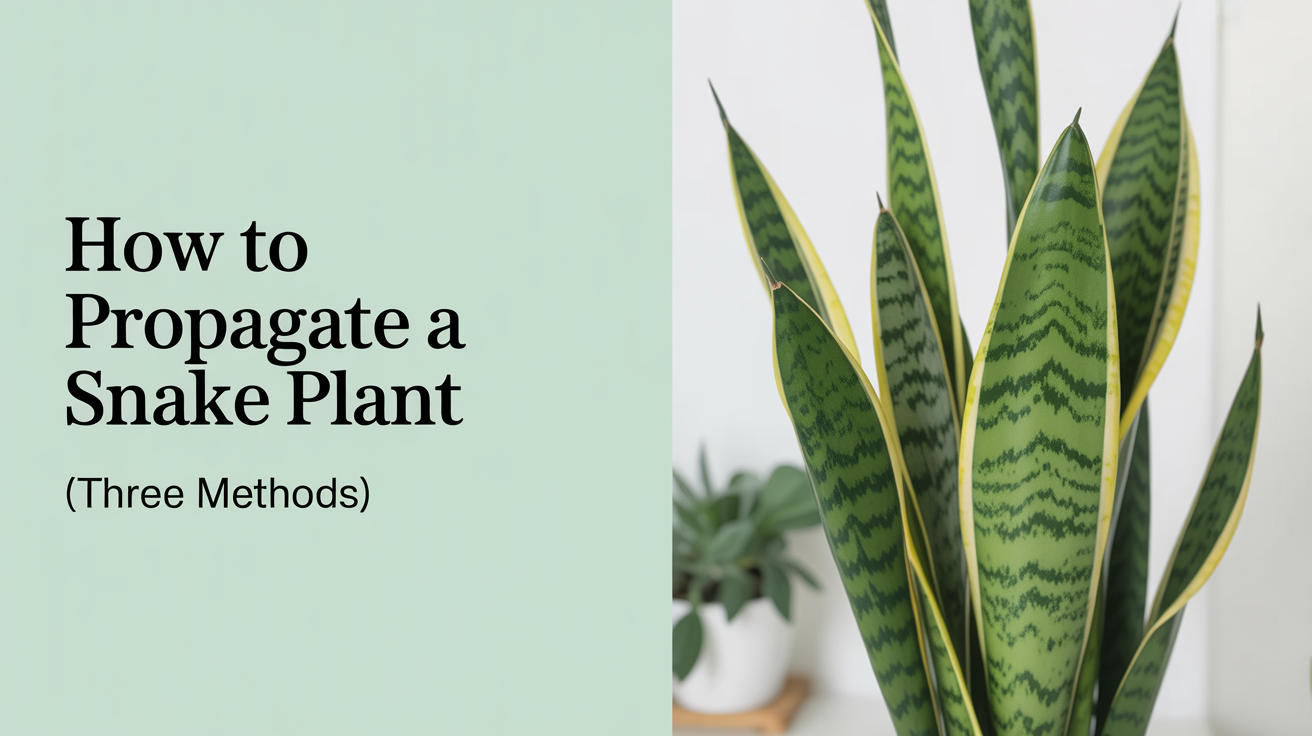
Snake plants (Dracaena trifasciata, formerly Sansevieria trifasciata) are among the easiest houseplants to multiply, a single healthy plant can produce dozens of new starts over its lifetime. There are three practical methods: division, leaf cuttings rooted in soil, and leaf cuttings rooted in water. Each has its own timeline and tradeoffs, and the right choice depends on what you want from the new plants and how much of the parent you're willing to sacrifice. NC State Extension's plant profile on Dracaena trifasciata lists division and stem cutting as the two standard propagation routes for the species, and notes the plant tolerates temperatures down to about 50°F and very low light, which is part of why cuttings are so forgiving to work with.
At a Glance
- Three methods exist: division (instant, preserves variegation), soil cuttings (4–8 weeks to root), and water cuttings (3–6 weeks to root).
- Only division passes on variegated patterns like 'Laurentii'; leaf cuttings of any kind revert to solid green.
- Roots form fastest between 65–85°F; below 60°F, rooting slows sharply and rot risk climbs.
- Overwatering, not cold or dim light, is the single fastest way to kill a cutting before it roots.
- Pups typically show 2–4 months after a cutting roots, don't judge success by root formation alone.
- Snake plant sap and leaf tissue are toxic to cats and dogs, keep trimmings and cuttings away from pets.
Which Method Should You Choose?
Before reaching for your knife, it helps to understand what each approach gives you.
| Method | Time to roots | Preserves variegation? | Effort |
|---|---|---|---|
| Division | Immediate (transplant-ready) | Yes | Medium |
| Leaf cuttings in soil | 4–8 weeks | No* | Low |
| Leaf cuttings in water | 3–6 weeks | No* | Low |
*Variegated cultivars like Dracaena trifasciata 'Laurentii' (yellow-edged) revert to solid green when propagated from leaf cuttings. Only division passes on the yellow margins. If keeping the look of a variegated plant matters to you, divide rather than cut.
Method 1: Division
Division is the fastest route to a full-sized, established plant. You're essentially splitting a crowded pot into two or more separate clumps, each with its own root system.
What you need
- A sharp, clean knife or pruning saw
- Fresh well-draining potting mix (a cactus/succulent blend works well)
- Pots sized to each division's root ball, snug fits root faster
- Rubbing alcohol or diluted bleach solution to sterilize the blade
Steps
- Water the parent plant the day before. Moist soil holds together better and causes less root tearing.
- Slide the plant out of its pot and brush away enough soil to see where the rhizomes connect.
- Identify natural separation points, you're looking for offshoots (pups) that have their own root clusters attached.
- Cut cleanly through the rhizome connecting the pup to the parent. A single confident cut is less damaging than sawing back and forth.
- Let the cut surfaces sit in open air for 30–60 minutes so they callous slightly. This small step reduces rot risk.
- Pot each division into fresh mix at the same depth it sat before. Don't bury the base of the leaves.
- Hold off on watering for 3–5 days. The roots need to seek moisture rather than sit in it while the cuts heal.
Divided snake plants typically look sulky for a week or two before settling in. That's normal, give them bright indirect light and resist the urge to overwater.
Worked example: A 10-inch pot with a dense clump of eight to ten leaves typically yields two to three divisions of two to three leaves each. Each division goes into its own 4-inch pot. Expect visible new growth (a fresh spear pushing up from the center) within 4–8 weeks if light and temperature are in range, faster in summer, slower from a fall or winter division.
Method 2: Leaf Cuttings in Soil
This is the most common propagation method and works well for solid-green varieties. You cut a leaf into sections, let them callous, then stick them in soil. Roots appear in 4–8 weeks; new pups emerge from the base of each cutting over the following months.
What you need
- A mature, healthy leaf (avoid yellowed or mushy sections)
- Clean, sharp scissors or a knife
- Perlite, or a mix of half perlite and half potting soil
- A small pot or tray
Steps
- Choose a leaf that's fully grown. Older leaves from the outer ring of the plant tend to root more reliably than young center growth.
- Cut the leaf into sections 3–4 inches (7–10 cm) long. You can get 5–8 cuttings from a single long leaf.
- Mark or remember which end is the bottom, cuttings inserted upside down won't root. Some people make a V-shaped notch on the bottom edge as a reminder.
- Set the cuttings on a tray in a dry spot for a few hours. The cut ends will form a slight skin.
- Push the bottom inch of each cutting into barely damp perlite or potting mix. Don't pack it tight.
- Place the tray somewhere with bright, indirect light. A north- or east-facing windowsill is fine.
- Water sparingly, once a week at most, just enough to keep the medium from going completely dry. Overwatering is the single fastest way to kill cuttings before they root.
Check for roots by giving a cutting a gentle tug after 4 weeks. If it resists, roots have formed. Pups, small new leaves growing from the base, usually appear 2–4 months after rooting.
Method 3: Leaf Cuttings in Water
Propagating snake plant in water lets you watch the roots develop, which is satisfying and also useful for checking progress without disturbing the cutting. The tradeoff is that water-rooted cuttings need a careful transition to soil, since the roots that form in water are structurally different from soil roots.
For a detailed walkthrough of the water propagation process in general, see our guide on how to propagate plants in water step by step, the same principles apply here.
Steps
- Cut leaf sections the same way as the soil method above, 3–4 inch pieces, bottom end identified.
- Place them in a glass or jar with about an inch of clean water covering the base. The cuttings should stand upright; prop them against the jar walls if needed.
- Set the jar in bright indirect light. Avoid direct sun, which warms the water and encourages rot.
- Change the water every 5–7 days. Stagnant water is a breeding ground for bacteria that will rot the bases before roots appear.
- Roots typically appear in 3–6 weeks, thin, white strands from the bottom of the cutting. Wait until the roots are at least half an inch long before moving to soil.
- When transplanting, pot into barely damp soil and ease into watering over the first two weeks. Water-grown roots are fragile and adapt better with slightly less moisture than they had in the jar.
Timing and Conditions That Actually Matter
Snake plant propagation isn't seasonal in a strict sense, these plants will root year-round in a warm home. That said, cuttings taken in spring or early summer root faster because the plant is in active growth and ambient temperatures are higher. Cuttings taken in winter can take twice as long, or stall entirely in a cold room.
Temperature is more important than season. Roots form best between 65–85°F (18–29°C). Below 60°F, rooting slows dramatically and rot becomes a bigger risk. Keep cuttings away from drafty windows in winter.
Light matters, too. Bright indirect light speeds rooting. A dark corner will work eventually, but "eventually" might mean four months rather than six weeks.
Propagation Timeline at a Glance
| Method | Ideal season | Weeks to first roots | Weeks to visible pup |
|---|---|---|---|
| Division | Any (spring/summer preferred) | 0 (roots already present) | 4–8 |
| Leaf cuttings, soil | Spring–summer | 4–8 | 8–16 more after rooting |
| Leaf cuttings, soil | Fall–winter | 8–16 | 16–24 more after rooting |
| Leaf cuttings, water | Spring–summer | 3–6 | 8–16 more after rooting |
| Leaf cuttings, water | Fall–winter | 6–10 | 16–24 more after rooting |
Common Problems and Fixes
Cuttings go soft and mushy at the base. Almost always too much water. Let the medium dry more between waterings and make sure the pot has drainage holes. If the mushy section is small, you can trim it off, let the cutting callous again, and restart.
No roots after 8 weeks. Check the temperature first, cuttings in a cool room often just need more time and warmth. Also confirm the cutting wasn't inserted upside down, which is more common than it sounds.
Roots formed but no pups after 3 months. This is normal. Pups are slow. As long as the cutting is firm and hasn't shriveled, keep waiting. Applying a diluted balanced liquid fertilizer (half the label rate, once a month during the growing season) can nudge things along.
The parent plant looks stressed after division. Give it a few weeks. Trim any leaves that go yellow at the base with clean scissors. Resume normal watering, don't overcompensate by watering more.
A division wilts and never perks back up. Check that the pup actually had roots attached when you cut it away from the parent. A leaf section separated without any root tissue behaves like a leaf cutting, not a division, and needs the 4–8 week timeline instead of an instant recovery.
If you're also growing other easy-to-propagate species, the technique for pothos cuttings follows a similar logic: clean cuts, the right medium moisture, and patience.
A Note on Snake Plant Toxicity
Dracaena trifasciata is toxic to dogs and cats. Its leaves contain saponins, and the ASPCA's toxicity listing for snake plant names nausea, vomiting, and diarrhea as the typical symptoms of ingestion. Keep propagation cuttings out of reach of pets, and dispose of trimmed leaf scraps in a closed bin. If you're adding a new plant to a home with animals, verify its safety with the ASPCA's plant toxicity database or your vet before bringing it home.
Frequently Asked Questions
Can I propagate a snake plant from a single leaf without cutting it into sections?
Yes. A whole leaf will root, but it takes longer and you get only one cutting from it. Sectioning the leaf into 3–4 inch pieces is more efficient, you get more potential plants and the shorter sections root faster than a 24-inch whole leaf.
Why did my variegated snake plant cuttings come out solid green?
Variegation in 'Laurentii' and similar cultivars is caused by chimeral tissue, the yellow margins exist in specific cell layers that don't carry over reliably into regenerated tissue from a leaf cutting. Only division preserves the pattern. This isn't a mistake; it's just how those cultivars work.
How long before a propagated snake plant is big enough to look like a proper plant?
Cuttings from leaf sections produce pups that typically reach 4–6 inches in their first season of active growth. A plant the size of the parent can take 2–4 years. Division gives you a full-sized plant immediately, which is why it's worth considering if you want results sooner. For propagating other succulents where size and speed matter, see our guide on propagating succulents from leaves and cuttings, the patience requirements are similar.
Can I propagate a snake plant in just perlite?
Yes, pure perlite works well for leaf cuttings, it drains fast enough that overwatering is harder to do. Keep it just barely damp and treat it the same as the soil method. Transplant into standard potting mix once pups appear.
What's the minimum leaf section length that will actually root?
Sections shorter than 2 inches tend to dry out before rooting or produce very weak pups. Three to four inches is a practical minimum. Longer sections (up to 5–6 inches) are fine too, there's no meaningful difference in rooting rate once you're past 2 inches.
Do I need rooting hormone for snake plant cuttings?
No. Snake plants root reliably without it, which is part of why the species is a popular beginner project. Rooting hormone can shave a little time off the process, especially on soil cuttings taken in cooler months, but it's an optional speed boost rather than a requirement.
Can a single leaf cutting produce more than one pup?
Yes. A single leaf section can push out two or three pups from its buried end over time, especially cuttings taken from a wide leaf. If you see multiple pups crowding one cutting, you can separate them once each has its own small root cluster, treating that separation like a mini-division.