Propagation
How to Propagate Plants in Water, Step by Step
Learn how to propagate plants in water with this step-by-step guide. Root cuttings of pothos, coleus, impatiens, and more in a jar.
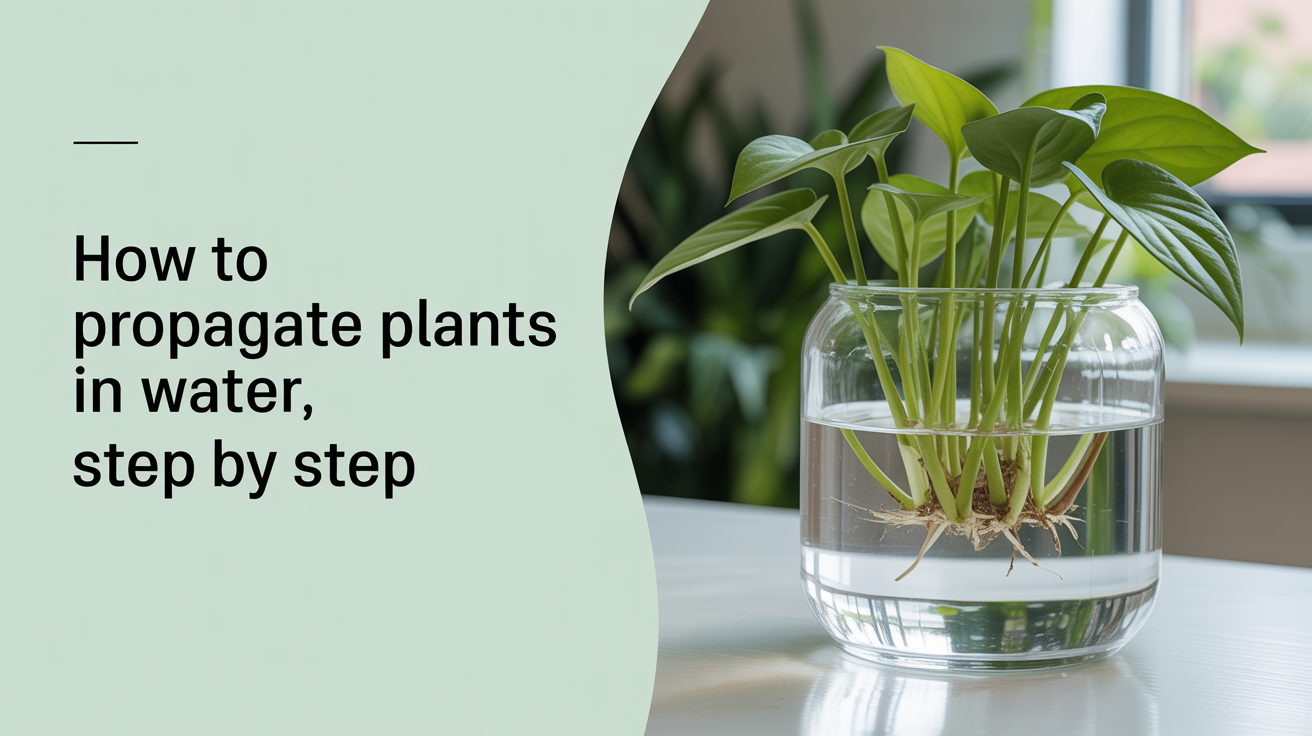
Water propagation is one of the most approachable ways to multiply your houseplants. You cut a stem, put it in a jar of water, wait a few weeks, and watch roots form right before your eyes. No rooting hormone required, no special soil mix, no guesswork about whether roots are developing, you can see exactly what's happening.
This guide covers which plants root easily in water, how to take a good cutting, and how to keep roots healthy so the transition to soil actually sticks.
At a Glance
- Aroids like pothos, philodendron, and monstera need a submerged node to root; a cutting with only leaves never will.
- Cut just below a node at a 45-degree angle, remove any leaves that would sit underwater, and use bright indirect light.
- Change the water every 5 to 7 days, or sooner if it clouds or smells, to keep oxygen up and bacteria down.
- Pot up when roots are 1 to 3 inches long. Waiting until roots are 4 inches or more makes the switch to soil harder, not easier.
- Succulents, cacti, and most woody plants root poorly or not at all in water, use a different method for those.
- Several common water-rooting favorites, including pothos and philodendron, are toxic to cats and dogs if chewed or ingested.
Which Plants Root Well in Water
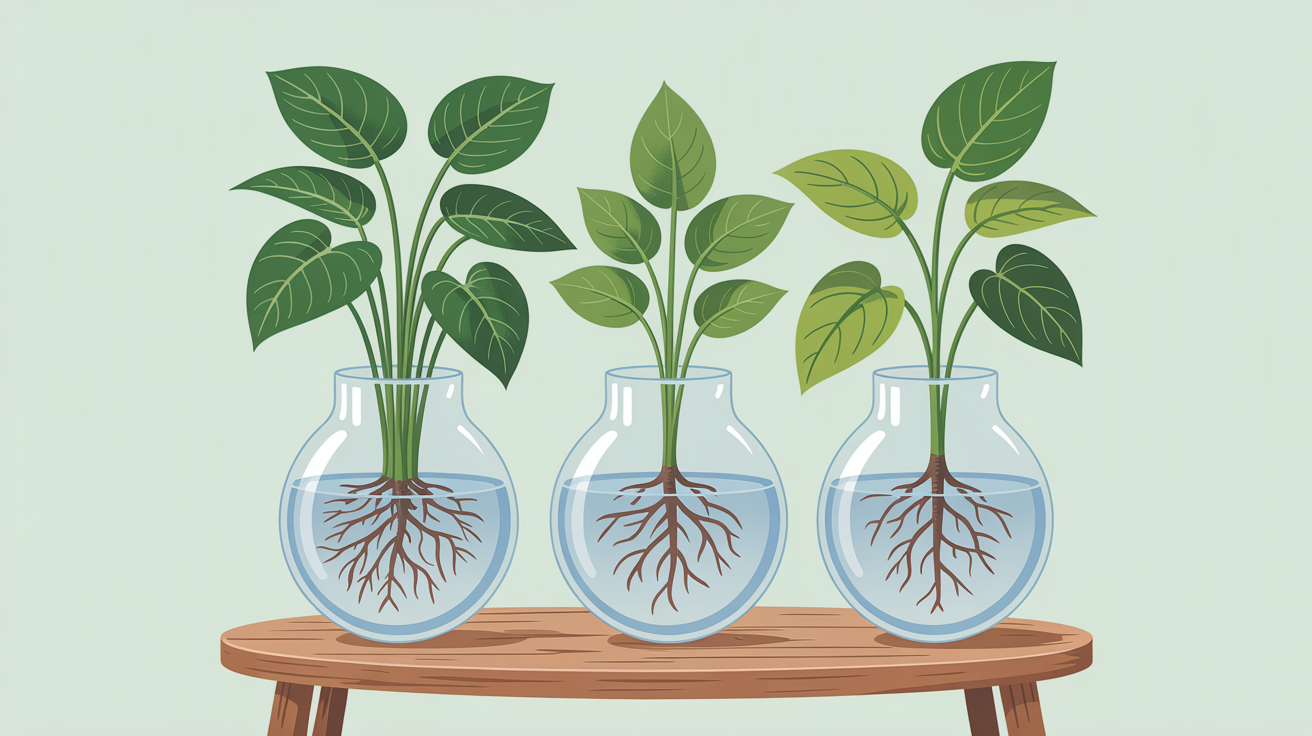
Not every plant cooperates. Some species root so reliably in water that they've become the standard recommendation for beginners; others rot before roots ever appear.
Reliable water rooters:
| Plant | Rooting time | Notes |
|---|---|---|
| Pothos (Epipremnum aureum) | 1-2 weeks | Almost foolproof; roots from any node |
| Heartleaf philodendron | 1-2 weeks | Same technique as pothos |
| Coleus | 1-2 weeks | Roots visible in as little as 5 days in warm weather |
| Tradescantia | 1-2 weeks | Both purple and green varieties work |
| Swedish ivy | 2-3 weeks | Best in bright indirect light |
| Impatiens | 1-2 weeks | Good option for seasonal cuttings |
| Monstera deliciosa | 4-8 weeks | Needs a node; larger stems take longer |
| Snake plant (Dracaena trifasciata) | 6-10 weeks | Slow but works; roots form near cut end |
| Chinese evergreen | 3-5 weeks | Tolerates low light during rooting |
| African violet | 4-8 weeks | Use petiole cuttings; keep leaves dry |
Plants that resist water rooting: Succulents and cacti prefer to callous and root in dry or barely moist substrate. Forcing them into water almost always leads to rot. Woody plants like fiddle-leaf figs can root in water with patience, but success rates are lower than in sphagnum moss. Rooting hormone doesn't fix this, a rooting hormone speeds up root initiation on a cutting that's already suited to water, it doesn't make an unsuited species tolerate a submerged cut.
For a detailed walkthrough on one of the easiest species to start with, see our guide on propagating pothos from cuttings.
What You'll Need
The supply list is short:
- A clean glass, jar, or vase (clear glass lets you monitor root growth)
- Pruning shears or a sharp knife, cleaned with rubbing alcohol
- Room-temperature water (tap water that has sat out for an hour works fine; chlorine dissipates)
- Optional: a small amount of liquid fertilizer at 1/4 strength, added once roots reach 1 to 2 inches
Avoid containers that are too wide, the cutting should be supported by the rim so the cut end hangs in water without the leaves submerging. Mason jars, propagation stations, and even clean condiment jars all work. If you're rooting several cuttings at once, a multi-cavity propagation station keeps each stem separated without needing a windowsill full of individual jars.
A sharp blade matters more than most beginners expect. NC State Extension's guide to propagating houseplants points out that a dull blade crushes stem tissue instead of slicing it cleanly, and crushed tissue restricts the water uptake a fresh cutting depends on before it has any roots of its own. A clean cut heals and roots faster than a ragged one, even on a plant as forgiving as pothos.
How to Take a Good Cutting
The cutting quality determines a lot. A sloppy cut from the wrong spot will either fail to root or produce a weak plant.
Find the Right Node
Roots emerge from nodes, the bumpy joints where a leaf meets the stem. For most aroids (pothos, philodendrons, monsteras), you need at least one node submerged. A section of stem with only leaves and no node will never root.
On pothos and philodendrons, nodes are spaced evenly along the stem and are easy to spot. Monstera nodes are larger and often have an aerial root already starting to form; if you see that brown nub, you've found the right spot.
Cut Technique
Use clean, sharp shears. Cut just below a node at a 45-degree angle, this gives a larger surface area for root development and prevents the flat-cut end from sitting flush against the container bottom. For most plants, a cutting 4 to 6 inches long with 2 to 4 leaves is ideal, which lines up closely with the 3 to 6 inch stem cuttings general extension guidance recommends for houseplants overall.
Remove any leaves that would sit below the waterline. Submerged leaves decompose quickly and foul the water, encouraging bacterial growth that slows rooting. As a rule of thumb, strip the lower third of the cutting's foliage before placing it in the jar, that's usually enough to clear the waterline without removing so much leaf area that the cutting can't photosynthesize while it roots.
Let the Cut End Callous (Optional, but Useful)
For plants prone to stem rot, certain philodendrons, African violets, leaving the cutting on a clean surface for 30 to 60 minutes before placing it in water lets the wound begin to seal. This is a minor step but reduces the risk of the cut end going mushy before roots form.
Setting Up and Monitoring Your Cuttings
Light and Temperature
Place cuttings in bright indirect light. Direct sun heats the water, promotes algae, and can burn unrooted cuttings that aren't yet pulling moisture through a root system. A north or east-facing windowsill is often ideal; a few feet back from a south window works too.
Temperature matters more than most guides acknowledge. Most houseplant cuttings root fastest between 65°F and 80°F (18-27°C). Below 60°F, rooting slows significantly, sometimes stalling for weeks. If your space is cool, a heat mat set to 72°F underneath the jar can cut rooting time noticeably. A windowsill that gets cold at night in winter, even one that's bright during the day, is one of the more common reasons a cutting sits for a month without visible progress.
Water Changes
Change the water every 5 to 7 days, or sooner if it turns cloudy or develops an odor. Stagnant water becomes oxygen-depleted and bacterial, which kills developing roots. Fresh water also keeps dissolved oxygen levels up, which roots need to grow.
When you change the water, rinse the container and gently rinse the developing roots under room-temperature water. Don't scrub them, the fine root hairs are fragile.
What Healthy Roots Look Like
New roots are typically white or cream-colored, fine-textured, and branching. On pothos, they emerge from the node itself and spread outward quickly. On snake plants, they're shorter and thicker, developing from the cut end of the leaf section.
Brown or black roots that feel mushy indicate rot, usually from stagnant water, too little light, or a temperature that's too cold. Trim affected roots with clean scissors and refresh the water. If more than half the root mass is affected, the cutting may not recover.
Normal vs. Trouble: A Quick Reference
| What you see | Likely meaning | What to do |
|---|---|---|
| Fine white roots, 1/4 inch or less, appearing at the node | Normal early rooting | Keep changing water on schedule |
| Roots branching and thickening after 2+ weeks | Healthy progress | Continue; plan for potting up soon |
| Water cloudy within 2-3 days of changing | Bacterial buildup, often from a decomposing leaf underwater | Remove any submerged leaves, rinse the jar, change water |
| Roots brown, soft, or slimy | Rot, usually from cold, stale water, or low light | Trim affected roots, move to warmer/brighter spot, change water |
| Stem soft or mushy at the cut end | Stem rot, often unrecoverable | Take a fresh cutting from healthy tissue above the damage |
| No roots after 3+ weeks, stem still firm | Slow conditions, not necessarily failure | Check temperature and light before assuming the cutting failed |
Transitioning Rooted Cuttings to Soil
This step trips up a lot of people. Water-rooted plants have developed "water roots", slightly different in structure from the roots that form in soil. Moving them too late (roots more than 3 to 4 inches long) makes the transition harder because the plant has adapted strongly to a water environment.
When to Pot Up
Transfer cuttings to soil when roots are 1 to 3 inches long and look healthy. Don't wait until the jar is a tangle of long roots, the longer you wait, the more shock the plant experiences when its root structure has to adapt to a drier substrate.
The Transition Process
- Prepare a small pot (3 to 4 inches is usually right) with a well-draining mix, a standard peat or coco-based potting soil with added perlite works well.
- Make a hole in the center of the soil large enough to accommodate the roots without folding or cramping them.
- Place the cutting, firm the soil gently around it, and water thoroughly until water drains from the bottom.
- For the first 2 to 3 weeks, keep the soil slightly more moist than you normally would. This bridges the gap while the plant grows true soil roots.
- Place the newly potted cutting in the same bright indirect light it had during rooting. Avoid direct sun for the first month.
Expect some wilting in the first week. This is normal, the plant is adjusting. As long as the stem stays firm and green, it will recover. If the stem goes soft at the soil line, that's stem rot, and the cutting is likely lost.
A Gentler Alternative: Half-and-Half
Some growers ease the transition by mixing water with a small amount of potting soil or transferring the cutting first into perlite. Perlite holds moisture similarly to water but forces the plant to develop soil-adapted roots. After 2 to 3 weeks in perlite with regular watering, move to standard potting mix. This intermediate step reduces transplant shock noticeably in slower-rooting species like monstera.
Propagating Succulents and Snake Plants: The Exception
Succulents and cacti need a completely different approach, see our guide on propagating succulents from leaves and cuttings for the full method.
Snake plants are worth a separate note because they sit in the middle: they can root in water, but it's slow (often 8 to 10 weeks) and the cuttings are unusually prone to rot. If you're propagating a snake plant, keeping the water level low (just the bottom inch of the cutting submerged) and refreshing it every 3 to 4 days reduces rot risk. For more detail on all three snake plant propagation methods, including division and pups, see how to propagate a snake plant.
Troubleshooting Common Problems
No roots after 3 weeks: Check temperature first. If the room is below 65°F, rooting stalls. Also confirm the node is submerged, a cutting with only leaf petioles in the water won't root.
Slimy stems: Usually a sign of water that isn't being changed frequently enough, or a cutting taken from an unhealthy parent plant. Remove the affected cutting, trim back to healthy tissue if possible, and restart with fresh water.
Algae in the jar: Common in clear glass near sunny windows. Switch to a colored or opaque container, or move the setup further from direct light. Algae won't necessarily kill the cutting but it competes for oxygen and makes it harder to monitor root health.
Leaves yellowing: Some leaf drop during propagation is normal, especially on lower leaves. If the cutting loses more than half its leaves before roots form, the cutting is stressed, usually from too much direct light or water that's too cold.
Roots formed but plant is wilting badly after potting: The soil may be too dry. Keep it consistently moist (not soggy) for the first two weeks and mist the leaves lightly once a day. A humidity dome or a clear plastic bag loosely draped over the pot can help retain moisture during the first week.
Multiple cuttings in one jar, only some rooting: This usually means the slower cutting was taken from a weaker section of the parent plant or wasn't submerged at the node the same way the others were. Check its placement, and if the other cuttings' roots are getting long enough to pot up, separate the slow one into its own jar rather than holding the whole batch back.
A note on plant safety: Many popular houseplants are toxic to cats, dogs, and people if ingested. Pothos and philodendrons, for example, contain calcium oxalate crystals, and the ASPCA's toxic plant page for pothos lists oral irritation, drooling, vomiting, and difficulty swallowing as the symptoms of ingestion. If you're propagating in a home with pets or small children, verify the safety of each species before placing cuttings where they can be reached. The ASPCA's toxic and non-toxic plant database is a reliable reference, and it's searchable by common name if you're not sure what your plant is called botanically.
Frequently Asked Questions
Can I add rooting hormone to water propagation?
Liquid rooting hormones (indole-3-butyric acid in diluted form) can be added to the water, though they're not necessary for species that root readily. Use them at the lowest recommended concentration, too much can inhibit rather than promote root development. For pothos, tradescantia, and coleus, skip it; they root fine without it.
How long can I leave a cutting in water before it needs to go into soil?
Technically indefinitely, some people grow pothos permanently in water. But for plants you intend to grow in soil long-term, potting up within 4 to 6 weeks of rooting gives the best results. The longer a cutting stays in water, the more difficulty it has adapting to soil afterward.
Why are my roots brown and slimy instead of white?
Brown, slimy roots are usually caused by one of three things: water that isn't being changed often enough, a bacterial bloom from decomposing leaf material that fell into the water, or temperatures that are too cold. Change the water immediately, trim back affected roots, and adjust conditions. If the stem itself feels soft, the cutting has probably rotted at the base and won't recover.
Do I need to use filtered or distilled water?
Tap water works for most plants. If your tap water is heavily chlorinated, letting it sit uncovered for an hour before use allows chlorine to off-gas. Fluoride is harder to remove, but most houseplants tolerate it at the levels found in municipal water. Plants especially sensitive to fluoride (spider plants, dracaenas) may show brown leaf tips over time, but this is a slow, cumulative effect, it won't affect propagation.
Can I propagate multiple cuttings in the same container?
Yes, though it's easier to monitor individual cuttings in separate jars, especially when learning. In a shared container, one rotting cutting can foul the water for the others. If you combine cuttings, check them daily and remove any that show signs of stem rot immediately.
Will a cutting root faster if I feed it fertilizer right away?
No, and it can backfire. A cutting without roots has no way to take up nutrients from the water, so early fertilizer just raises the salt concentration around the cut end and can slow or damage the rooting process. Wait until roots are at least 1 to 2 inches long before adding a very dilute liquid fertilizer, and even then, a quarter strength is plenty.
Is it normal for a cutting to grow roots but no new leaves for weeks?
Yes. Most cuttings put energy into roots first and only start visible top growth once the root system can reliably support it. A cutting can look static for several weeks after rooting while it's actually building out its root mass below the waterline or soil line. As long as the existing leaves stay green and the stem stays firm, there's no cause for concern, new growth typically follows within a month of potting up.