Propagation
How to Take a Healthy Stem Cutting
Learn how to take a stem cutting correctly, including where to cut, the node vs internode difference, and which plants root fastest from this method.
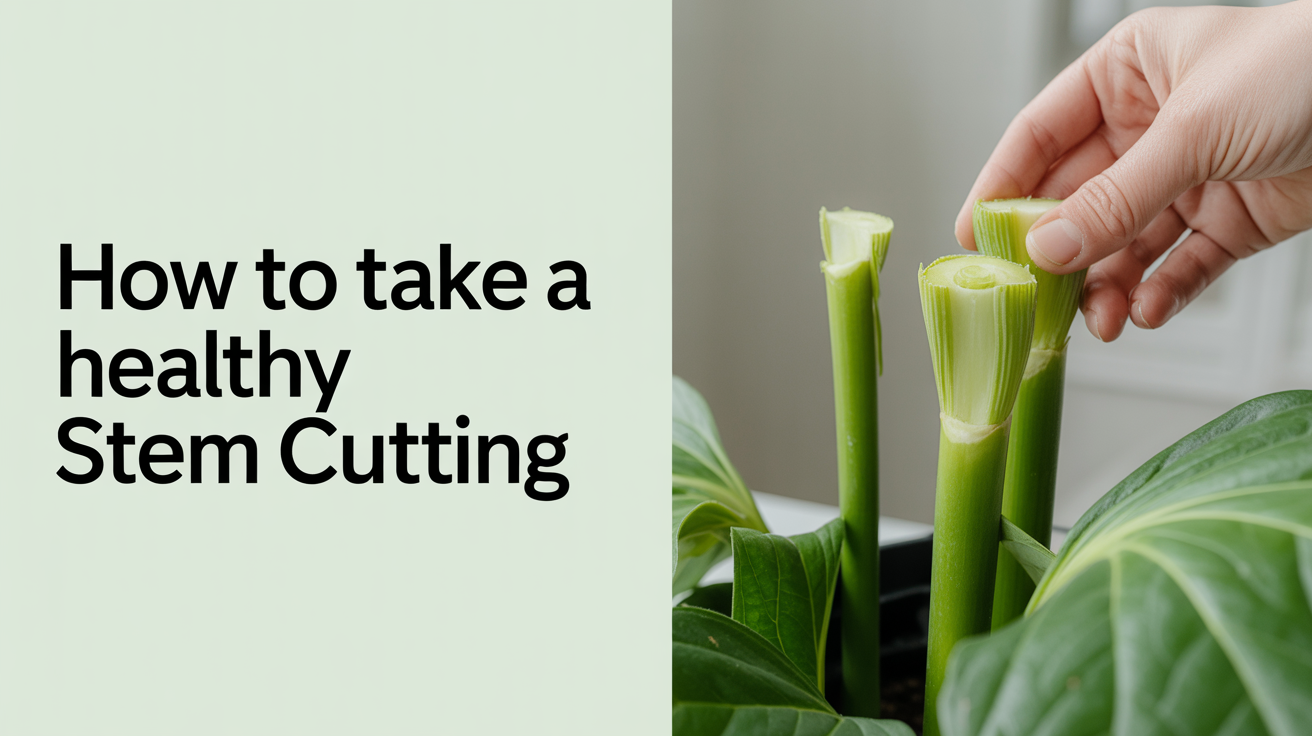
A stem cutting is one of the fastest ways to turn one plant into several, and the technique is simpler than most guides make it sound. Cut just below a node, make sure the cutting has at least one healthy leaf, and use a sharp, clean blade. The details below will help you choose the right stem, make the right cut, and avoid the mistakes that cause cuttings to rot or stall before roots ever form.
At a Glance
- Every stem cutting needs at least one node, the swollen point where a leaf attaches. Roots form there, not from bare internode tissue.
- Aim for a 4 to 6 inch cutting with two nodes and two to three healthy leaves. That gives the plant a backup node and enough leaf mass without overloading it.
- A dull or dirty blade crushes cells and invites rot. Wipe your blade with rubbing alcohol before cutting and between plants.
- Most soft-stemmed tropicals (pothos, philodendron, tradescantia) root readily without rooting hormone. Succulents need a 24 to 48-hour dry callus period instead.
- Change water every five to seven days for water propagation, and pot up before roots pass about 2 to 3 inches, since longer roots break easily during transplanting.
- Warm temperatures (68 to 79°F) and bright indirect light speed rooting more reliably than any additive or gadget.
What Makes a Stem Cutting Work
A stem cutting succeeds because it contains meristematic tissue, the plant cells responsible for generating new roots. Those cells are concentrated at the node, the bump or joint where a leaf attaches to the stem. Without a node, a cutting rarely roots on its own.
Node vs Internode
The node is the swollen point on a stem where leaves, aerial roots, or side shoots emerge. The internode is the smooth stretch of stem between two nodes. Your cut needs to land below a node so that node is included in the cutting, giving it the rooting tissue it needs.
On a pothos or heartleaf philodendron, nodes are obvious little nubs, often with a short aerial root already poking out. On a monstera, each node is a clearly defined joint. On basil or a fittonia, nodes appear wherever leaves attach. The rule holds across species.
What a Healthy Cutting Looks Like
A good cutting comes from a stem that is actively growing, not one that has been struggling. Look for:
- Firm, turgid stem (not soft or wrinkled)
- At least two to three healthy, full-sized leaves
- No yellowing, spots, or mushy sections
- No signs of pests, especially along leaf undersides and stem joints
- New growth somewhere on the plant in the past month or two, a sign it's actively growing rather than dormant or stressed
Avoid the oldest, woodiest stems on a plant. They can root, but they take longer and are more likely to fail than young, flexible growth from the current season.
The Right Tools for a Clean Cut
Blade quality matters more than most people expect. A dull blade crushes plant cells instead of slicing through them cleanly, and crushed tissue is slower to heal and more prone to bacterial infection.
Use a sharp pair of pruning snips, a single-edge razor blade, or a clean craft knife. Wipe the blade with rubbing alcohol before you start and between cuts if you are working with multiple plants. This takes thirty seconds and prevents you from unknowingly transferring fungal spores or bacteria from one plant to another. A blade that's visibly nicked or pitted is worth retiring; it will tear tissue no matter how well you clean it.
Rooting hormone is not required for most houseplants. Pothos, philodendrons, tradescantias, monsteras, and most soft-stemmed tropicals root readily in water or moist soil without any powder or gel. Clemson HGIC's guide to propagation by cuttings recommends making the cut at a node and dipping the cut end in rooting hormone powder as standard practice for many ornamentals, and that step can speed things up meaningfully for slower-rooting species like hoyas. For easy tropicals, though, skip it unless you have a specific reason to use it.
How to Take the Cutting
Choose the Stem
Pick a stem with at least two nodes. The cutting will root at one node while the other stays above the rooting medium and supports the leaves. A cutting with only a single node can work, but having two gives you a backup if the lowest one rots.
A good cutting length is roughly 10 to 15 cm (4 to 6 inches). Iowa State University Extension's guide to stem tip cuttings recommends a similar range, 3 to 6 inches with at least two nodes, for houseplants like dracaena, philodendron, and English ivy. Longer cuttings have more leaf mass, which means higher water demand before roots are established. Shorter cuttings are easier to keep hydrated and generally root just as fast.
Make the Cut
Position the blade about 3 to 5 mm (roughly 1/8 inch) below the node. Cut at a slight angle, which increases surface area and prevents water from pooling on the cut end. One firm, confident stroke produces a cleaner edge than sawing back and forth.
Remove any leaves from the bottom portion of the stem, leaving the lowest one or two nodes bare. Submerging leaves in water or burying them in soil is a fast way to invite rot. Strip those leaves off cleanly at the stem; do not leave a stub. The Clemson HGIC guide notes a similar leaf-reduction step for cuttings with larger leaves, cutting remaining leaves in half to reduce moisture loss while roots are still forming, which is worth doing on any cutting with big, thin foliage even if you're keeping the leaf rather than removing it entirely.
If your cutting comes from a large-leafed plant (monstera, split-leaf philodendron), remove all but one or two leaves to reduce the moisture load while roots are still developing. Full-sized leaves on a rootless cutting are drawing water the plant cannot yet replace.
Let It Callus (Succulents Only)
Most tropical houseplants can go straight into water or soil after cutting. Succulents and cacti are the exception. Let those cuttings sit on a dry surface at room temperature, out of direct sun, for 24 to 48 hours before placing them in any medium. This allows the cut end to dry and form a protective callus, which reduces rot risk considerably. For water and soil propagation of tropical species, no callus period is needed. Full details on the leaf and cutting methods for succulents are in our guide to propagating succulents from leaves and cuttings.
Water vs Soil: Where to Root Your Cutting
Both methods work reliably. The choice mostly comes down to how much you want to monitor the process.
Water Propagation
Drop the prepared cutting into a glass or jar with enough water to cover the bare node but not the leaves. Keep the jar somewhere with bright indirect light and change the water every five to seven days to prevent bacterial buildup. Roots typically appear within one to four weeks, depending on the species and the season. The Iowa State guide recommends changing water even more frequently for some species, one to two times a week, and stresses never letting the water level drop low enough to expose developing roots to air, since that can dry out and kill the fragile new root tips.
Move water-rooted cuttings into soil before the roots get too long. Roots beyond 5 to 7 cm (2 to 3 inches) are brittle and prone to breaking during transplanting, which sets the plant back. A full walkthrough of the water-rooting process is in our guide to propagating plants in water step by step.
Soil Propagation
Insert the bare node section of the cutting about 2 to 4 cm (1 to 1.5 inches) into moist potting mix. A well-draining, airy mix works better than dense soil. Equal parts standard potting mix and perlite is a reliable combination. Water lightly after planting, then let the top layer of soil dry slightly between waterings. Constantly wet soil encourages rot at the cut end.
Cover the cutting loosely with a clear plastic bag or humidity dome to reduce moisture loss from the leaves while roots form. Remove the cover for an hour each day to let fresh air circulate and prevent mold.
Temperature and Light for Rooting
Cuttings root faster in warm conditions. Aim for 20 to 26°C (68 to 79°F). Keep them away from drafty windows or air conditioning vents, since temperature swings slow rooting noticeably.
Bright indirect light is ideal. Direct sun through glass dehydrates a leafy cutting before roots exist to absorb water. A north or east-facing windowsill, or a spot set back about a meter from a brighter window, works well for most species.
Plants That Root Especially Well From Stem Cuttings
Some houseplants propagate from stem cuttings more reliably than others. The table below gives a rough sense of timing and preferred medium so you know what to expect before you start.
| Plant | Typical rooting time | Best medium | Notes |
|---|---|---|---|
| Pothos (Epipremnum aureum) | 1-2 weeks | Water or soil | Roots from almost any node; very forgiving of beginner mistakes |
| Heartleaf philodendron | 1-2 weeks | Water or soil | Behaves almost identically to pothos |
| Tradescantia (spiderwort) | Under 1 week | Water | Soft stems root fast enough to make a good confidence-builder |
| Coleus | About 1 week | Water | Fast in warm conditions; watch for leggy growth if light is low |
| Begonia | 1-3 weeks | Water or moist potting mix | Susceptible to stem rot if kept too wet in soil |
| Sweet basil and other soft herbs | Under 2 weeks | Water | Move to soil promptly once rooted; herb roots stay fragile longer |
| Hoya | 4-8 weeks | Moist sphagnum or soil | Slower; rooting hormone genuinely helps here |
| Monstera | 4-8 weeks | Moist sphagnum or soil | Needs a node with a visible aerial root for best results |
| Rubber tree (Ficus elastica) | 4-8 weeks | Moist sphagnum or soil | Sap can seal the cut; wipe it away before placing in medium |
Hoyas, monsteras, and rubber trees also root from stem cuttings but take longer than the fast tropicals above, and tend to do better in moist sphagnum or soil than in plain water. Patience matters more with these than technique.
Frequently Asked Questions
Does every cutting need a node to root?
For stem cuttings, yes. A cutting without a node is missing the tissue that generates roots and will not establish. The exception is leaf propagation, where some plants (sedums, echeverias, certain sansevierias) can produce plantlets from a single leaf placed on soil. That is a different technique from stem cutting propagation and does not apply to most tropical houseplants.
Where do I cut if I also want to keep the parent plant looking tidy?
Cut just above a node on the parent plant. That leaves the node on the parent, which pushes out a new side shoot and makes the plant bushier rather than leaving a bare stub. The cutting gets the node below the cut. Both plant and cutting benefit from this placement.
Can I take a cutting the same week I bought the plant?
It is possible, but better to wait. A newly purchased plant is adjusting to different light, humidity, and temperature. Taking cuttings during that transition adds stress. Give it two to four weeks to settle before cutting into it, and you will generally see faster rooting as a result.
Why did my cutting rot instead of root?
The most common causes are submerged leaves decaying and spreading bacteria, water that was not changed often enough, too little light, or a dull or dirty blade. Check which factor applied and adjust on the next attempt. Most cuttings that rot do so because of standing moisture around the stem, not because the plant species is inherently difficult.
How do I know when a water-rooted cutting is ready to pot up?
Look for roots that are 3 to 5 cm (1 to 2 inches) long, white or pale yellow, and beginning to branch. At that stage the cutting has enough root system to support itself in soil. Waiting for longer roots is fine, but anything beyond 7 to 8 cm (3 inches) becomes fragile and harder to transplant without damage.
Can I take more than one cutting from the same plant at once?
Yes, as long as you're not removing more than a third of the plant's total foliage at once. Taking a handful of cuttings from different stems spreads the stress across the plant rather than concentrating it, and gives you backups if one or two cuttings fail to root. Wipe the blade between cuts on the same plant too, since a cutting with early rot symptoms can still transfer bacteria to a clean stem.
Is tap water safe for water propagation, or does it need to be filtered?
Plain tap water works for the vast majority of houseplants. If your water is heavily chlorinated or very hard, letting it sit out for 24 hours before use allows some chlorine to dissipate, which a few sensitive species appreciate. It's a minor refinement, not a requirement, and most pothos, philodendron, and tradescantia cuttings root just fine straight from the tap.