Plant Care
Overwatering vs Underwatering: How to Tell the Difference
Learn the signs of overwatering vs underwatering so you can diagnose your houseplant fast and give it exactly what it needs to recover.
Yellow leaves, drooping stems, soil that looks either soaked or bone dry. Most houseplant problems trace back to water, and the tricky part is that overwatering and underwatering can look almost identical from a distance. Both cause wilting. Both cause yellowing. Both will kill a plant if left long enough.
The good news: the symptoms are actually quite different once you know what to look for. A few simple checks will tell you which direction you've gone wrong.
At a Glance
- Both problems cause wilting and yellowing, which is why they're so often confused from across the room.
- The soil test settles it fast: wet, cool, clumping soil points to overwatering; dry, crumbly, shrunken soil points to underwatering.
- Overwatered leaves tend to go soft and yellow from the bottom up; underwatered leaves tend to go crisp and brown at the tips and edges first.
- Wilting despite damp soil is the clearest single sign of root rot from overwatering, since damaged roots can't move water to the leaves.
- Overwatering fixes center on drying out and improving drainage; underwatering fixes center on a thorough soak, sometimes from the bottom up.
- When in doubt, unpot the plant and look at the roots directly. Firm and pale means healthy; soft, dark, or slimy means rot.
Overwatering vs Underwatering: Symptom Comparison
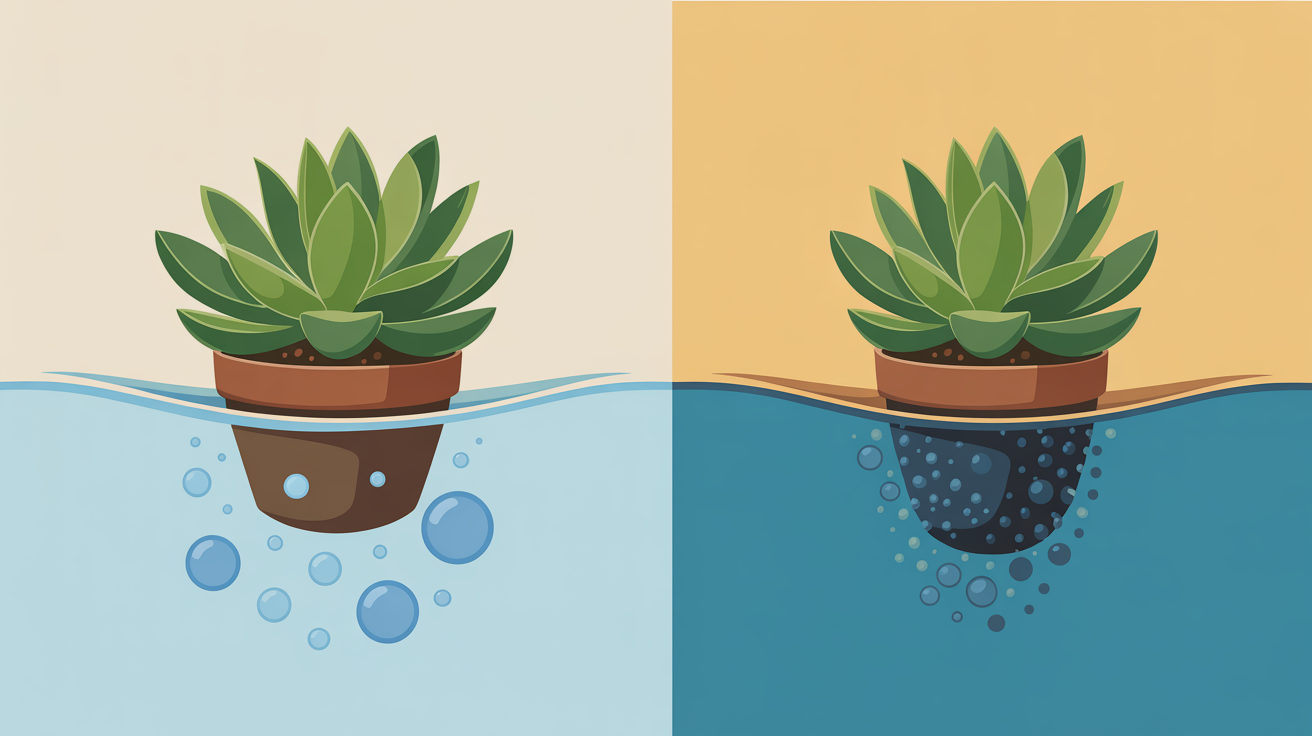
| Symptom | Overwatering | Underwatering |
|---|---|---|
| Leaf texture | Soft, puffy, sometimes translucent | Crispy, papery, brittle |
| Where yellowing starts | Lower leaves first, moving up | Can appear anywhere, often with brown crisp edges |
| Soil condition | Wet, cool, clumps together | Dry, crumbly, may pull from pot edges |
| Wilting pattern | Wilts even though soil is damp | Wilts and perks back up within hours of watering |
| Smell | Sour, musty, or rotten from the pot | No unusual smell |
| Pests commonly present | Fungus gnats, surface mold | Spider mites (which prefer dry conditions) |
| Pot weight | Noticeably heavy | Noticeably light |
Signs of Overwatering
Overwatering is the more common of the two problems, especially with beginners. Plants sitting in wet soil for too long lose access to oxygen at the roots, which leads to root rot and a cascade of symptoms that look a lot like drought stress. Clemson Cooperative Extension's houseplant disease factsheet notes that root and stem rot fungi cause noticeable wilting along with browning or blackening at the soil line, and that overwatering is the single biggest risk factor for these infections taking hold.
Yellowing Leaves That Feel Soft
Overwatered leaves tend to yellow from the bottom of the plant upward. They often feel soft, almost puffy, and may drop before they fully dry out. If multiple lower leaves are going yellow simultaneously and the soil has been consistently moist, overwatering is likely the cause.
Wilting Despite Wet Soil
This is the clearest diagnostic clue. Stick your finger two inches into the soil. If the plant is wilting but the soil still feels damp or wet, the roots are struggling, not thirsty. Rotted roots can no longer move water to the leaves regardless of how much moisture surrounds them. The plant wilts anyway, and watering more at this point only makes things worse.
Mushy Stems at the Base
Press gently at the base of the stem where it meets the soil. Healthy tissue should feel firm. A mushy or discolored base is a sign that rot has moved up from the roots into the stem itself, which is a more serious stage and often means a larger portion of the plant needs to be cut away to save what's left.
Mold, Fungus Gnats, and Soggy Smells
Consistently wet soil invites problems. White surface mold, a sour or musty smell from the pot, and clouds of tiny fungus gnats hovering around the soil are all signs that the growing medium is staying wet too long between waterings. The UC Integrated Pest Management pest note on fungus gnats points out that gnats "thrive in moist conditions" and that avoiding overwatering is one of the most effective ways to keep populations from building up in the first place.
Signs of Underwatering
Underwatering is straightforward in theory but easy to misread. A drought-stressed plant sends some of the same distress signals as an overwatered one.
Wilting With Dry, Pulling Soil
Push your finger into the soil. If the plant is wilting AND the soil feels dry two or more inches down, the plant needs water. Soil that has dried out completely may also pull away from the sides of the pot, leaving a visible gap between the soil and the container wall.
Crispy Leaf Tips and Edges
Underwatered leaves tend to dry out rather than go soft. Leaf tips and edges turn brown and crisp, often progressing inward over time. The texture is key: crunchy and papery rather than soft and limp.
Leaves That Curl Inward
Many plants curl or roll their leaves inward as a moisture-conservation response. Calatheas, spider plants, and peace lilies do this visibly when they're thirsty. Once you water, most will uncurl within a few hours.
Soil That Repels Water
Very dry soil, particularly peat-heavy mixes, can become hydrophobic. Water poured on the surface runs straight down the sides of the pot and out the drainage hole without actually moistening the root zone. If water drains immediately and the soil still feels dry in the middle, this is what's happening.
The Overlap Problem: When Both Look Alike
Yellow leaves, drooping, and generally sad-looking growth can come from either direction. Rather than guessing, work through a short checklist.
Check the soil first. Wet, cool, and clumping soil points toward overwatering. Dry, crumbly, or shrunken soil points toward underwatering. This single step solves most diagnoses. University of Maryland Extension's guide to watering indoor plants recommends testing soil with a finger to a depth of about two inches before deciding whether to water at all, which is the same test that settles most overwatering-versus-underwatering confusion.
Check when you last watered. If it was three days ago and the pot feels heavy, lean toward overwatering. If it was two weeks ago and the pot feels light, lean toward underwatering.
Lift the pot. A wet pot is noticeably heavier than a dry one. With a little practice you can gauge soil moisture by weight alone, which is faster than poking the soil every time. A 6-inch pot of dry potting mix typically weighs noticeably less than the same pot fully saturated; lifting both a recently watered plant and a dry one a few times builds the muscle memory quickly.
Check the roots. If you're unsure, tip the plant gently out of its pot. Healthy roots are white or tan and firm. Rotted roots are brown, gray, or black, and may feel slimy or fall apart when touched.
How to Fix an Overwatered Plant
Catching overwatering early makes recovery straightforward. Left too long, the rot becomes severe and the plant may not survive.
Stop watering and let it dry. Move the plant to a spot with bright, indirect light (avoid direct sun while it's stressed) and let the soil dry down before you water again. Remove any standing water from the saucer immediately.
Improve drainage. If the pot has no drainage hole, that's the first thing to address. A pot without drainage means water accumulates at the bottom regardless of how carefully you water. The best soil for houseplants should drain freely so air can reach roots between waterings.
Check the roots and repot if needed. If the plant is wilting despite dry soil, or if you see rot at the base, unpot the plant and inspect the roots. Trim away any black, mushy sections with clean scissors, let the cut ends dry for an hour, and repot into fresh, dry soil. Temperatures during recovery should stay between 65°F and 80°F (18°C and 27°C) to avoid additional stress. For a full walkthrough of this process, see how to repot a houseplant without killing it.
Adjust your watering cadence. After recovery, water only when the top one to two inches of soil are dry. Most tropical houseplants, including pothos, philodendrons, and monsteras, prefer to dry out slightly between drinks rather than sitting in constant moisture. A cheap moisture meter removes the guesswork if you've been burned by root rot before and don't fully trust your own finger test yet.
How to Fix an Underwatered Plant
Dehydrated plants usually bounce back quickly once they get water, though severely wilted specimens may take a day or two to perk up fully.
Water thoroughly, not just on the surface. Drench the soil until water runs freely from the drainage hole. This ensures the entire root zone gets wet, not just the top layer.
Bottom-water to rehydrate compacted soil. If the soil has pulled away from the pot walls or water is running straight through without absorbing, set the pot in two to three inches of water for 20 to 30 minutes. The soil will wick moisture up from below, rehydrating evenly without channeling. You'll know it's done absorbing when the top of the soil feels damp to the touch.
Give it some time. A badly wilted plant may not visibly recover for several hours. Keep it in indirect light, around 65°F to 75°F (18°C to 24°C), and check back the following day before assuming the worst.
Build a better watering routine. Underwatering is almost always a scheduling problem rather than a lack of care. Rather than watering on a fixed calendar, check the soil. The "finger test" (dry two inches down means water time) works for the vast majority of houseplants. How often to water houseplants and how to know for sure covers plant-by-plant variation in more detail.
Frequently Asked Questions
Can a plant be both overwatered and underwatered at the same time?
Not exactly, but it can feel that way. Severely compacted or hydrophobic soil can be dry in the center while appearing wet on the surface, or water can drain away too fast to penetrate. Bottom-watering usually solves the issue by giving moisture time to soak in from below.
Why does my plant have yellow leaves if the soil feels dry?
Yellow leaves from underwatering are possible but less common than yellow leaves from overwatering. Other causes include low humidity, cold drafts, insufficient light, or a natural shedding of older leaves. Dry yellow leaves with crispy edges are more characteristic of drought; soft, pale yellow leaves that drop easily tend to point toward root problems.
How long does it take an overwatered plant to recover?
A plant with mild overwatering and intact roots can stabilize within one to two weeks once it dries out properly. A plant that has developed significant root rot may take a month or longer after being repotted, and some heavily damaged specimens don't fully recover. The earlier you catch it, the better the outcome.
Should I fertilize a plant that's been over- or underwatered?
No. Both conditions stress the roots and leave them less able to absorb nutrients safely. Hold off on fertilizer until the plant has recovered and is putting out healthy new growth, then resume at a half-strength dose to ease it back in.
Does the type of pot affect overwatering risk?
Yes, considerably. Terracotta pots are porous and allow the soil to dry faster than plastic or glazed ceramic, which makes them forgiving for plants that are prone to overwatering. Plastic and glazed pots retain moisture longer, so they're better suited to moisture-loving plants. The pot size matters too: a pot that's much larger than the root ball holds excess soil that stays wet even when the plant isn't drawing from it.
My plant looks fine but the soil is always wet days after watering. Is that a problem?
It's worth investigating even without visible symptoms yet. Soil that stays wet for several days after a normal watering usually means the pot is oversized for the root ball, the mix is too dense, or drainage is poor. Left unaddressed, this is exactly the condition that leads to root rot down the line, so it's worth sizing down the pot or amending the soil with perlite before symptoms show up on the leaves.