Plant Profiles
Philodendron Care: Types and How to Keep Them Happy
A practical guide to philodendron care covering popular types, light needs, watering cadence, and how to troubleshoot the most common problems.
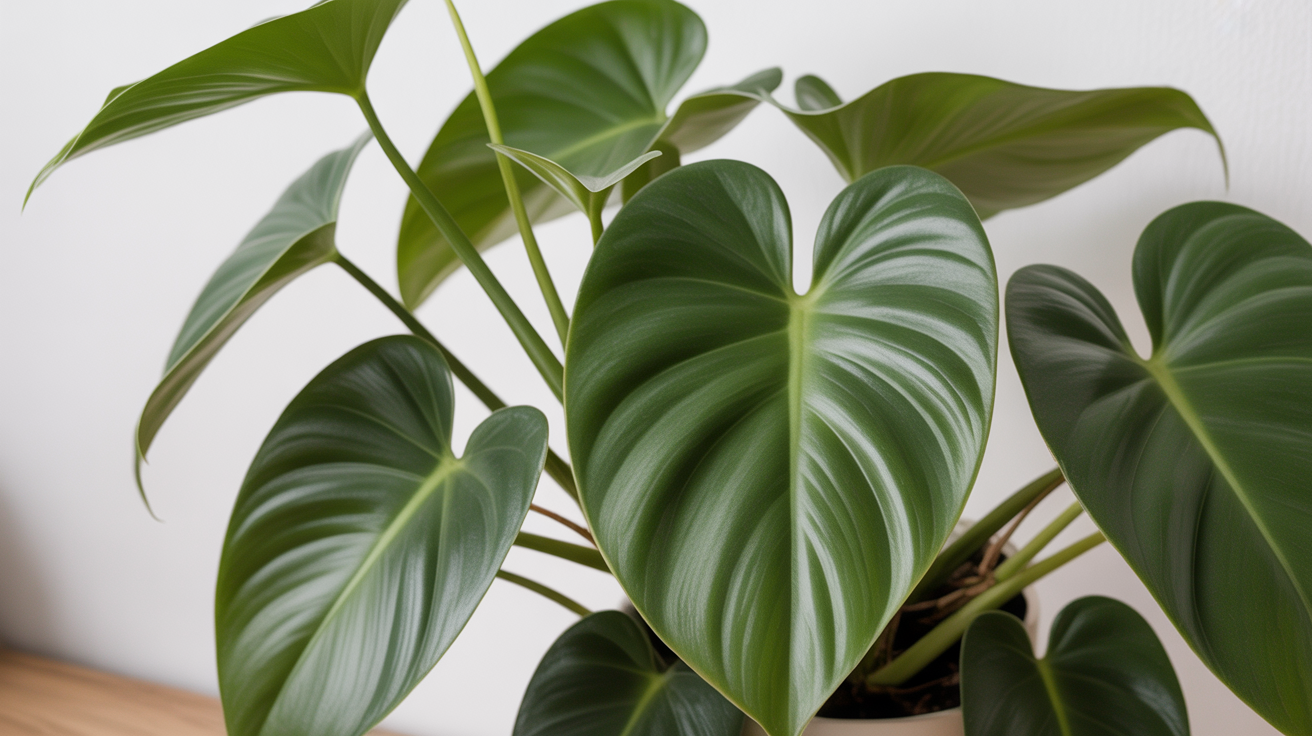
Philodendrons are among the most forgiving houseplants you can keep, which explains why they show up in offices, apartments, and shaded corners of living rooms everywhere. The genus contains hundreds of species, but most of the ones sold as houseplants fall into two broad groups: climbing types that trail or attach to a support, and self-heading types that grow outward from a central point without needing anything to lean on. Both groups share the same core needs, and both are toxic if chewed, so a little safety awareness belongs in the same guide as the care advice.
This guide covers the species you're most likely to encounter, what each one wants in terms of light and water, how to catch problems before they become serious, and what to know if you have pets or young children in the house.
At a Glance
- Philodendrons split into climbing types (heartleaf, Brasil) and self-heading types (Birkin, Bipinnatifidum) that grow outward instead of trailing.
- Bright indirect light suits nearly every species. Low light is tolerated, especially by heartleaf, but slows growth and fades variegation.
- Water when the top 2-3 cm (1 in) of soil is dry, roughly every 7-10 days in summer and every 12-16 days in winter, adjusted for pot material and light.
- All philodendrons are toxic to cats, dogs, and people if chewed, due to insoluble calcium oxalate crystals. This is a low-severity but genuinely painful poisoning, not a footnote to skip.
- Yellow leaves almost always mean too much water. Brown, crispy tips almost always mean too little humidity or inconsistent watering.
Common Types of Philodendron
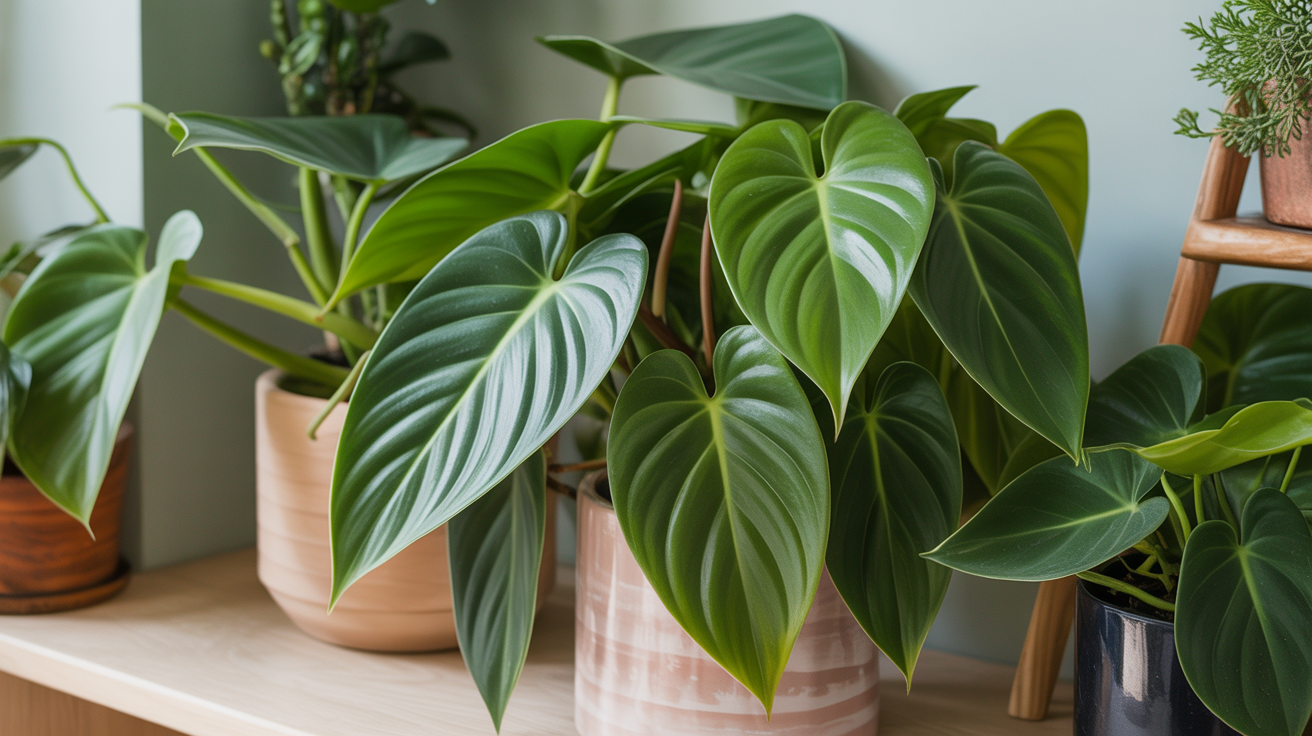
The variety can feel overwhelming when you're standing in a plant shop. A handful of species make up the bulk of what's available.
| Type | Growth habit | Mature size (indoor) | Light need | Best for |
|---|---|---|---|---|
| Heartleaf | Climbing, trailing | Trails 1.5-3 m (5-10 ft) | Low to bright indirect | Beginners, low-light rooms |
| Brasil | Climbing, trailing | Same as heartleaf | Medium to bright indirect | Beginners who want variegation |
| Birkin | Self-heading | 60-90 cm (24-36 in) | Bright indirect | Compact spaces |
| Gloriosum / Melanochrysum | Crawling | Spreads along the soil surface | Medium to bright indirect, higher humidity | Collectors, humid rooms |
| Bipinnatifidum (Tree) | Self-heading | 1.5-2 m (5-6 ft) wide | Bright indirect | Large rooms, statement plant |
Heartleaf Philodendron (Philodendron hederaceum)
The heartleaf is the one most people picture when they hear the name. It has dark green, heart-shaped leaves on long flexible stems that trail over pot edges or climb a moss pole if you give them one. It tolerates low light and inconsistent watering better than most houseplants, which makes it a reliable choice when your space isn't ideal. NC State Extension notes it can survive for long periods in extremely low light, though growth will be slow and sparse there.
One thing worth knowing: the heartleaf is often confused with pothos (Epipremnum aureum). A simple way to tell them apart is leaf texture. Pothos leaves feel slightly waxy and have a more irregular shape, while heartleaf philodendron leaves are thinner, matte, and more uniformly heart-shaped. If you're growing one and unsure which you have, a closer look at pothos care can help you compare the two side by side.
Brasil Philodendron (Philodendron hederaceum 'Brasil')
Brasil is a variegated cultivar of the heartleaf, with lime green and yellow streaks running through the center of each leaf. It needs slightly more light than the all-green version to maintain its variegation, but otherwise its care is identical. Expect slower growth in low light, with leaves pushing out mostly green until brightness improves.
Philodendron Birkin
Birkin is a self-heading type with dark green leaves and fine white pinstripes. It grows slowly and stays compact, topping out around 60-90 cm (24-36 in) tall in most home settings. It's more sensitive to low light than the trailing types and tends to push plain green leaves if it doesn't get enough.
Philodendron Gloriosum and Melanochrysum
These crawling aroids have velvety, heart-shaped leaves that can get genuinely large. Gloriosum stays on or near the soil surface rather than climbing. Both are slower growers and more demanding than the common heartleaf, but they reward patience with impressive foliage. They prefer higher humidity than the average living room and need more careful attention to watering.
Philodendron Bipinnatifidum (Tree Philodendron)
Formerly sold as Philodendron selloum, this self-heading species develops large, deeply lobed leaves on stout stems. It can reach 1.5-2 m (5-6 ft) wide indoors given time and good light. It's often shelved beside monsteras at garden centers because of its split leaves, though it's a distinct plant. A similar large-leaf aroid worth comparing is covered in the monstera care guide, which follows a comparable watering rhythm.
Philodendron Toxicity: What Pet Owners and Parents Should Know
Every commonly sold philodendron is toxic if chewed or eaten, and that warning applies across the genus, not just to one species. The ASPCA lists heartleaf philodendron as toxic to dogs, cats, and horses, and a second philodendron species in its database shows the same toxic principle: insoluble calcium oxalate crystals present throughout the leaves, stems, and sap.
When a cat or dog bites into a leaf, those microscopic crystals release and lodge in the soft tissue of the mouth. NC State Extension describes the result as oral irritation, painful swelling of the mouth, tongue, and lips, excessive drooling, vomiting, and difficulty swallowing. It classifies the poisoning as low severity, meaning it's genuinely unpleasant and worth an urgent vet call but rarely life-threatening by itself, unlike a sago palm ingestion, which the ASPCA links to liver failure in dogs and cats.
The same crystals can irritate human skin. NC State Extension notes that handling philodendron sap can cause contact dermatitis, so wear gloves when pruning a plant with a lot of exposed sap and wash your hands afterward regardless.
If you have curious pets or small children, keep philodendrons on a high shelf, in a room with a door you can close, or choose a plant with no toxicity concerns instead. If you do suspect a pet has chewed on one, contact your vet or the ASPCA Animal Poison Control Center at 888-426-4435, and bring a clipping or photo of the plant to speed up identification.
Philodendron Light Needs
Philodendrons grow naturally in tropical forests, where they receive dappled or filtered light beneath a canopy. That origin tells you most of what you need to know about their philodendron light needs. Clemson Cooperative Extension sums it up simply: most philodendrons prefer indirect or curtain-filtered sunlight but will tolerate low light, with heartleaf tolerating the dimmest conditions of the common types.
Bright indirect light suits virtually every philodendron well. A spot 1-2 m (3-6 ft) from a south or east-facing window, with no direct sun hitting the leaves, is close to ideal for most species. A simple test: if you can comfortably read a book without turning on a lamp where the plant sits during the day, the light is probably adequate.
Direct afternoon sun will scorch the leaves, especially on thinner-leaved varieties like the heartleaf. Morning sun through an east window is gentler and usually tolerated without damage.
Low light slows growth noticeably. The heartleaf philodendron can survive in quite dim spots, but it will produce fewer, smaller leaves than one in a brighter position. Variegated types like Brasil will revert toward solid green in low light until conditions improve.
Artificial light works well for philodendrons. A grow light on a 12-14 hour timer placed 20-40 cm (8-16 in) above the plant keeps most species growing steadily through winter.
Watering and Soil
Philodendrons want soil that stays moist but not wet. Root rot is the main way people lose them, and it almost always comes from soil that stays saturated too long. Clemson Cooperative Extension frames the underlying rule the same way growers do at home: water enough to keep the soil evenly moist, but never let the plant stand in water, since pooled water in a saucer can suffocate roots within days.
A reliable approach: water thoroughly when the top 2-3 cm (1 in) of soil is dry, then let the pot drain completely. Dump any water that collects in the saucer after 30 minutes. In a typical home with adequate light, that works out to roughly every 7-10 days in summer and every 12-16 days in winter.
Several factors shift that cadence. Terracotta pots dry out faster than plastic or ceramic. Smaller pots dry out faster than large ones. Plants in brighter light need water more often than plants in dim corners. Checking the soil with your finger is more reliable than following a fixed schedule.
For soil, philodendrons do best in a mix that drains quickly but holds some moisture. A blend of standard potting mix, perlite, and a small amount of orchid bark works well. Straight bagged potting mix is workable but tends to hold too much water for extended periods, especially in plastic pots.
Signs of Overwatering
Yellow leaves on the lower portion of the plant, combined with soil that feels wet well after you last watered, are typical signs of too much water. The soil may also smell sour in an unpleasant way. If the plant is wilting despite wet soil, root rot may already be underway.
Signs of Underwatering
A thirsty philodendron will droop slightly and have dry, slightly crinkly leaf tips or edges. The soil will be bone dry several centimeters down. Once watered, most philodendrons recover within a few hours.
Temperature, Humidity, and Feeding
Philodendrons are tropical plants and prefer consistent warmth. They grow well between 18-29°C (65-85°F) and struggle below 13°C (55°F). Clemson Cooperative Extension separates the ideal range further by time of day for best growth: roughly 24-29°C (75-85°F) during the day and 18-21°C (65-70°F) at night, with heartleaf types tolerating slightly warmer nights than the average species. Keep them away from cold drafts, air conditioning vents, and windows that get genuinely cold in winter.
Humidity is less critical for the common heartleaf and Brasil types than it is for species like gloriosum or melanochrysum. Average household humidity (40-50% relative humidity) is fine for most everyday varieties. For velvety-leaved species, a pebble tray with water beneath the pot or a small humidifier nearby will help.
Feeding is straightforward. A balanced liquid fertilizer diluted to half strength, applied monthly through spring and summer, is enough. Skip fertilizing in winter when growth slows naturally. Clemson notes that over-fertilizing is a more common problem than under-fertilizing indoors, showing up as browning, curling leaf tips well before any nutrient deficiency would.
Common Problems and What Causes Them
Yellow leaves usually point to overwatering, too little light, or the natural shedding of older lower leaves. Check the soil first. If it's wet and stays wet, reduce your watering frequency and check that the pot drains properly.
Brown leaf tips typically result from low humidity or inconsistent watering. Dry, crispy tips differ from yellowing tips, which tend to indicate a watering or nutrient issue rather than a humidity one.
Leggy, stretched growth means the plant is reaching for light. Moving it closer to a window or adding a grow light will produce more compact new growth.
Leaves reverting to plain green on Brasil or Birkin points to insufficient light. More brightness will bring the pattern back as new leaves emerge.
No new growth during the growing season could indicate the plant is root-bound. Check whether roots are circling the bottom of the pot or emerging from drainage holes. If so, move it up one pot size.
White, crusty buildup on the soil surface usually means fertilizer salts have accumulated. Flush the pot with plain water until it runs freely from the drainage holes, several times in a row, then resume your normal feeding schedule at half strength.
Frequently Asked Questions
How often should I water a philodendron?
Water when the top 2-3 cm (1 in) of soil is dry. That typically works out to every 7-10 days in warm months and every 12-16 days in winter, though pot material, pot size, and light levels all affect the actual pace. Checking the soil with your finger is far more reliable than following a fixed calendar.
What is the difference between a philodendron and a pothos?
Both are popular trailing houseplants and they're often shelved together, but they're not closely related. Pothos leaves tend to feel waxy with a slightly irregular shape. Heartleaf philodendron leaves are thinner and matte, more uniformly heart-shaped, and the petiole attaches differently at the leaf base. A small notch (sinus) is visible where the petiole meets the leaf blade on the heartleaf philodendron, which isn't present on pothos. Care is similar for both, though pothos handles low light slightly better.
Are philodendrons toxic to cats and dogs?
Yes, and the warning applies to essentially every species sold as a houseplant. Philodendrons contain insoluble calcium oxalate crystals, which cause oral irritation, drooling, and vomiting in cats and dogs if chewed or ingested. The ASPCA classifies common types as toxic to dogs, cats, and horses. It's a low-severity poisoning compared to something like sago palm, but it's genuinely painful and worth an urgent vet call, not something to wait out. Keep the plant out of reach of pets, and check any new plant's toxicity profile before bringing it home if you have animals.
Is philodendron sap dangerous to touch?
It can irritate skin. The same calcium oxalate crystals responsible for oral irritation in pets can cause contact dermatitis in people who handle a lot of exposed sap, typically during heavy pruning or propagation. Gloves are a reasonable precaution if you're taking several cuttings at once, and washing your hands afterward is worth doing regardless.
Why are my philodendron's leaves turning yellow?
Yellow leaves most often signal overwatering. If the soil feels wet days after you last watered, let it dry out more between sessions and check whether the soil or pot drains well. If the soil is appropriately dry and yellowing is happening only to older, lower leaves, it may simply be natural shedding as the plant matures. A sudden flush of yellow across multiple leaves is more likely a watering or root issue.
Can a philodendron live outside?
In warm climates (roughly USDA zones 9b-11), some philodendron species grow outdoors year-round in shaded spots. In cooler regions, they can spend summer months outside but should come back indoors before nights drop below 13°C (55°F). Avoid direct outdoor sun even for species that tolerate brighter indoor light, since outdoor sun intensity is much higher and can scorch leaves quickly.