Plant Profiles
Pothos Care Guide for Beginners
Learn pothos care basics: light, watering, soil, and common problems. A practical guide to keeping golden pothos thriving indoors.
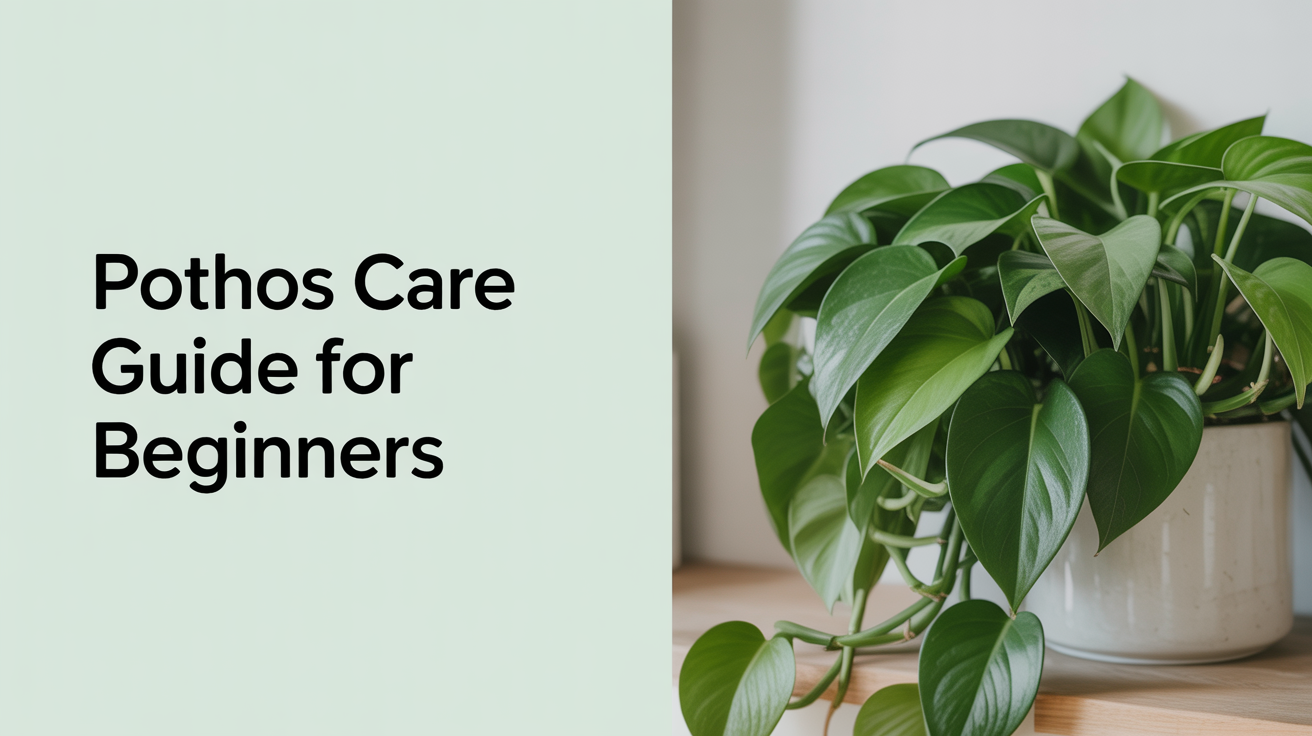
Pothos (Epipremnum aureum) is probably the most forgiving houseplant you can own. It tolerates low light, irregular watering, and the kind of neglect that would kill a fiddle-leaf fig in a week. That said, there's a difference between surviving and actually looking good, and with a few adjustments, pothos can grow fast, trail dramatically, and stay lush year-round.
Here's everything you need to keep one healthy.
Light: What Pothos Actually Needs
Pothos is often described as a "low light" plant, which is technically true but a little misleading. It will stay alive in low light; it just won't do much. Slow growth, small leaves, and loss of variegation in varieties like golden pothos are all signs the plant needs more.
The sweet spot is bright indirect light, near a window with filtered sun, or a few feet back from a south- or east-facing window. Direct afternoon sun will scorch the leaves, so avoid placing the pot right on a west-facing sill in summer. NC State Extension's plant profile on pothos describes the same pattern: it prefers bright indirect light but can survive for long periods in low light, with growth slowing accordingly.
What "Low Light" Really Means
Low light for pothos means no direct sun but some ambient daylight, a few feet from a window, or in a room with adequate overhead lighting. A windowless bathroom with only a dim overhead bulb is usually too dark, even for pothos. If the leaves are getting smaller over time and the vines look leggy, move the plant closer to a light source.
Variegated Varieties Need More Light
Golden pothos (the classic yellow-green marbled variety) and marble queen pothos hold their variegation better with more light. In deep shade, the leaves tend to revert toward solid green. Neon pothos, which is solid chartreuse, is slightly more tolerant of lower light than its variegated relatives.
Watering Pothos: The One Rule That Matters
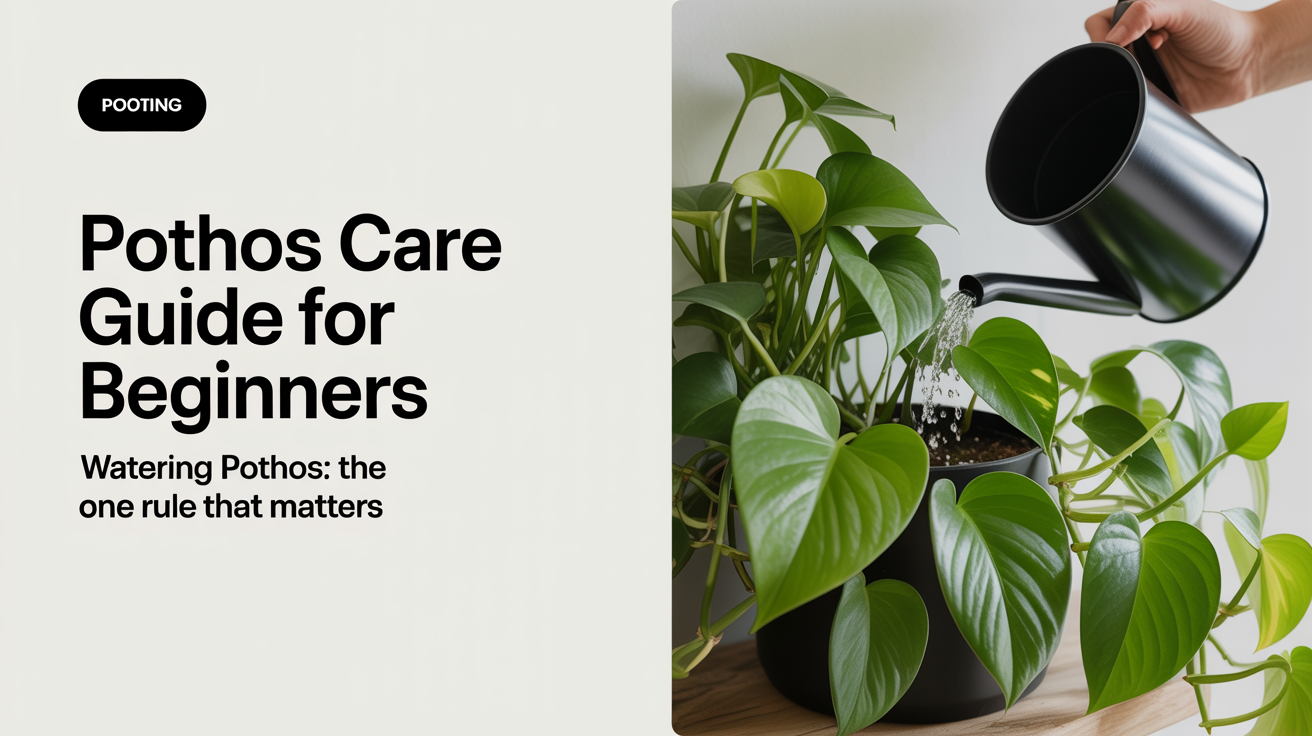
Water when the top inch or two of soil has dried out. That's the core rule. In a typical home, this works out to every 7–10 days in summer and every 14 days or so in winter, but those are rough numbers, the actual schedule depends on your pot size, soil mix, and light level.
The two failure modes here are opposite: overwatering (by far the more common problem) and underwatering.
Overwatering signs: yellowing leaves, mushy stems near the soil, a sour smell from the pot. The roots are sitting in wet soil too long and beginning to rot. NC State Extension notes that root rot and blackening at the leaf margins are the typical result of overwatering pothos specifically.
Underwatering signs: wilting, dry and curling leaves, crispy brown tips. The plant bounces back quickly once watered, which is reassuring.
If you're seeing yellowing leaves and suspect root rot, check out our guide on treating root rot and saving your plant before the problem spreads further down the roots.
Pot Drainage Matters
Pothos must be planted in a pot with drainage holes. Without drainage, water accumulates at the bottom of the soil and creates the anaerobic conditions that kill roots. If you want a decorative pot without holes, use it as an outer cover with the nursery pot sitting inside.
Soil and Potting
A standard indoor potting mix works fine for pothos. If your current mix feels heavy or tends to stay soggy for days after watering, blend in some perlite (roughly one part perlite to three parts mix) to improve drainage. Pothos doesn't need a specialized or expensive soil.
Repot when the roots are visibly circling the bottom or coming out of drainage holes, usually every 1–2 years for actively growing plants. Go up one pot size at a time (no more than 2 inches wider in diameter). A pot that's too large holds excess moisture that roots can't absorb fast enough, which circles back to the overwatering problem.
Fertilizing
During the growing season (roughly March through September), a balanced liquid fertilizer every 4–6 weeks is plenty. A 10-10-10 or 20-20-20 NPK ratio works well; dilute to half strength to avoid salt buildup in the soil. Skip fertilizing in fall and winter when growth slows.
You don't need to fertilize heavily to get fast growth. Pothos grows quickly when its light and watering needs are met, fertilizer is a supplement, not a substitute for good conditions.
Common Pothos Problems and Fixes
| Symptom | Likely Cause | Fix |
|---|---|---|
| Yellowing lower leaves | Overwatering or natural aging | Let soil dry more between waterings; remove dead leaves |
| Brown leaf tips | Low humidity or salt buildup | Increase humidity; flush soil with water occasionally |
| Leggy, sparse vines | Too little light | Move closer to a window |
| Pale or washed-out variegation | Too little light | Brighter indirect light restores patterning over time |
| Black or mushy stems | Root rot from overwatering | Remove affected roots, repot in fresh soil |
| White crusty residue on soil | Mineral deposits from tap water | Use filtered water or flush soil periodically |
A Note on Pests
Pothos isn't especially pest-prone, but spider mites, mealybugs, and scale can show up, particularly on plants stressed by low humidity or inconsistent watering. Check the undersides of leaves occasionally. A diluted neem oil spray or insecticidal soap handles most infestations if caught early.
Propagating Pothos
One of the genuinely appealing things about pothos is how easily it roots from cuttings. Take a stem with at least two or three leaves and one or two nodes (the small brown bumps where leaves attach to the vine). Cut just below a node, remove the bottom leaf, and place the cutting in a glass of water or directly into moist soil.
In water, roots usually appear within 2–4 weeks. Cuttings rooted in soil skip the transition adjustment that sometimes stresses water-rooted cuttings, though they take a bit longer to establish. Either method works.
This also makes pothos an easy plant to share, a single trailing plant can produce dozens of cuttings over time. If you're already growing other easy-care plants, the same propagation principles apply to species like snake plant; see our complete snake plant care guide for how that process differs.
Pothos Varieties Worth Knowing
Golden pothos (E. aureum 'Golden') is the standard, yellow-green marbling on heart-shaped leaves, extremely common, extremely tough. But there are several other varieties worth considering:
- Marble Queen: Heavier white variegation, slightly slower growing, needs a bit more light to keep its patterning.
- Neon: Solid bright yellow-green, no variegation. One of the easiest to find and one of the fastest growers.
- Manjula: Creamy white and green patches, less defined than Marble Queen. Rarer and slower growing.
- Cebu Blue: Narrow silvery-blue leaves with a different texture from the typical rounded golden pothos leaf. More trailing than climbing.
- Njoy: Smaller leaves with sharp white and green patches, compact growth habit.
All of these follow the same basic care principles, with minor differences in light needs for the more heavily variegated types.
Toxicity
Pothos is toxic to cats, dogs, and humans if ingested. The plant contains calcium oxalate crystals, which cause mouth irritation, drooling, and vomiting. The ASPCA's plant profile confirms the same symptom pattern for both cats and dogs. Keep it out of reach of pets and young children, and wash your hands after pruning. If you're building a collection of easy-care plants but need pet-safe options, our monstera deliciosa care guide covers a plant that has similar caveats, always verify a specific plant's safety with the ASPCA toxic plant list or your vet before bringing anything new home.
Frequently Asked Questions
How often should I water my pothos?
Water when the top 1–2 inches of soil are dry. In most homes this means every 7–10 days in summer and every 12–14 days in winter. Don't water on a fixed schedule; check the soil instead. Overwatering is the most common way pothos plants die.
Why are my pothos leaves turning yellow?
Yellow leaves usually point to overwatering, though they can also mean the plant is simply shedding older growth at the base. If the yellowing is concentrated in lower, older leaves and the soil looks and smells fine, it's probably normal turnover. If multiple leaves across the plant are yellowing and the soil stays wet for a long time, cut back on watering and check the roots.
Can pothos live in low light?
It tolerates low light better than most houseplants, but in genuinely dim conditions it grows slowly, produces smaller leaves, and loses variegation. If you need a plant for a dark corner, pothos will survive, but don't expect vigorous growth. Moving it to brighter indirect light even for part of the year helps it recover.
Why are my pothos vines getting leggy and sparse?
Legginess (long stretches of vine between leaves) is almost always a light problem. The plant is stretching toward whatever light it can find. Move it somewhere brighter and the new growth will come in more compact and full.
How do I get my pothos to trail longer?
Give it more light and let it grow. In good conditions, pothos can add a foot or more of new vine growth per month during summer. If you want longer trails rather than bushier growth, resist the urge to trim often. You can also train the vines to grow in a specific direction by gently guiding them along a shelf or pinning them to a wall.