Plant Profiles
Monstera Deliciosa Care Guide for Healthy Growth
Learn monstera care essentials: light, watering, soil, and why leaves stop splitting — plus fixes for common problems.
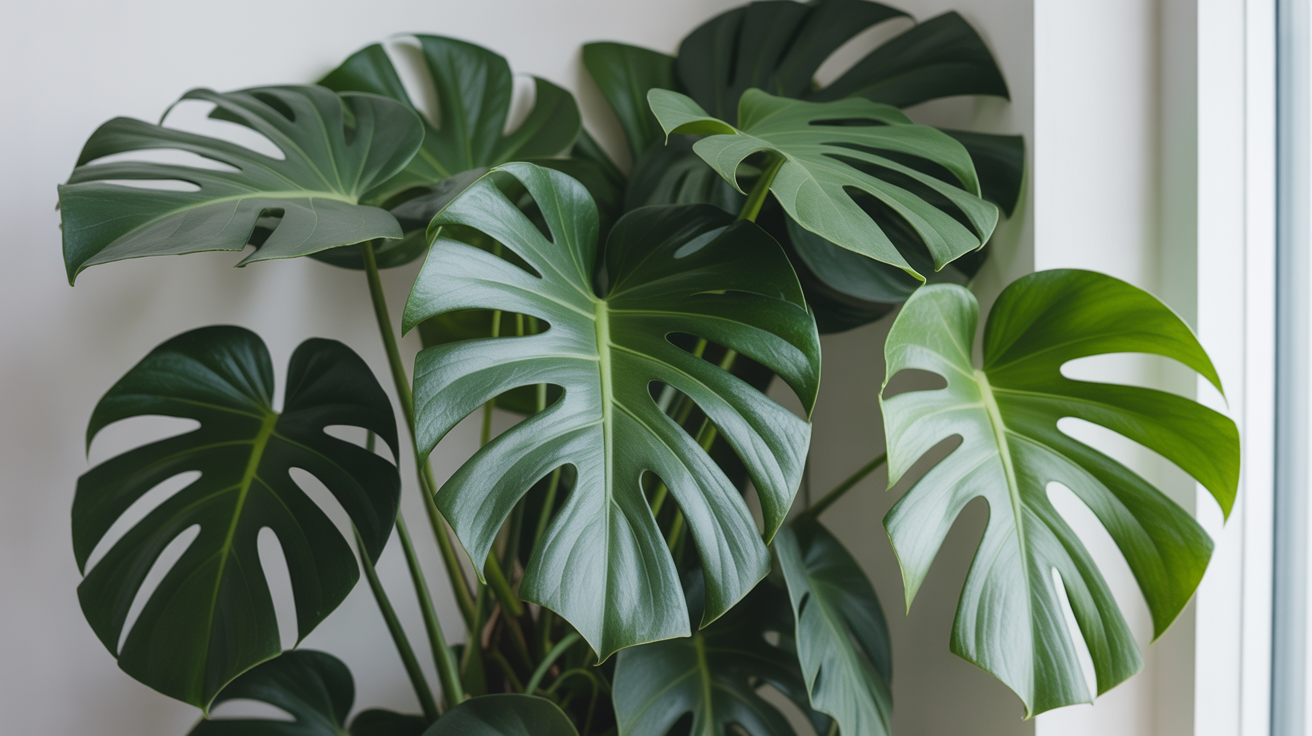
Monstera deliciosa is one of the most satisfying houseplants to grow once you understand what it actually needs. Give it the right light and let the soil dry out between waterings, and it will reward you with large, deeply fenestrated leaves that look genuinely impressive. Skimp on either, and you get yellowing foliage and small, hole-free leaves that never reach their potential.
At a Glance
- Light is the single biggest lever: bright indirect light produces large, split leaves; low light produces small, solid ones.
- Water every 7 to 10 days in summer and every 14 to 18 days in winter, but always confirm with a finger test before you pour.
- Use a chunky mix (potting soil, perlite, and orchid bark) so roots get both drainage and moisture.
- Feed monthly with a diluted balanced fertilizer from spring through early fall, and stop entirely in winter.
- Fenestrations (the signature holes and splits) only appear once the plant matures and gets enough light; a young plant with solid leaves is normal, not a problem.
- Every part of the plant is toxic to pets and people if eaten, so placement matters in homes with curious animals or kids.
Care at a Glance
| Factor | What Monstera deliciosa needs |
|---|---|
| Light | Bright indirect light, 5 to 8 feet from an east or west window, or filtered light from the south |
| Water | Every 7 to 10 days in summer, 14 to 18 days in winter; water when the top 2 inches of soil are dry |
| Soil | Chunky, fast-draining mix: 2 parts potting soil, 1 part perlite, 1 part orchid bark |
| Humidity | Tolerates 40 to 50%; grows faster and larger at 60 to 70% |
| Temperature | 65°F to 85°F (18°C to 29°C); growth stops below 55°F (13°C) |
| Fertilizer | Balanced liquid fertilizer at half strength every 3 to 4 weeks, April through September |
| Repotting | Every 1 to 2 years in spring, or when roots circle the drainage holes |
| Toxicity | Toxic to cats, dogs, and people; calcium oxalate crystals cause oral irritation |
Light: The Single Biggest Factor
Monstera deliciosa is native to the rainforest understory of southern Mexico and Central America, where it climbs tree trunks toward dappled, bright indirect light. According to NC State Extension's plant profile, the species is native from Mexico to Panama and can reach 70 feet in the wild by climbing, though it typically stays 6 to 8 feet as a houseplant. In your home, its native range translates to a spot within 5 to 8 feet of an east- or west-facing window, or set back from a south-facing window with a sheer curtain.
What counts as bright indirect light? A spot where you can comfortably read a book without switching on a lamp during daytime, but where the sun's rays don't hit the leaves directly for more than an hour or two.
Direct afternoon sun burns the leaves fast; you'll see bleached, papery patches within days. Low light produces small, undivided leaves and very slow growth, and it's the main reason people ask why their monstera leaves are not splitting (more on that below).
Artificial Light
If your home is genuinely dim, a grow light helps a lot. A full-spectrum LED panel placed 12 to 18 inches above the plant for 12 to 14 hours a day will keep growth moving through a dark winter. Cheap clip-on grow bulbs work in a pinch, though a wider panel covers more leaf area and produces more even growth across a large plant.
Watering: Let It Dry Down First
Overwatering kills more monsteras than anything else. The roots need oxygen as much as they need moisture, and soggy soil suffocates them within days.
A reliable schedule in most homes: water every 7 to 10 days in summer, every 14 to 18 days in winter. But schedules are a starting point, not a rule. Check the soil before you water.
The two-inch test: Push your finger two inches into the soil. If it feels even slightly moist, wait. Water thoroughly only when the top two inches are completely dry. Then water until it drains freely from the bottom holes, let it drain fully, and empty the saucer within 30 minutes.
Signs You're Watering Wrong
| Symptom | Likely cause | Fix |
|---|---|---|
| Yellow leaves, soft stems | Overwatering / root rot | Let soil dry fully; check for rotten roots |
| Dry, brown leaf edges | Underwatering or low humidity | Water sooner; mist or add a pebble tray |
| Wilting despite moist soil | Root rot (roots can't uptake water) | Repot, trim rotten roots, fresh soil |
| Pale, washed-out leaves | Too much direct sun | Move farther from the window |
| Dark, muddy spots on leaves | Cold water on leaves; cold drafts | Water at root level; keep above 60°F (15°C) |
| Slow growth, small new leaves | Underfeeding or too little light | Check light first, then adjust fertilizer schedule |
If you suspect root rot, check out our guide on treating root rot for the step-by-step process of inspecting and trimming damaged roots before repotting.
Soil, Pots, and Repotting
Monstera deliciosa wants a chunky, well-draining mix. Standard potting soil on its own holds too much moisture and compacts over time. A good home mix: two parts standard potting soil, one part perlite, and one part orchid bark (or coarse pine bark fines). Clemson Cooperative Extension's guide to indoor plant soil mixes notes that a quality mix should allow water and air to pass through readily while still retaining adequate moisture, which is exactly what the bark and perlite combination does for an aroid like monstera.
Terracotta pots are ideal for monstera care because the clay wicks moisture away from the roots. Plastic pots work, but you'll need to water less often and be more careful about overwatering.
Repotting: Move up one pot size (2 inches wider) every 1 to 2 years in spring, or whenever roots start circling the drainage holes or pushing through the bottom. Going too large too fast means excess soil holds moisture the roots can't use, increasing rot risk. A plant that dries out within 2 to 3 days of a thorough watering is usually telling you it's ready for the next size up.
Fertilizing Through the Growing Season
From April through September, feed with a balanced liquid fertilizer (10-10-10 or similar) diluted to half strength every 3 to 4 weeks. Stop fertilizing entirely from October through March when growth slows. Too much fertilizer in winter builds up salts in the soil, which shows up as brown leaf tips.
A slow-release granular fertilizer worked into the top inch of soil at repotting time gives a gentler, longer-lasting nutrient supply and reduces the risk of salt buildup. If you notice a white or gray crust forming on the soil surface or around the drainage holes, that's a visible sign of salt accumulation, and it's worth flushing the pot with plain water (about three times the pot's volume, poured through slowly) before your next feeding.
Why Monstera Leaves Are Not Splitting
This is probably the most common question about monstera deliciosa, and the answer is almost always one of these four things:
1. The plant is too young. Monstera leaves only develop fenestrations (the holes and splits) once the plant is mature enough, typically after it's produced several large leaves. Juvenile plants put out small, heart-shaped leaves without any holes at all. This is completely normal and nothing to fix.
2. Insufficient light. A monstera in low light produces smaller leaves with few or no splits. NC State's plant profile confirms mature leaves are "gigantic, up to 1 foot or more" and "perforated with several holes throughout the blade," a trait tied directly to how much light the plant receives as it grows. The prevailing theory is that fenestrations help the plant survive in its natural habitat by letting light pass through to lower leaves and reducing wind resistance. A plant that isn't getting enough light has no biological reason to produce them. Move the plant to a brighter spot and wait 2 to 3 months.
3. The plant is rootbound and stunted. Severely rootbound plants redirect energy to root survival rather than leaf development. Check if it's time to repot.
4. Inconsistent watering. Drought stress interrupts the hormonal signals that trigger normal leaf development. Leaves unfurl under stress and don't fully expand.
If your plant consistently gets 4 to 6 hours of bright indirect light per day and you're watering correctly, the leaves will start fenestrating as the plant matures. Patience is genuinely required here; pushing it with extra fertilizer doesn't speed up the process, and a plant given too much nitrogen too soon often puts out soft, floppy growth instead of sturdier fenestrated leaves.
Humidity, Temperature, and Cleaning
Monstera deliciosa tolerates typical home humidity (40 to 50%) without complaint. It will grow faster and produce larger leaves at 60 to 70% humidity, which you can achieve with a humidifier near the plant, a pebble tray filled with water, or grouping it with other plants. Misting is less effective than any of these methods and can encourage fungal spots if water sits on leaves too long.
Keep the temperature between 65°F and 85°F (18 to 29°C). Below 55°F (13°C), growth stops and cold injury sets in. Keep the plant away from drafts, heating vents, and air conditioning units, all of which cause stress.
Large monstera leaves collect dust, which blocks light absorption and attracts pests. Wipe both sides of the leaves with a damp cloth every 4 to 6 weeks. This also gives you a chance to spot spider mites or scale early, well before an infestation is visible from across the room.
Common Pests
Monstera deliciosa isn't especially pest-prone, but watch for these:
- Spider mites: Fine webbing on the undersides of leaves, tiny dots moving on the leaf surface. Treat with insecticidal soap or neem oil, applied every 5 to 7 days for three weeks.
- Scale: Brown, waxy bumps on stems. Scrape off manually, then treat with rubbing alcohol on a cotton swab.
- Fungus gnats: Annoying rather than dangerous to mature plants; the larvae can damage roots on younger plants. Let the top 2 to 3 inches of soil dry out completely between waterings to break the breeding cycle.
If you grow other tropical plants alongside your monstera, the care routines are often similar. Our pothos care guide and snake plant guide cover two reliable companions that thrive in the same light and humidity range.
A Note on Toxicity
Monstera deliciosa contains calcium oxalate crystals, which are toxic to dogs, cats, and humans if ingested. The ASPCA's toxic and non-toxic plant list lists monstera (also known there as Swiss cheese plant) as toxic to both dogs and cats, with symptoms including oral irritation, intense burning of the mouth and lips, excessive drooling, vomiting, and difficulty swallowing. Keep it out of reach of pets and children, and confirm any plant's safety with the ASPCA Poison Control database or your veterinarian before bringing it home. If you suspect a pet has chewed on the plant, contact ASPCA Animal Poison Control or your vet promptly rather than waiting to see if symptoms appear.
Frequently Asked Questions
How often should I water my monstera?
Every 7 to 10 days in summer and every 14 to 18 days in winter is a reasonable starting point, but always check the soil first. Water only when the top two inches of soil are completely dry. The actual frequency depends on your pot size, pot material, soil mix, light levels, and the season.
Why are my monstera leaves turning yellow?
Yellow leaves most often mean overwatering or root rot. Less commonly, they indicate nutrient deficiency (if older leaves turn yellow), too much direct sun, or natural aging of the oldest lower leaves. Start by checking the soil and roots before assuming it's a fertilizer problem.
How do I know when to repot my monstera?
When roots start circling the drainage holes, poking out the bottom, or the plant dries out faster than usual (within 2 to 3 days of watering), it's time to go up a pot size. Spring is the best time to repot because the plant is entering its active growing season.
My monstera has aerial roots. Should I cut them?
Aerial roots are natural. In their native habitat, monsteras use them to climb and absorb moisture from humid air. Indoors, you can tuck them into the soil to let them help with water uptake, direct them into a moss pole for support, or trim them if they become unmanageable. Cutting them won't harm the plant.
Does monstera deliciosa need a moss pole?
Not strictly necessary, but it genuinely helps. In the wild, monsteras climb rather than sprawl, and a vertical support encourages the plant to put out larger, more fenestrated leaves as it climbs. A moss pole or coco coir pole works well; so does a simple wooden stake. If your monstera is flopping over and getting leggy, a support will help it grow more compactly.
Is it safe to keep a monstera if I have cats or dogs that chew on plants?
It's riskier than a non-toxic plant like a pothos alternative, but manageable with placement. Most cases of monstera ingestion cause mouth irritation and drooling rather than severe poisoning, though any suspected ingestion still warrants a call to your vet or ASPCA Poison Control. Hanging the plant, using a plant stand out of paw's reach, or choosing a room your pet doesn't access are the most reliable fixes if you have a chewer.