Plant Profiles
Fiddle Leaf Fig Care Without the Stress
Master fiddle leaf fig care with practical tips on light, water, brown spots, and repotting — so your Ficus lyrata actually thrives.
Fiddle leaf figs (Ficus lyrata) have a reputation for being difficult, and that reputation is not entirely undeserved. But most of the drama comes from a few specific mistakes that, once you understand them, are easy to sidestep. Get the light and water right, stop moving the plant around, and a fiddle leaf fig will reward you with those oversized, glossy leaves for years.
At a Glance
- Light is the single biggest factor: place it within 3 feet of a large south- or east-facing window, and use a grow light if that's not available.
- Water only when the top 2 inches of soil are dry, roughly every 7–10 days in summer and 10–14 days in winter, then water deeply until it drains.
- Brown spot pattern tells you the cause: irregular edge patches mean root rot, tip browning means low humidity, sunken patches mean sun or heat damage.
- Repot in spring, one pot size up, only once the plant is genuinely root-bound.
- Keep humidity above 30–40 percent; a humidifier works more reliably than a pebble tray in very dry homes.
- The milky sap is toxic to cats and dogs and irritates skin, wear gloves when pruning or propagating.
Light: The Single Biggest Factor
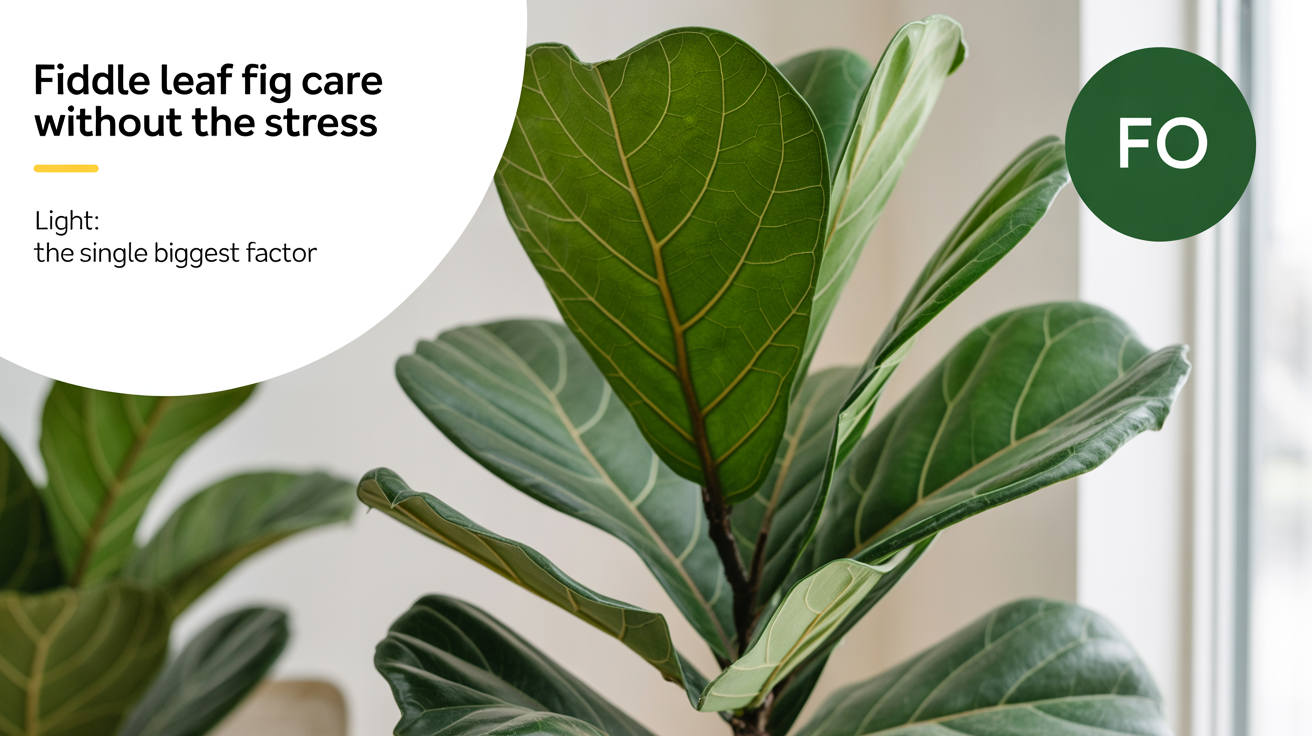
Fiddle leaf figs are native to the rainforest understory of West Africa, where they receive bright, filtered light for most of the day. Indoors, that translates to a spot within about 3 feet of a large, south- or east-facing window. Direct afternoon sun through unfiltered glass can scorch the leaves, but a few hours of gentle morning sun is genuinely helpful. NC State Extension's plant profile on Ficus lyrata describes the species as preferring bright indirect light or partial shade, with leaf scorch a known risk from excessive direct afternoon sun, which matches what most growers see firsthand.
Low light is where things fall apart fast. A fiddle leaf fig pushed into a dim corner will drop leaves, fail to put out new growth, and slowly decline. If your best window is on the north side or blocked by a covered porch, a full-spectrum grow light on a 12-hour timer can fill the gap reasonably well.
What to Avoid
Moving the plant disrupts it more than most people expect. Ficus lyrata dislikes drafts, heating vents, and air conditioning units blowing directly on it. Pick a spot and leave it there. If you rotate it quarterly so all sides get equal light, do it gradually rather than spinning it 180 degrees at once.
Watering Without Overthinking It
More fiddle leaf figs die from overwatering than from neglect. The roots need to dry out partially between waterings, the top 2 inches of soil should feel dry to the touch before you water again.
A rough schedule in most homes: every 7–10 days in summer, every 10–14 days in winter. That's a starting point, not a rule. Check the soil, not the calendar.
When you do water, water deeply until it drains freely from the bottom. Empty the saucer within 30 minutes so the roots aren't sitting in water. If your pot has no drainage hole, find a different pot, this is non-negotiable for long-term health.
Signs You're Getting It Wrong
- Yellow leaves that fall off: usually overwatering or root rot
- Brown, crispy leaf edges: low humidity or underwatering
- Leaves dropping without yellowing first: sudden temperature change, cold draft, or being moved
Fiddle Leaf Fig Care at a Glance
For the settings that matter most, here's a single reference chart you can pin to the fridge.
| Factor | Target range | Notes |
|---|---|---|
| Light | Bright indirect, 3 feet from a south/east window | Grow light on a 12-hour timer if no bright window exists |
| Water | Top 2 inches of soil dry before rewatering | Every 7–10 days summer, 10–14 days winter as a starting point |
| Temperature | 60–85°F (15–29°C) | Keep away from drafts and heating vents |
| Humidity | Above 30–40 percent | Humidifier is more reliable than a pebble tray |
| Fertilizer | Half-strength balanced liquid, monthly | April through September only; skip after repotting for 6–8 weeks |
| Repotting | One pot size up (2 inches) | Spring, only when root-bound |
Fiddle Leaf Fig Brown Spots: Decoding the Damage
Brown spots are the most common complaint with Ficus lyrata, and the pattern of the spots tells you a lot about the cause.
| Spot Pattern | Likely Cause | Fix |
|---|---|---|
| Large, irregular brown patches, usually outer edges | Root rot from overwatering | Unpot, trim rotted roots, let dry, repot in fresh mix |
| Small tan or brown spots that spread | Bacterial infection | Improve air circulation, reduce watering, remove affected leaves |
| Brown around the very tips only | Low humidity or fluoride in tap water | Raise humidity, switch to filtered water |
| Sunken brown patches on one side | Sunburn or heat from a vent | Move plant away from direct source |
Root rot is the most serious. If you pull the plant from its pot and see mushy, dark roots with a sour smell, you'll need to trim those roots back to healthy tissue, treat with a diluted hydrogen peroxide solution (1 part 3% H2O2 to 3 parts water), and repot into fresh, well-draining soil. Recovery is possible but takes months, expect to see whether the plant has stabilized (no new spots, no further leaf drop) within 4–6 weeks, with a full recovery of vigorous new growth taking two to three months longer. For more detail on diagnosing and treating root issues in houseplants, see our guide on treating root rot and saving your plant.
Soil, Pot, and Repotting
Fiddle leaf figs want a well-draining mix that still retains some moisture. A standard indoor potting mix works, but cut it with about 20–30% perlite to improve drainage. Dense, compacted mixes from bargain bags are one of the faster ways to create root rot conditions.
Repot in spring, and only when the plant is genuinely rootbound, roots circling the bottom of the pot or poking out the drainage holes. Going up one pot size (2 inches in diameter) is enough. Jumping to a much larger pot leaves excess wet soil around the roots with no roots to absorb it, which leads back to rot.
After repotting, hold off on fertilizing for 6–8 weeks. Fresh potting mix usually has enough nutrients, and a stressed plant isn't in a good position to process a feed anyway.
Humidity and Temperature
Fiddle leaf figs prefer temperatures between 60–85°F (15–29°C) and humidity above 30–40%. Most homes sit somewhere in that range for temperature, but winter heating can drop indoor humidity to 20% or below, which dries out leaf edges and slows growth.
A pebble tray with water under the pot helps modestly. A small humidifier near the plant is more reliable if you're in a very dry climate or running central heat all winter. University of New Hampshire Extension's guide to raising indoor humidity notes that a portable humidifier paired with a hygrometer gives the most consistent results, and that grouping plants together raises local humidity through a microclimate effect as they release moisture from soil and leaves.
Wiping the large leaves with a damp cloth once a month removes dust and keeps the stomata clear. It also gives you a chance to spot early pest activity before it gets out of hand.
Pests to Watch For
Fiddle leaf figs occasionally get spider mites, scale, and mealybugs. All three tend to appear when the plant is already stressed from poor conditions.
Spider mites show up as fine webbing on the undersides of leaves, often when the air is very dry. Populations can double in under a week once conditions favor them, so catching an infestation in its first few days makes a real difference. Wipe the leaves with a damp cloth and treat with neem oil or insecticidal soap, applied weekly for 3–4 weeks to break the egg cycle.
Scale looks like small brown or tan bumps along stems and leaf midribs. They can be scraped off manually with a soft toothbrush, followed by a neem oil treatment. A healthy plant in good light resists reinfestation reasonably well.
If you're already dealing with pest pressure on other plants, isolate a new fiddle leaf fig for two weeks before placing it near your collection. The same general quarantine approach applies to any new arrival, as discussed in our guide on snake plant care.
A Note on Toxicity
Ficus lyrata contains a milky sap that is toxic to cats and dogs, and can irritate human skin. The toxic principle is insoluble calcium oxalates, present throughout the bark, leaves, and sap, and the NC State Extension plant profile lists the species as poisonous with low severity, capable of causing oral irritation and vomiting if chewed. If you have pets that chew on plants, keep the fiddle leaf fig out of reach, wear gloves when pruning or propagating, and confirm plant safety through the ASPCA's toxic plant database before bringing any new species home. This is general care information, not veterinary advice.
Frequently Asked Questions
Why does my fiddle leaf fig keep dropping leaves?
Leaf drop almost always traces back to one of four things: overwatering, underwatering, a sudden change in environment (being moved, a cold draft, a nearby heating vent), or very low light. Check the soil moisture first. If that's fine, look at what changed in the plant's location recently.
How often should I fertilize a fiddle leaf fig?
During the growing season (roughly April through September), a balanced liquid fertilizer at half strength once a month is enough. Skip fertilizing in fall and winter when growth naturally slows. More fertilizer does not mean faster growth, excess fertilizer salts build up in the soil and eventually burn roots.
Can I put my fiddle leaf fig outside in summer?
Yes, with some care. Move it to a shaded or dappled-light outdoor spot rather than direct sun, and do it gradually over a week or two so the leaves acclimate. Bring it back inside before nighttime temperatures drop below 55°F (13°C). Outdoor summers often produce a flush of new growth.
My new leaf is unfurling but looks brown and dry at the tip. Is something wrong?
A small amount of tip browning on a new leaf as it unfurls is common and usually harmless, it's often just minor mechanical damage or low humidity during that vulnerable stage. If the damage is extensive or spreads to older leaves, investigate your watering and humidity levels. New leaves also sometimes show minor imperfections if the plant was stressed during the weeks before the leaf formed.
How do I get a fiddle leaf fig to branch?
Fiddle leaf figs naturally grow as a single trunk unless prompted to branch. Notching, making a shallow cut just above a leaf node with a clean blade, encourages the plant to produce a new bud at that point. It works best on mature, actively growing plants in spring. You can also try pinching out the growing tip, though results vary. Neither approach is guaranteed, and a stressed plant won't branch regardless of technique.
Why does my fiddle leaf fig have one giant leaf and then nothing for weeks?
Fiddle leaf figs push growth in flushes rather than a steady trickle. A single large leaf unfurling, followed by a quiet stretch of several weeks before the next one starts, is the normal rhythm for the species, especially indoors where light is lower than in its native range. As long as the plant isn't dropping older leaves during the pause, there's nothing to fix.
For more on building a collection of plants with different light and care needs, our pothos care guide covers one of the most forgiving companions you can pair with a fiddle leaf fig in the same room.