Plant Profiles
Snake Plant Care: The Complete Guide
Master snake plant care with practical advice on watering, light, soil, and common problems for healthy Sansevieria indoors.

Snake plants (now classified as Dracaena trifasciata, though most growers still call them Sansevieria) are genuinely hard to kill. They tolerate dim corners, irregular watering, and neglect that would finish off most houseplants. That said, "tolerant" doesn't mean "do nothing," a few specific habits separate a thriving snake plant from a yellowing one sitting in soggy soil.
Light: What Snake Plants Actually Need
The go-to advice is "any light works," and it's mostly true, but worth nuancing.
Snake plants handle low light without dying, but growth will essentially stop in a dark corner. New leaves are smaller and the distinctive striping fades toward solid green as the plant reaches for whatever light is available. If you want the plant to actually grow and hold its coloring, a spot with indirect bright light (3–5 feet from an east or west window, for example) is the practical sweet spot.
Direct Sunlight
A few hours of direct morning sun is fine, even beneficial. Harsh afternoon sun through a south-facing window, especially in summer, can scorch the leaf tips and edges, leaving dry brown patches that won't heal. If you're moving a snake plant from a low-light spot to a sunny window, do it gradually over two weeks so the leaves adjust.
Low-Light Reality Check
North-facing rooms and interior hallways technically "work," but water every 4–6 weeks in those conditions since the soil stays wet much longer without adequate evaporation. Overwatering in low light is the single most common way snake plants die.
Watering: Getting the Frequency Right
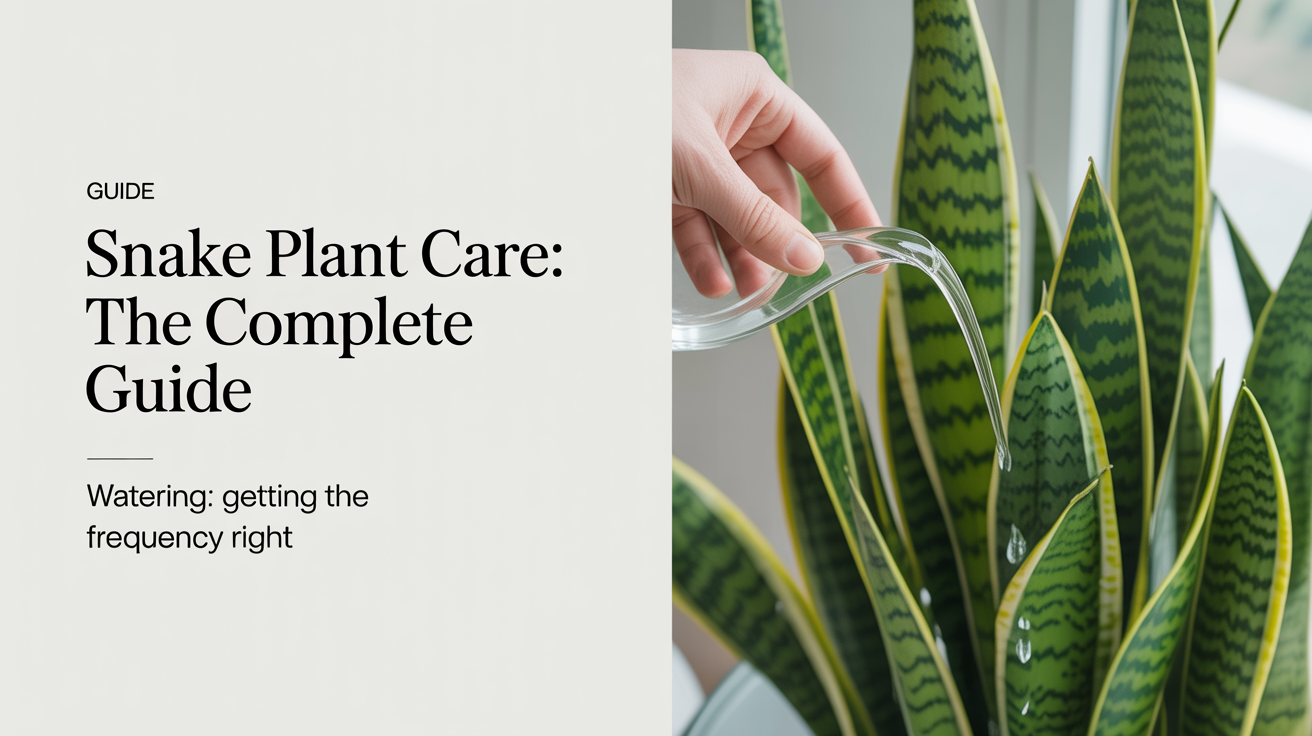
Overwatering kills more snake plants than any other cause. The roots sit in wet soil, rot sets in, and by the time the leaves start yellowing and going soft at the base, the damage is usually extensive.
The general rule: let the soil dry out completely between waterings. In practice, that means:
| Season | Indoor temperature | Watering frequency |
|---|---|---|
| Spring/Summer | 65–80°F (18–27°C) | Every 7–14 days |
| Fall | 55–70°F (13–21°C) | Every 14–21 days |
| Winter | Below 60°F (15°C) | Every 4–6 weeks |
These are starting points, not fixed schedules. Always check the soil first. Push a finger 2 inches into the mix; if there's any moisture, wait another few days. A 6-inch pot filled with well-draining mix in a bright spot will dry faster than a deep plastic nursery pot in a dim corner.
How to Water Correctly
When you do water, soak the soil thoroughly until water drains freely from the bottom holes, then empty the saucer within 30 minutes. Shallow sips that only wet the top inch encourage shallow roots and uneven drying. Bottom watering (setting the pot in a shallow tray of water for 20–30 minutes) works well for snake plants since it reduces the risk of water pooling around the crown.
Soil and Potting
A standard succulent or cactus mix straight from the bag is a solid choice. If you're using all-purpose potting mix, cut it with about 30–40% perlite to improve drainage. Snake plant roots need oxygen, and dense soil holds moisture too long.
The pot matters as much as the mix. Terracotta is ideal because it breathes and wicks moisture, helping the soil dry faster between waterings. Glazed ceramic and plastic retain moisture longer, which isn't inherently wrong, but you'll water less frequently and should be more conservative.
Pot size is worth getting right. Snake plants are tolerant of being somewhat root-bound, and a pot more than 1–2 inches wider than the root ball holds excess wet soil around the roots. When repotting, go up one size at a time, and do it in spring when the plant is actively growing.
Temperature and Humidity
Dracaena trifasciata is a subtropical plant from West Africa, so it prefers warmth. The comfortable range is 60–85°F (15–29°C). Anything below 50°F (10°C) causes cold damage: water-soaked, soft spots on the leaves that turn brown and mushy. A single cold night near a drafty window in January can scar leaves permanently.
Humidity is not a concern. Snake plants do fine in the dry air of most homes, including heated spaces in winter where humidity drops to 20–30%. No misting needed.
Fertilizing
Snake plants are slow growers and light feeders. During the active growing season (roughly April through September), a balanced liquid fertilizer diluted to half strength once a month is enough. Skip fertilizing entirely from October through March when growth slows.
One mistake to avoid: fertilizing to "fix" yellowing leaves. If leaves are turning yellow, the cause is almost always overwatering or root rot, not a nutrient deficiency. Adding fertilizer to a plant with damaged roots makes things worse.
Common Problems and How to Diagnose Them
Yellowing Leaves
Soft, mushy yellow leaves starting at the base almost always mean root rot from overwatering or poor drainage. Remove the plant from the pot, trim off black or brown mushy roots, let the remaining roots air-dry for a few hours, then repot in fresh dry mix. For more detail on saving a plant in this state, see our guide on treating root rot and saving your plant.
Firm yellow leaves (not soft) can indicate too much direct sun or, less commonly, a nitrogen deficiency if the plant hasn't been fertilized in over a year.
Brown Tips
Crispy brown tips are usually caused by one of three things: low humidity (less likely in snake plants, which tolerate dry air), fluoride or salt buildup from tap water or excess fertilizer, or physical damage from dry cold air near a window. Switching to filtered or rainwater and flushing the soil thoroughly every few months resolves most tip burn cases.
Wrinkled or Curling Leaves
This is the opposite problem from overwatering. If leaves look shriveled or are curling inward, the plant is underwatered. Give it a good soak and it should recover within a day or two.
Root Rot
Caught early, root rot is salvageable. If more than half the roots are gone, the odds drop. Propagating healthy leaf cuttings before discarding a badly rotted plant is worth doing as insurance.
Propagation
Snake plants propagate easily by three methods:
- Division (fastest): When repotting, separate offsets (pups) that have their own root systems. Pot them individually in fresh mix.
- Leaf cuttings in water: Cut a healthy leaf into 3–4 inch sections, keep track of which end is "up," and place them base-down in a jar of water. Roots appear in 4–6 weeks. Transfer to soil once roots reach about an inch.
- Leaf cuttings in soil: Same process but planted directly into moist perlite or succulent mix. Slower to see progress but reduces the risk of rot during transition.
One caveat on leaf cuttings: variegated varieties (like Dracaena trifasciata 'Laurentii' with its yellow-edged leaves) will revert to plain green when propagated by leaf cuttings. To keep the variegation, divide the pups instead.
Snake plants share some care overlap with other low-maintenance tropicals. If you're building out a collection of forgiving plants, the pothos care guide for beginners covers another excellent starter plant that thrives in similar conditions.
Snake Plant Safety
Snake plants are toxic to cats and dogs. According to the ASPCA's plant profile for snake plant, the saponins in the leaves typically cause nausea, vomiting, and diarrhea if a pet chews on or swallows them. Keep them out of reach of animals that chew on leaves. This is general information, not veterinary advice; consult a vet if you suspect a pet has ingested any houseplant.
For households with curious cats, a fiddle leaf fig is also toxic and worth noting, but there are many pet-safe alternatives worth exploring if you need to rethink placement.
Frequently Asked Questions
How often should I water my snake plant?
In a warm, moderately bright spot, every 7–14 days in summer and every 4–6 weeks in winter. The actual test is soil dryness, not the calendar. Stick a finger 2 inches into the soil; if there's moisture, wait.
Can snake plants live in a room with no windows?
They can survive, but growth stops almost entirely and the risk of fungal issues increases since soil stays wet for weeks. Supplement with a grow light on a 12-hour cycle if you need them in a windowless space.
Why are my snake plant's leaves falling over?
Leaves that splay outward or flop are usually caused by overwatering (roots can't support the plant), too little light (leaves reach in all directions instead of growing upright), or a pot that's too large. Check root health first; soggy roots go mushy and can no longer anchor the leaves.
Do snake plants need to be repotted often?
No. They're slow growers and tolerate being root-bound. Repot every 2–3 years, or when roots are visibly circling the bottom of the pot or pushing up through the soil surface. Spring is the best time.
What's the difference between Sansevieria and Dracaena trifasciata?
Taxonomically, they're the same plant. In 2017, molecular research led to the reclassification of most Sansevieria species into the Dracaena genus. NC State Extension's plant profile lists the plant under its current name, Dracaena trifasciata, with Sansevieria trifasciata noted as a synonym. Most nurseries and growers still use Sansevieria on labels because that's what people search for. Both names refer to the same plant.