Styling & Display
Hanging Plant Ideas for Small Spaces
Discover practical hanging plant ideas to green up small rooms. Best species, mounting options, and styling tips for indoor hanging plants.
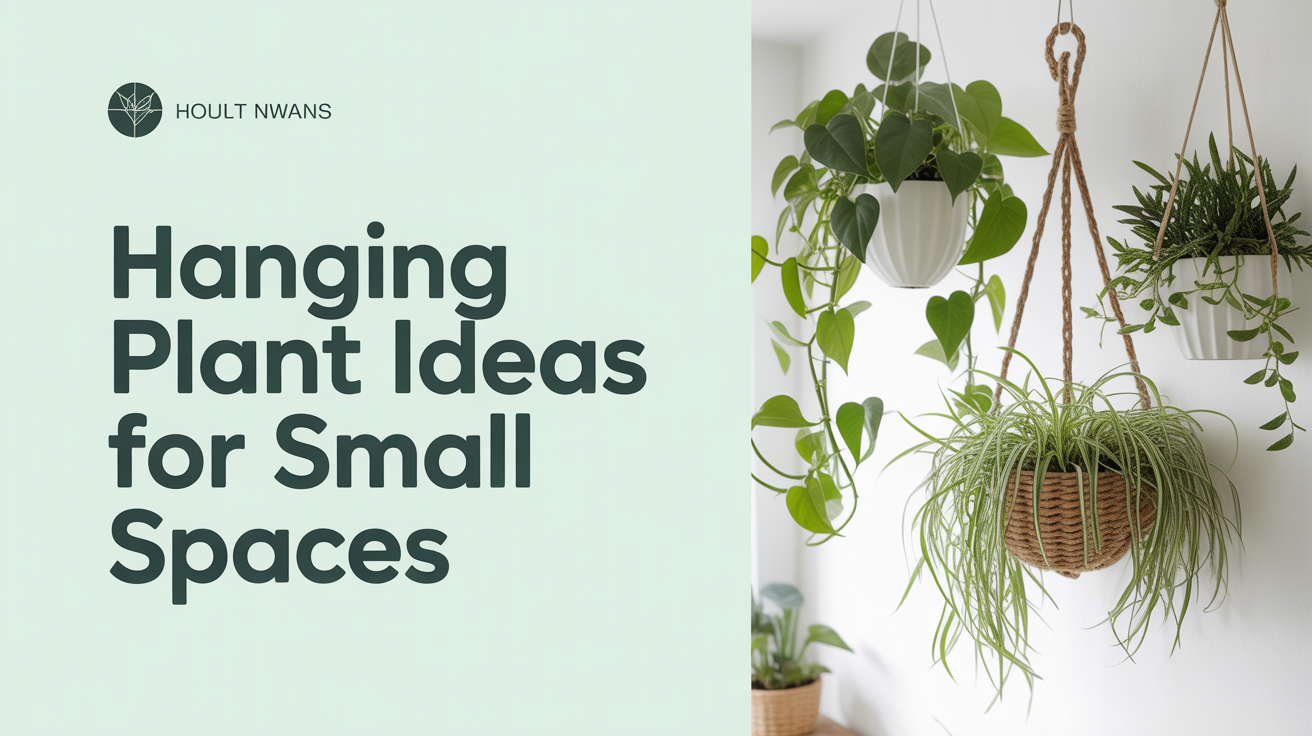
Hanging plants are one of the most efficient ways to add greenery to a small room because they use vertical space that's otherwise just air. Instead of crowding a windowsill or floor, a few well-placed hanging pots can make a room feel lush without shrinking it. This guide covers which plants work best, how to hang them safely, and how to put together a display that looks deliberately styled rather than thrown together.
Which Plants Actually Work Hanging
Not every houseplant thrives when it's suspended. The best candidates have flexible, trailing stems or are lightweight enough that a small pot doesn't become a hazard.
Trailing plants for bright spots
- Pothos (Epipremnum aureum): Long vines, forgiving of irregular watering, tolerates lower light than you'd expect. One of the easiest plants you can hang.
- String of pearls (Senecio rowleyanus): Needs bright indirect light and fast-draining soil. The bead-like vines look best when they have room to spill at least 30–40 cm.
- Heartleaf philodendron (Philodendron hederaceum): Similar care to pothos but with softer, heart-shaped leaves. Grows quickly.
- Burro's tail (Sedum morganianum): Succulent, so it wants a sunny window and very occasional watering. Heavy when mature; hang close to structural anchors.
Trailing plants for lower-light spots
- Spider plant (Chlorophytum comosum): Produces babies on long runners, which adds a lot of visual interest. Tolerates indirect light well.
- English ivy (Hedera helix): Drapes nicely, but the ASPCA lists it as toxic to both cats and dogs, with symptoms including vomiting, drooling, and abdominal pain, so position it out of reach.
- Tradescantia zebrina: Purple-and-silver striped leaves, grows fast, and does fine in moderate indirect light.
Plants that work in a basket but don't trail
Boston fern (Nephrolepis exaltata) is a classic hanging plant that fans outward rather than trailing down. It needs humidity and consistent moisture, which makes it better suited for a bathroom or kitchen than a dry bedroom. Staghorn fern (Platycerium bifurcatum) can be mounted on a board rather than potted, which cuts weight significantly.
Ceiling Hooks and Mounting: Getting This Right
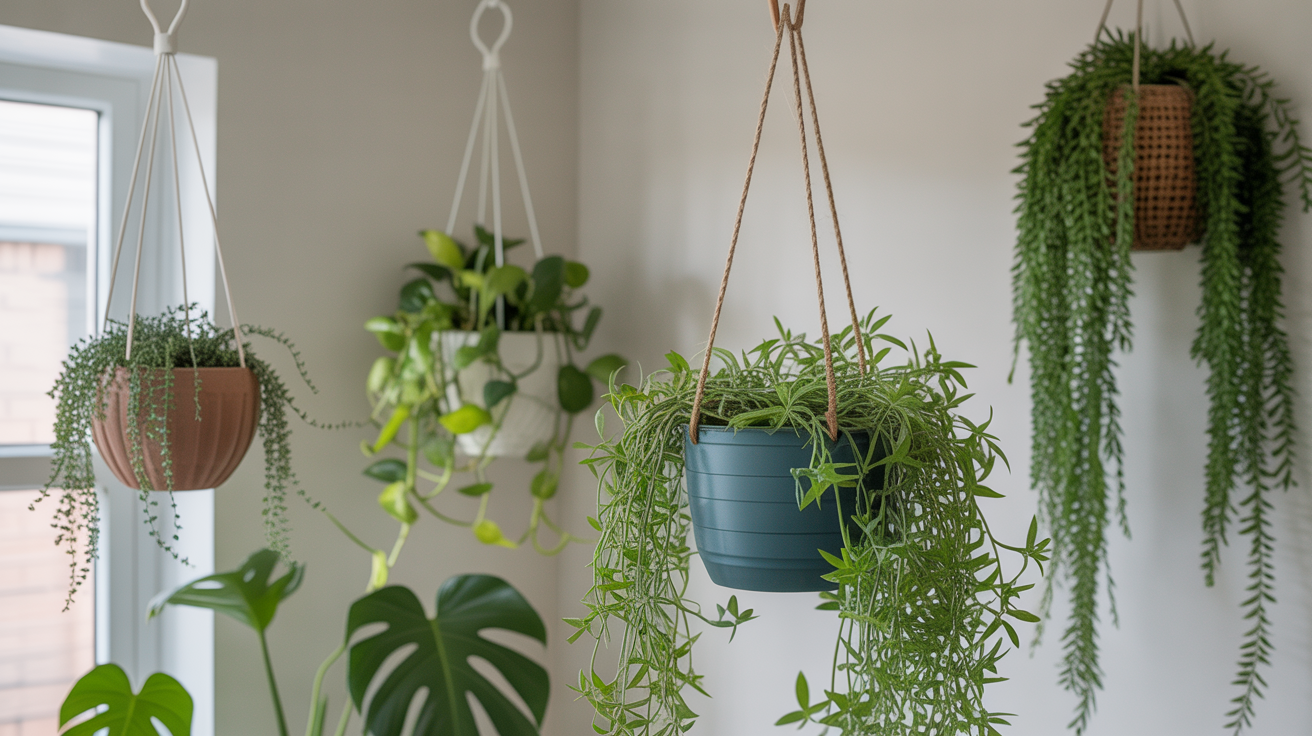
A pot of damp soil is heavier than it looks. A 15 cm pot with a fern and wet soil can weigh 2 kg or more. Ceiling plant hooks only hold if they're anchored into a joist or a solid masonry ceiling, not just into drywall.
Finding a joist
Use a stud finder or try the knuckle-tap method, solid joists produce a dull thud rather than a hollow knock. Once you've located one, a 60 mm wood screw with a swivel hook gives a very secure hold. Pre-drill to avoid splitting.
Toggle bolts for non-joist spots
If a joist isn't where you want it, a heavy-duty toggle bolt (also called a molly bolt) can hold 10–15 kg in plasterboard, depending on the wall thickness and the bolt size. Always check the manufacturer's weight rating and stay well under it.
Alternatives to drilling
- Tension rod between two walls: Works in alcoves or window recesses. Hang S-hooks along the rod.
- Freestanding plant arch or rack: No drilling. Useful in rented flats.
- Over-door hooks with a horizontal bar: Limited to the door width but requires zero hardware.
- Clip-on curtain track hooks: If you have a curtain track near a window, some systems accept clip-on plant hangers rated for a few kilograms.
Macrame Plant Hangers: What to Know Before You Buy
Macrame plant hangers have been popular for decades because they look good, cost little, and are adjustable in height by simply tying them at a different point. Most hold 20–25 cm pots comfortably; check the width of the basket before buying a hanger to make sure the pot sits securely in the knot cradle.
Cotton macrame is softer-looking but absorbs moisture if you accidentally overwater and can rot over a year or two. Jute is stiffer and slightly more water-resistant. Nylon and polyester cord last longer and don't rot, though they have a slightly shinier look.
A few practical notes:
- Pot weight matters. A macrame hanger relies entirely on the ceiling hook above it. The cord itself can handle a few kilograms, but the hook is the real constraint.
- Terracotta pots + macrame = very heavy. Plastic or lightweight ceramic pots are better choices for hanging. A 15 cm plastic pot with a philodendron weighs about half as much as the same size in terracotta.
- Length is adjustable post-installation. If the hanger ends up too low, you can tie a knot at the top to shorten it without replacing the whole thing.
For a deeper look at how hanging plants fit into a broader room display, the guide to how to style houseplants like a designer has some useful framing around scale and repetition.
Spacing and Arrangement in a Small Room
One hanging plant can look like an afterthought. Two or three, arranged at different heights, create a sense of composition. A few principles that help:
Vary the drop. If three plants all hang at the same height, they look like a row of traffic lights. Offset them by 20–30 cm to create a layered effect.
Group near a window. Light is the real constraint. Plants positioned far from a window in a small room will slowly decline no matter how good they look initially. Clustering hanging plants near your best light source means they're more likely to thrive.
Match the pot style. Consistency in pot material (all terracotta, all white ceramic, all black plastic) reads as intentional even when the plant species differ. Mixing three different pot styles looks random.
Consider the view from below. Unlike shelf plants, hanging plants are often seen from below. Trailing varieties like pothos and string of pearls look best from this angle. Upright plants in hanging baskets often look stubby.
For floor-level displays that complement hanging plants, plant stand ideas to show off your collection covers tiered and vertical floor options that work well alongside overhead plants.
Care Adjustments for Hanging Plants
Plants behave slightly differently when suspended. A few things change:
Watering frequency increases. Hanging pots get better airflow, which dries out the soil faster than a pot sitting on a shelf. In summer, a pothos that you'd normally water every 10 days might need water every 6–7 days when hanging near a ceiling where warm air collects.
Soil dries unevenly. The top layer dries first, but the bottom of the pot (which you can't see) may stay wet longer. Stick your finger 3–4 cm into the soil rather than judging by the surface.
Watering is awkward. A small watering can with a long, narrow spout helps. Alternatively, take hanging plants down to water them at a sink once a week, then rehang. This also gives you a chance to inspect the whole plant for pests.
Humidity drops higher up. In dry climates or centrally heated rooms, plants near the ceiling may suffer more than those at floor level. Ferns in particular may develop brown tips if humidity is low. Misting helps in the short term; a small humidifier positioned nearby is more consistent.
Fertilising is the same. A balanced liquid fertiliser (e.g., 10-10-10 NPK) applied monthly during the growing season is plenty for most trailing houseplants.
If you're building out a proper plant corner that mixes hanging, shelf, and floor plants, the guide on how to create a plant corner that looks intentional has a practical layout framework.
Safety and Toxicity Note
Several popular hanging houseplants are toxic to cats, dogs, or both. Pothos, philodendron, English ivy, and string of pearls all contain compounds that cause digestive upset or worse in pets if ingested. Hanging plants are often at cat jumping height or can drop leaves onto the floor. Verify any plant's toxicity on the ASPCA's toxic and non-toxic plant list before bringing it into a home with animals or young children. This guide is general plant-care information, not veterinary advice.
Frequently Asked Questions
What are the easiest hanging plants for a beginner?
Pothos (Epipremnum aureum) and heartleaf philodendron are the most forgiving. Both tolerate irregular watering, a range of light conditions, and occasional neglect. Spider plant is another solid option if you want something that produces visual interest through its hanging runners.
How much weight can a ceiling plant hook hold?
That depends almost entirely on what it's anchored into. A 60 mm wood screw in a joist can hold 25 kg or more. A cheap drywall anchor rated at 5 kg should be treated as a 2–3 kg limit in practice. Always anchor into structural material for heavy pots, and stay well under the rated limit.
Can I hang plants in a room with no natural light?
Technically yes, but the plant selection gets very limited. Pothos and ZZ plant (Zamioculcas zamiifolia) tolerate low light better than most, but they won't trail vigorously without some light. Grow lights mounted at ceiling level can supplement; full-spectrum LED strips positioned above a hanging pot work reasonably well for pothos and philodendrons.
Do macrame hangers work for heavy pots?
Only if the ceiling hook is rated for the weight. The macrame cord itself is rarely the weakest link. A large terracotta pot full of damp soil can hit 4–5 kg easily. Use a hook rated to at least double the pot weight, anchored into a joist, and check the hook periodically for any sign of pulling out from the ceiling.
How do I stop a hanging plant from spinning?
Lightweight pots spin in air drafts and after watering. A swivel hook at the ceiling (rather than a fixed eye hook) lets the pot rotate freely without twisting the cord, which is the more important fix. For a pot that spins into a wall repeatedly, a small piece of fishing line tied from the pot to a nearby nail will steady it without being visible.