Styling & Display
How to Create a Plant Corner That Looks Intentional
Learn how to design an indoor plant corner that looks curated, not chaotic. Tips on grouping plants, layering heights, and picking the right spot.
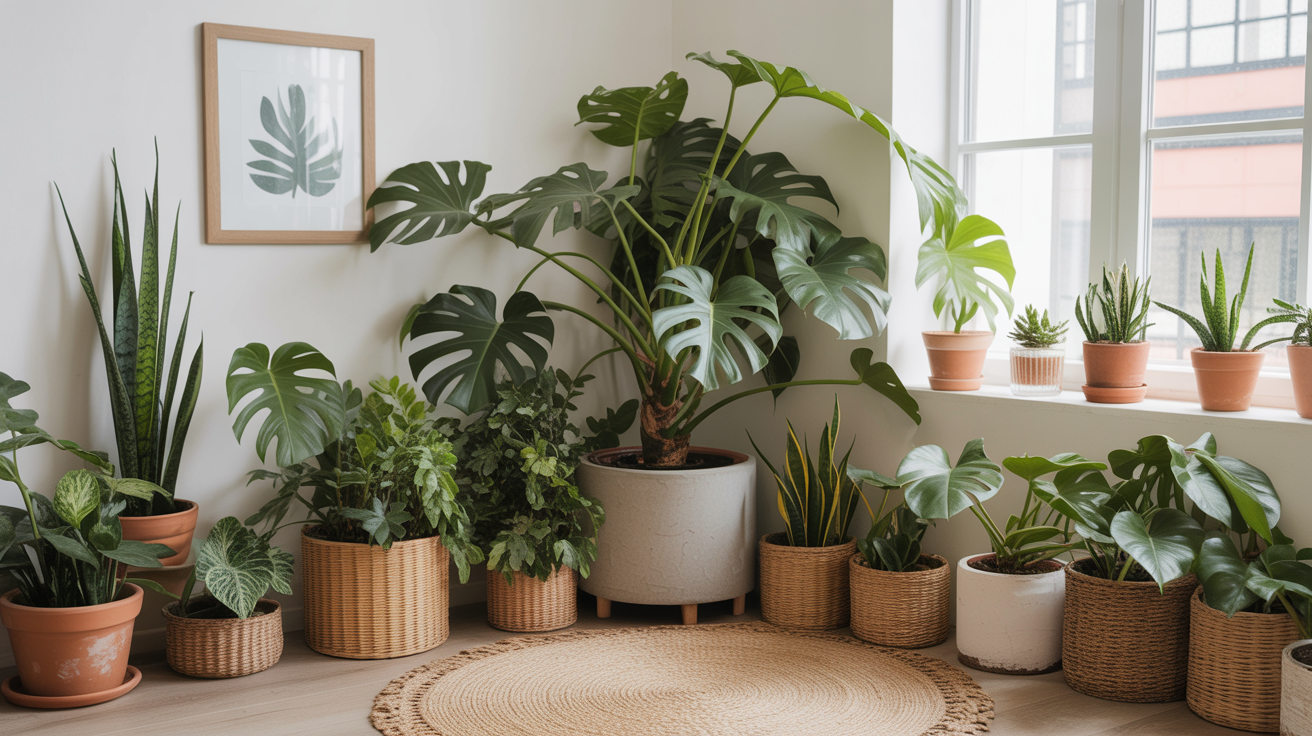
A well-placed cluster of plants in a corner can anchor a room the way a piece of furniture does. The difference between a plant corner that looks purposeful and one that looks like a dumping ground for impulse buys usually comes down to a few repeatable decisions about light, height, and visual rhythm.
Here's how to build one from scratch or tighten up one that isn't quite working.
At a Glance
- Pick the corner by light first, then plants. A southeast corner suits medium-light plants; a dark north corner needs true low-light species, not a compromise.
- Build in layers: one tall anchor, a mid-height layer that does most of the visual work, and a low or trailing layer at the base.
- Stagger pot rim heights by at least 6 to 8 inches so the grouping reads as designed rather than lined up.
- Grouping plants together measurably raises local humidity through transpiration, a real benefit for tropicals in dry winter rooms.
- Five to nine plants is the sweet spot for a standard corner; fewer looks sparse, many more starts to look cluttered.
- Check pet safety before finalizing a layout. Several common corner plants (pothos, philodendron, peace lily) are toxic if chewed.
Pick the Right Corner First
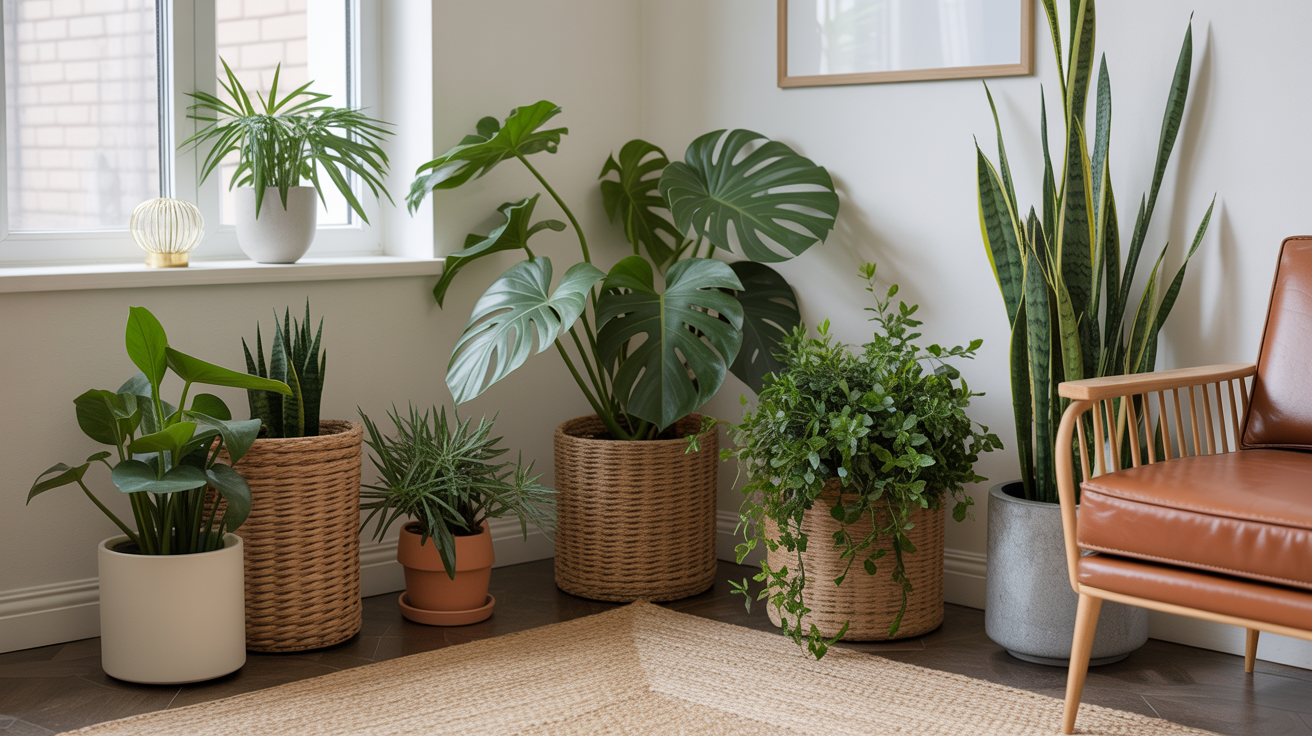
Light is the constraint everything else bends around. Before you move a single pot, spend a day noticing where the sun actually hits. A southeast-facing corner gets gentle morning light, good for most medium-light plants like pothos, ZZ plants, and most ferns. A south- or west-facing corner can support higher-light plants: fiddle-leaf figs, rubber trees, and bird-of-paradise do well with several hours of direct sun.
If the corner you want is dim (north-facing or blocked by a porch), you're not locked out. Peace lilies (Spathiphyllum wallisii), cast iron plants (Aspidistra elatior), and snake plants (Dracaena trifasciata) genuinely tolerate low light. What doesn't work is forcing a high-light plant into a dark corner and expecting it to hold its shape, it stretches toward the window and stops looking like itself within a few months.
Also consider airflow. Corners near exterior doors or heating vents dry out quickly, which stresses most tropical plants. If that's your only option, group plants in a way that creates a small humidity buffer (more on that below).
Build Layers: Tall, Mid, Low, and Trailing
The single move that makes a plant corner look curated rather than random is working in layers. Think of it as filling vertical space with purpose.
Tall anchor (above eye level or at it): This is the statement plant that gives the corner its structure. Good candidates include a fiddle-leaf fig (Ficus lyrata), a Monstera deliciosa that's been given room to climb, or a tall snake plant. One is usually enough. Two identical tall plants can work if the corner is large, but mixing two different tall species at the same height tends to read as cluttered.
Mid-height (waist to chest height): Potted plants on a plant stand, a trailing plant in a hanging pot, or a bushy specimen like a peace lily or a calathea. This layer does the most work in creating visual mass. For ideas on raising plants to the right height, plant stand ideas to show off your collection covers options at several price points.
Low and trailing: Small pots at floor level, or a trailing plant (golden pothos, heartleaf philodendron) draping down from the mid layer. This keeps your eye from dead-stopping at the pot rims.
The rule of thumb is to avoid aligning pot rims at the same height. Stagger everything by at least 6 to 8 inches and the grouping reads as designed, not accidental.
Grouping Plants Together: More Than Aesthetics
Grouping plants isn't just a visual trick. When plants are clustered, their transpiration raises the local humidity around the group. University of Maryland Extension's guide to temperature and humidity for indoor plants confirms the mechanism directly: grouping plants together in a room will collectively raise the humidity in their immediate area, one of several practical ways to boost humidity alongside pebble trays and humidifiers. In dry apartments (especially in winter when heating runs constantly), this makes a real difference for tropical species that otherwise develop brown leaf tips.
A few things to keep in mind when deciding what goes together:
- Match care requirements, not just looks. Grouping a cactus with a fern because they're the same size is going to create a problem: the fern wants consistent moisture and the cactus wants bone-dry soil between waterings. Plants that live together get watered together (mostly), so group by similar needs. This applies to humidity too, succulents and other low-humidity plants should sit apart from the humidity-loving cluster rather than inside it.
- Consider leaf texture and shape. A corner planted entirely in large-leafed tropicals can look heavy. Mix in something fine-textured (a fern, a spider plant, a fittonia) to add visual contrast without breaking the cohesion.
- One pot color or material goes a long way. A mix of terracotta, white ceramic, and plastic nursery pots in the same corner looks unresolved. Picking one primary material (terracotta is forgiving; white ceramic looks cleaner) and using it for at least 60 to 70% of the pots pulls a grouping together fast.
For rooms with limited floor space, vertical solutions like wall-mounted planters or hanging pots free up the floor while still building a jungle corner feel. Hanging plant ideas for small spaces has practical options if floor space is the constraint.
A Simple Plant Corner Starter Kit by Light Level
Not sure what to actually buy? Here's a working shortlist by light condition.
| Light Level | Tall Anchor | Mid Layer | Low / Trailing |
|---|---|---|---|
| Bright indirect (south/west, no direct sun) | Fiddle-leaf fig, rubber tree | Peace lily, Chinese evergreen | Pothos, heartleaf philodendron |
| Medium indirect (east/north-east) | Snake plant (tall variety) | ZZ plant, peace lily | Pothos, tradescantia |
| Low light (north-facing, shaded) | Cast iron plant | Peace lily, dracaena | Pothos (golden tolerates low), cast iron small pot |
| Bright direct (several hours of sun) | Bird-of-paradise, tall cactus | Aloe vera, smaller succulents | String of pearls, echeveria |
Note: many common houseplants are toxic to pets and people. Peace lilies, pothos, philodendrons, and ZZ plants are all toxic if ingested. Check the ASPCA's searchable toxic and non-toxic plant list for a specific plant's safety before bringing it home, especially if you have cats, dogs, or young children.
Build Cost by Corner Size
| Corner size | Plant count | Rough cost (mid-range nursery plants + one stand) |
|---|---|---|
| Small (studio, apartment corner) | 5 to 6 plants | $80 to $150 |
| Medium (living room corner) | 7 to 9 plants | $150 to $300 |
| Large (open-plan, high ceiling) | 9 to 12 plants, one large statement piece | $300 to $600+, driven by the anchor plant's size |
Prices swing a lot based on how large your anchor plant is when you buy it. A 6-foot fiddle-leaf fig or Monstera costs several times what a 1-foot starter does, and buying smaller plants and growing the corner in over a year or two is a legitimate way to keep costs down.
Finishing Details That Make It Look Done
Once the plants are placed, a few finishing touches close the gap between "arrangement" and "intentional corner."
Define the edge. A corner that bleeds into the rest of the room without any visual boundary can look incomplete. A jute rug underneath the grouping, a low plant tray that unifies the base, or a simple planter shelf that holds the arrangement defines the space.
Limit the number of plants to what you can actually maintain. An indoor plant corner with 8 thriving, full-leafed plants looks better than 15 plants where half are struggling. A sparse, cared-for grouping beats a dense, neglected one every time.
Edit periodically. Seasonal growth means the balance shifts. A plant that was the mid-layer accent in spring might be tall enough by fall to compete with the anchor. Moving things around every few months keeps the grouping looking intentional rather than frozen.
For more guidance on overall arrangement principles, how to style houseplants like a designer goes deeper on proportion and negative space.
Frequently Asked Questions
How many plants do I need for a corner to look full?
Somewhere between 5 and 9 is usually the sweet spot for a standard corner. Fewer than 5 tends to read as a loose collection rather than a vignette. More than 10 starts to look dense unless the plants are small or you have a very large corner with high ceilings. Start with 5 to 6 and let natural growth fill in the gaps over time.
Can I mix tropical plants with succulents in the same corner?
Physically yes, but logistically it's tricky. Tropicals (pothos, monstera, ferns) want consistent soil moisture and higher humidity. Succulents and cacti want to dry out completely and don't like humidity. The workaround is putting succulents in terracotta pots with fast-draining soil so they drain and dry quickly even if the room is more humid than ideal. Water them separately and less often than the tropicals.
What's the best way to handle a dark corner?
Lean into low-light species rather than trying to fight the condition. Cast iron plants, snake plants, ZZ plants, and certain dracaenas genuinely do well with minimal light. If you want more visual drama in a dark corner, a grow light on a timer (12 to 14 hours on, 10 to 12 hours off) can expand your options significantly without much effort.
Do I need matching pots for a plant corner to look cohesive?
Not identical, but some visual thread helps. Sticking to one material (terracotta, glazed ceramic, concrete) for most of the pots unifies the look even if the sizes and shapes vary. Mixing pot colors across the visible spectrum in a single corner tends to read as chaotic regardless of how good the plants themselves look.
How do I keep a plant corner from blocking the room?
Keep the tallest plants against the wall, not at the front of the group. The arrangement should taper from tall at the back/wall to low at the front edge, so the corner reads as receding rather than encroaching. Also avoid pushing large-leafed plants out past the boundary where they interrupt foot traffic or sightlines across the room.
Does grouping plants actually help them, or is it just for looks?
Both. The visual payoff is real, layered heights and clustered pots read as a designed feature rather than scattered plants. But the humidity benefit is measurable too: plants release most of the water they take up back into the air through transpiration, and clustering plants concentrates that moisture around the group instead of letting it diffuse through the whole room. The effect is strongest in a low-airflow spot, which is often exactly where a plant corner already sits.