Styling & Display
Plant Stand Ideas to Show Off Your Collection
Discover plant stand ideas that work for any space—tiered shelves, DIY builds, corner clusters, and more to display your houseplants beautifully.
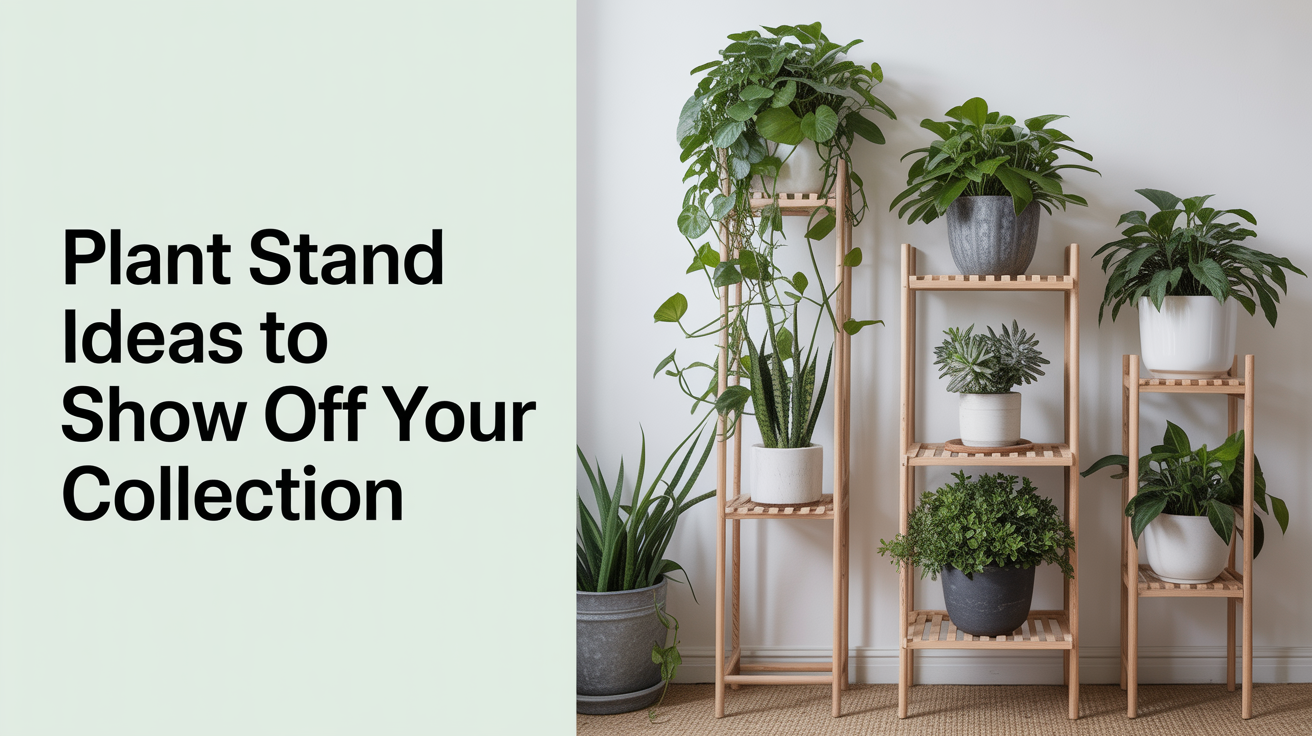
A good plant stand does two things at once: it puts your plants where they can actually get the light they need, and it turns your collection into something worth looking at. Whether you have two pothos on a windowsill or forty plants spread across three rooms, choosing the right stand can change how the whole space feels.
Here's a practical guide to the most useful indoor plant stand formats, what each is best for, and how to put them together without overthinking it.
At a Glance
- Match stand height to light: the closer to a window, the more light-hungry the plant on it should be.
- Tiered stands are the most space-efficient option, but the top shelf gets meaningfully more light than the bottom one.
- Steel or iron handles humidity and heavy pots better than bamboo or rattan, which can warp or mold in bathrooms and kitchens.
- A wet, mid-size ceramic pot commonly weighs 5 to 8 lbs; check a stand's weight rating before stacking several.
- Budget builds (cinder block and plank, or PVC pipe) hold real weight and cost a fraction of retail stands.
- If pets share the space, plan stand placement around which plants are toxic, not just which look good together.
Tiered Plant Stands: The Most Space-Efficient Option
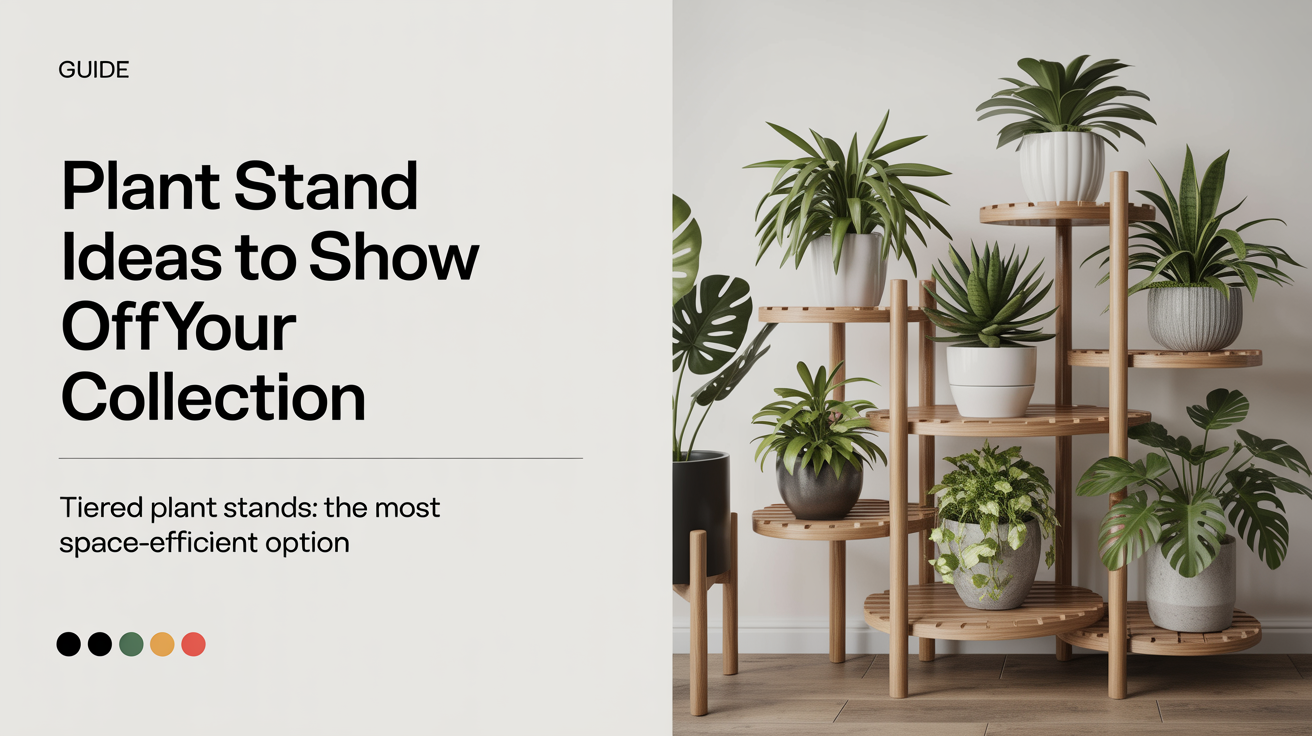
A tiered plant stand is the single most effective way to display multiple plants in a small footprint. Three to five shelves stacked vertically let you mix trailing varieties (which cascade down) with upright plants on the upper tiers. The result looks layered and intentional without taking up more floor space than a side table.
What works on a tiered stand
Trailing plants like pothos (Epipremnum aureum), string of hearts (Ceropegia woodii), and heartleaf philodendron (Philodendron hederaceum) belong on upper shelves where their vines can hang freely. Compact uprights, ZZ plants (Zamioculcas zamiifolia), snake plants (Dracaena trifasciata) in small pots, or ferns, work well on lower tiers.
One thing to watch: tiered stands near a window create a light gradient. The top shelf gets more direct light than the bottom. University of Maryland Extension's guide to lighting indoor plants classifies light intensity in bands: high light (roughly 500 to 1,000 foot-candles) close to a south-facing window, medium-bright light (100 to 500 foot-candles) near east or west windows, and low light (25 to 100 foot-candles) farther into the room. On a tiered stand, that whole range can exist between the top and bottom shelf of a single unit placed near a window, which is why matching your plants to the tier matters more than matching them to the room. A high-light plant like a succulent on the lowest shelf will stretch toward the light and eventually look leggy.
Material considerations
Bamboo and rattan stands look natural and are lightweight, but they're not ideal in rooms with high humidity (like a bathroom) where they can warp or mold over time. Steel or iron stands handle moisture better and hold heavier pots. A mid-weight ceramic pot with wet soil can easily weigh 5 to 8 lbs, so check the weight rating before stacking several large pots on a single unit.
DIY Plant Stand Ideas Worth Actually Building
A DIY plant stand doesn't have to be complicated to be useful. Two of the most practical builds require minimal tools and materials.
Cinder block and wood plank shelves
Stack two cinder blocks on their sides, lay a plank across them, stack two more blocks, add another plank. Repeat as high as you want. This creates an open shelving unit that's stable, holds heavy pots without bending, and costs very little, a standard cinder block plus a scrap or big-box plank runs under $15 total for a single shelf, versus $40 to $80 for a comparable retail plant stand. Paint the blocks or leave them raw. The industrial look works surprisingly well alongside leafy plants.
PVC pipe stand
PVC pipe from a hardware store can be cut and assembled into an A-frame or ladder-style stand with basic connectors. A 1-inch diameter pipe holds up well for small to medium pots. The advantage over wood is that PVC doesn't rot and can be wiped clean when soil spills on it. Spray-paint it black or white before assembling if you want it to blend in rather than look like a plumbing project.
For more ways to make a display look cohesive rather than accidental, the guide on how to create a plant corner that looks intentional covers pot grouping, height variation, and negative space in detail.
Corner Stands and Tall Pedestal Displays
A tall corner stand, anywhere from 4 to 6 feet high, solves a specific problem: how to fill vertical space in a corner without blocking light or cluttering the floor. These are usually single-shelf units on a narrow pedestal or a ladder-style stand that leans into the corner.
Fiddle-leaf figs (Ficus lyrata), bird of paradise (Strelitzia reginae), and tall dracaenas are natural fits here because they're already upright and architectural. But a tall pedestal can also work for a single trailing plant, a wax plant (Hoya carnosa) or a long-vining pothos placed high enough to let the vines reach 3 to 4 feet down looks dramatic against a plain wall.
A note on pot weight: pedestals narrow at the base, so top-heavy arrangements (large pot, dry light soil, tall plant) can tip. Keep the pot low and check that the base is stable before walking away.
Window Shelf and Sill Extenders
The space directly in front of a south- or east-facing window is the most valuable real estate in any plant setup. A window shelf or sill extender adds usable surface area there without permanently altering anything.
Tension-mounted or bracket-mounted window shelves in glass or acrylic are nearly invisible and don't block light to plants sitting below them. This makes them ideal for succulents, cacti, small herbs like basil (Ocimum basilicum), and other plants that need several hours of direct sun per day, the high-light band described above.
If your windowsill is too narrow to hold a pot securely, a clip-on plant shelf that hooks over the window frame solves it without drilling. These typically hold pots up to 6 inches in diameter. Keep the glass clean, dusty windows can reduce light transmission more than most people expect.
Grouping Multiple Stands: Building a Display
Individual stands are useful, but putting two or three together creates a more complete look. The principle behind any good grouping is simple: vary the heights, vary the textures, and leave some open space so the eye has somewhere to rest.
A practical three-stand arrangement:
- A tall corner pedestal with one architectural plant (fiddle-leaf fig or snake plant) at 5 feet
- A mid-height tiered stand to one side with 4 to 6 smaller plants at varying tiers
- A low pot directly on the floor for a trailing plant that spills outward
This creates a diagonal line of height across the corner, which draws the eye in a way that a flat row of equal-height plants never does. You can read more about making this kind of composition feel considered rather than crowded in the guide on how to style houseplants like a designer.
Plant Stand Quick-Reference by Situation
| Situation | Best stand type | Notes |
|---|---|---|
| Small room, many plants | Tiered stand (3 to 5 shelves) | Maximizes vertical space |
| Bright corner with one statement plant | Tall pedestal | Match plant height to ceiling |
| Kitchen or bathroom | Waterproof metal or sealed wood | Humidity and splashes damage untreated wood |
| Renter (no drilling) | Freestanding ladder stand | Leans against wall, no hardware |
| High-light plants needing direct sun | Window shelf/sill extender | Keeps plants closest to the glass |
| Budget build | Cinder block + plank, or PVC pipe | Both handle real weight and last for years |
| Small-space overflow | Wall-mounted floating shelf | Frees floor space entirely |
Weight and Load Reference
| Pot size (wet, filled) | Approx. weight | Stand needs |
|---|---|---|
| 4 to 6 inch plastic or ceramic | 2 to 4 lbs | Almost any stand, including glass shelves |
| 8 to 10 inch ceramic | 5 to 8 lbs | Wood or steel tiered stand rated for the shelf, not just the whole unit |
| 12 to 14 inch ceramic, large tropical | 15 to 20 lbs | Steel/iron frame, wide base, single-plant pedestal |
| 16 inch+ floor planter | 20 to 30 lbs | Rated 50 lbs+, or straight to the floor with a rolling plant caddy |
If floor space is the main constraint, hanging plants can run parallel to stands rather than competing with them. The guide on hanging plant ideas for small spaces covers ceiling hooks, macrame hangers, and wall-mounted bracket options.
Frequently Asked Questions
How do I keep a plant stand from tipping over?
Most tips happen because the pot is too heavy for the stand's base, or the base is too narrow relative to the height. When in doubt, choose a stand with a wider base footprint, and put heavier pots on lower shelves rather than at the top. On hard floors, rubber feet or non-slip pads under the legs help a lot.
Can I put a plant stand outside?
Some indoor plant stands (particularly solid iron or treated wood) hold up fine on a covered porch. Untreated wood, bamboo, and rattan will deteriorate quickly with direct rain exposure. Check the material before moving a stand outdoors, and bring it in before winter if temperatures drop below freezing.
What's a good stand for a very heavy pot?
Large ceramic planters can weigh 20 to 30 lbs when filled with wet soil. For anything that heavy, look for stands with a steel or iron frame rated for 50 lbs or more, most listings state weight capacity. Wide-base industrial shelving (the kind used in garage storage) is an underrated option for very large or multiple heavy pots.
Do tiered plant stands block light for lower shelves?
They do, to some degree. Upper shelves will receive more light than lower ones, especially if the stand is placed a few feet from the window. This isn't necessarily a problem, put your low-light plants (pothos, peace lily, ZZ plant) on the lower tiers and higher-light plants near the top.
Are there plant stands safe for pets?
The stand itself isn't the concern, the plants on it are. Many common houseplants are toxic to cats and dogs, including pothos, philodendrons, and peace lilies. If you have pets, check the ASPCA's searchable toxic and non-toxic plant list for each plant before bringing it home, and consider placing toxic plants on high shelves or in rooms pets don't access.
How much clearance does a plant need above it on a shelf?
Leave at least 8 to 12 inches between the top of a plant and the shelf above it on a tiered stand, more for fast growers like pothos or philodendron that will fill that gap within a season. If a plant is already brushing the shelf above, either move it down a tier or plan on a trim; leaves pressed against a shelf don't get even light and can develop soft spots from reduced airflow.