Styling & Display
How to Decorate With Plants Without the Clutter
Decorating with plants looks effortless in photos and chaotic in real homes. Here's how to place and style plants so a room feels lush, not overwhelmed.
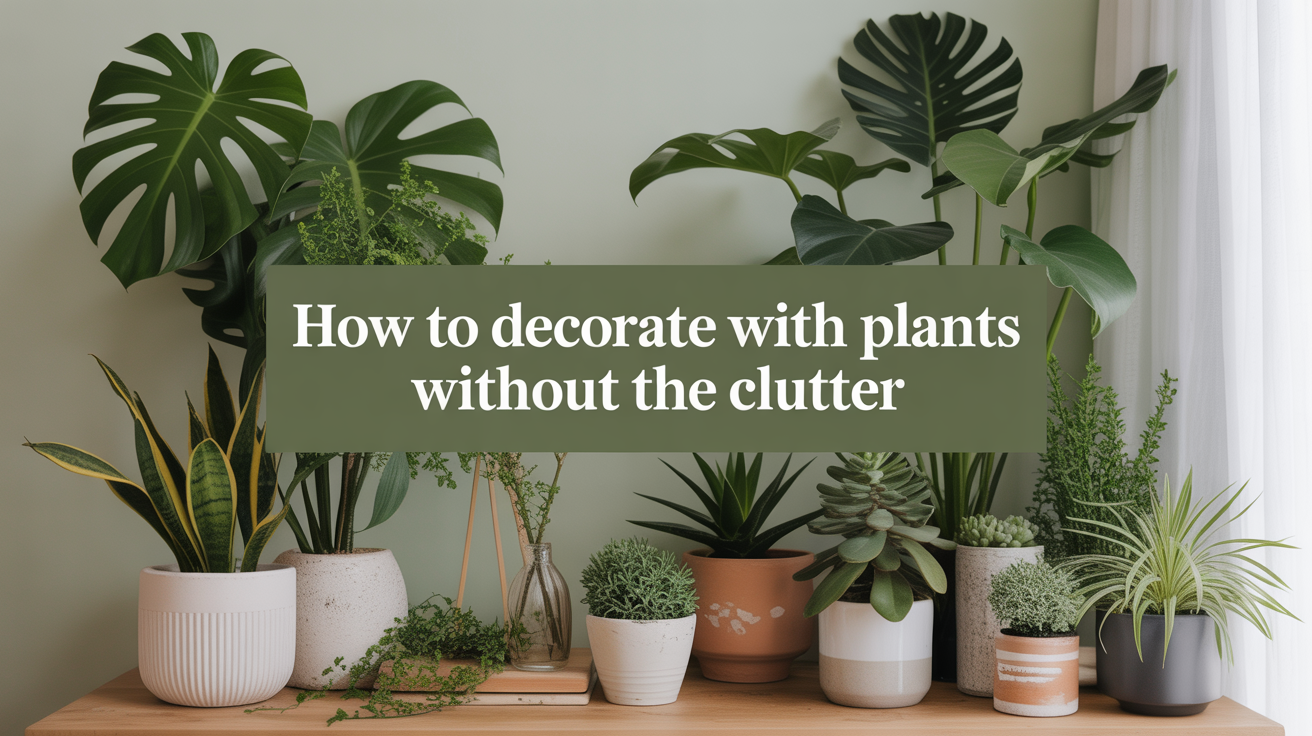
The homes that pull off lush green interiors without looking chaotic share one thing: restraint. Not fewer plants necessarily, but fewer plants in any one spot, placed with some intention behind them. Decorating with plants goes sideways when buying comes before planning, and the result is a room that feels more like a holding area than a living space.
The good news is that editing and rearranging work faster than buying more. Most rooms are one or two adjustments away from looking deliberate.
At a Glance
- Edit before you add: pull two plants out for a week and see if you miss them before buying more.
- Match plant scale to furniture scale. Big plants belong on the floor; small ones get swallowed by tall furniture.
- A living room around 12 by 14 feet reads well with three to five plants placed with purpose, not ten scattered around.
- Repeat two or three pot materials across a room instead of a different container for every plant.
- Vary height with stands and shelves rather than adding more pots to fill a space.
- Several popular decor plants, including pothos, monstera, snake plant, and ficus species, are listed as toxic to cats and dogs, so it's worth checking before placing them where pets can reach.
Edit Before You Add
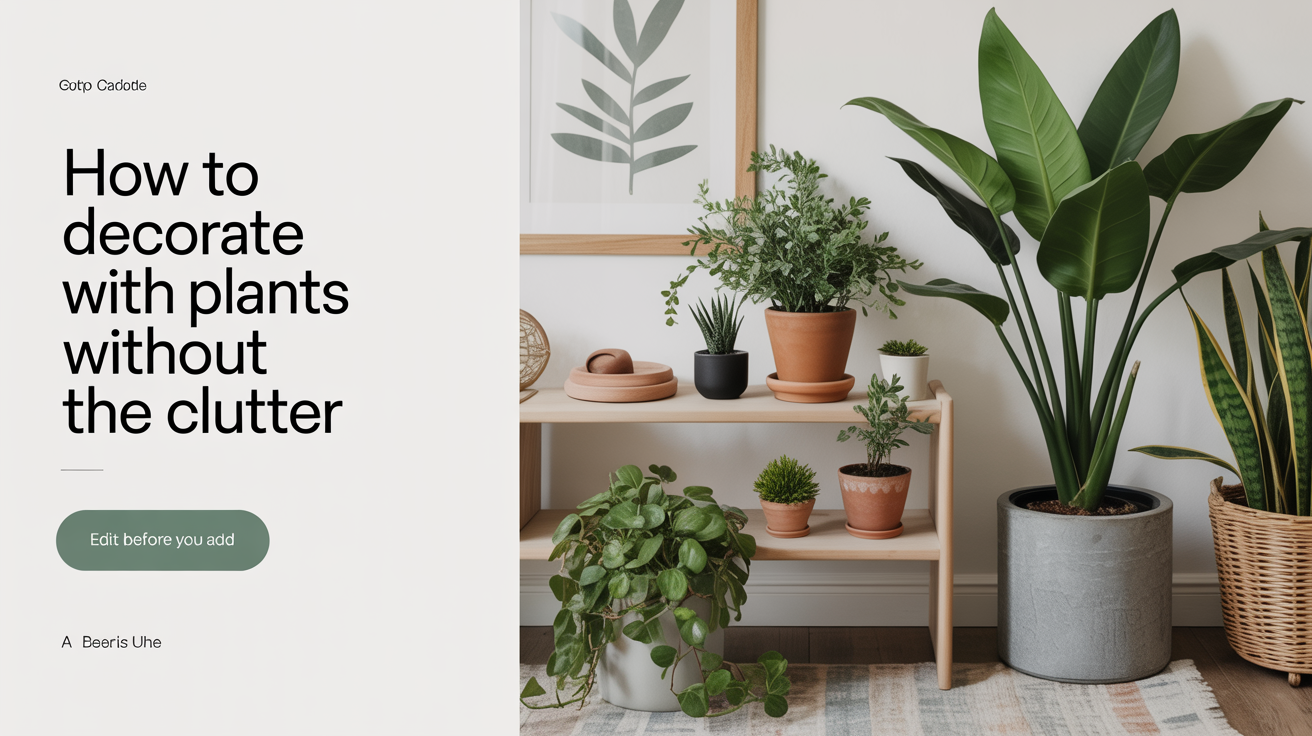
The most common mistake is acquiring plants first and figuring out placement later. A better approach: look at the room as it is, decide where a plant would actually add something, then bring the right plant in for that spot.
The Two-Plant Test
Pull two plants out of your current collection and set them in another room for a week. Do you notice their absence? If the space feels calmer or the same, those plants were background noise rather than design choices. Editing is not defeat; it's the same thing a stylist does before every shoot.
Why Clutter Happens
Plants accumulate gradually. A small pot here, a succulent from a friend there, a cutting that rooted faster than expected. Before long, every surface has something green on it and none of it reads as placed on purpose. The fix is deciding, in advance, which spots in a room are plant spots and leaving the rest alone.
Matching Plants to Furniture Scale
Styling plants with furniture is mostly a question of proportion. A three-inch succulent on top of a six-foot bookcase disappears. A five-foot bird of paradise wedged next to a loveseat overwhelms the whole corner. Getting the scale right is the difference between a plant that looks designed and one that looks forgotten.
Floor-Level Plants
Large plants work best on the floor beside furniture rather than crowded onto it. A fiddle-leaf fig or a monstera positioned next to a sofa anchors a corner without cluttering any surface. For a fiddle-leaf fig, you need bright indirect light, temperatures between 60°F and 85°F (16°C to 30°C), and watering roughly once a week when the top two inches of soil have dried out. Under-water slightly rather than over; soggy roots are a fast way to lose a plant that took a year to grow to furniture height.
Shelf and Surface Plants
On shelves, the approach that works reliably is one plant per visual break. If a shelf has books, a candle, and a framed photo, that's already visually full. One trailing pothos or a single plant in a good pot can anchor the shelf without competing with everything else. A golden pothos tolerates low light and forgives irregular watering, which the North Carolina State Extension Gardener's plant profile for Epipremnum aureum confirms directly, noting it survives for long periods in low light and prefers to dry out between waterings, which makes it the practical choice when a shelf sits away from window access.
Tabletop Plants
Tables need to stay functional. A small plant near the edge of a dining table works. A row of succulents down the center that guests have to peer around does not. Keep tabletop plants compact and low enough that they don't interrupt conversation or sightlines.
How Many Plants in a Room
There is no formula, but there is a useful question: can you name every plant in the room without walking around to check? If not, there are probably too many.
A living room that's roughly 12 by 14 feet reads well with three to five plants placed with purpose. That might be one floor plant in a corner, one trailing plant on a shelf, and one or two near a window. More than that takes active arrangement to look intentional rather than accumulated.
Smaller rooms need fewer plants. A bathroom with one well-chosen plant often looks better than one with six crammed around the sink. A bedroom works with two or three plants; beyond that, the room can start to feel repurposed.
For a room that feels lush rather than crowded, vary the heights rather than increasing the count. Plant stand ideas to show off your collection are a useful starting point for understanding how to build visual layers without multiplying pots.
Choosing Plants That Work Harder
Some plants earn their space with care requirements that actually fit the room, not just their appearance. A plant that needs watering every four days in a room you rarely visit will look half-dead most of the time, which undoes whatever styling benefit it was supposed to provide.
Low-Water Options for Dry Rooms
ZZ plants and snake plants tolerate serious drought and dim conditions without fading quickly. A snake plant needs watering only every two to three weeks in winter and about once a week in summer, prefers temperatures above 50°F (10°C), and does fine in indirect or even fluorescent light. It also grows upright rather than trailing, which keeps it from encroaching on surrounding furniture.
Trailing Plants for Shelves
Pothos and heartleaf philodendrons trail naturally without much intervention. Both tolerate indirect light and can go a week or more between waterings once the soil dries out. The trailing effect reads as intentional design even when you've had a busy week, which makes them low-maintenance in the styling sense as well as the care sense.
Statement Plants for Corners
One large plant in a corner does more visual work than four small ones scattered across a windowsill. A monstera in a room with good indirect light (bright but out of direct sun) can reach three to four feet wide and tall over a few years. Water it when the top inch of soil is dry, keep it above 60°F (16°C), and wipe the leaves occasionally so they stay glossy. It fills a corner on its own without requiring a collection of smaller plants to compensate.
Plants and Pets: What to Check Before You Buy
A styled corner isn't much of a win if it sends a curious cat to the emergency vet. Several of the plants that come up most often in decorating guides, including this one, are listed as toxic to cats and dogs by the ASPCA's toxic and non-toxic plant list, which is worth a quick search before you commit a plant to a spot a pet can reach.
| Plant Mentioned Above | ASPCA Toxicity Status | Typical Symptoms if Chewed |
|---|---|---|
| Pothos (Epipremnum aureum) | Toxic to cats and dogs | Oral irritation, drooling, vomiting, trouble swallowing |
| Snake plant (Sansevieria) | Toxic to cats and dogs | Nausea, vomiting, diarrhea |
| Monstera deliciosa (Ceriman) | Toxic to cats and dogs | Oral irritation, drooling, vomiting, trouble swallowing |
| Fiddle-leaf fig (Ficus species) | Toxic to cats and dogs (Ficus sp. broadly listed as toxic) | Skin and mouth irritation from sap |
None of this means you need to give up your monstera if you have a cat. It means placing it where a determined pet can't easily reach and chew a leaf, on a high shelf or plant stand rather than at floor level in a room your cat has the run of, and knowing the signs of plant poisoning so you can call a vet if you notice chewed leaves and a pet acting unwell. If you'd rather sidestep the question entirely, pet-safe houseplants that are easy to grow rounds up options that don't require that extra placement caution.
Containers and Pots Matter More Than You Think
Plants in home decor succeed or fail partly on the pot. A mismatched collection of nursery plastic and ceramic pots in five different styles makes a shelf look like a clearance display. Choosing two or three pot styles and repeating them across a room pulls the whole arrangement together.
Terracotta reads as natural and pairs well with wood furniture. White or cream ceramic feels clean and suits modern or minimal rooms. Woven baskets used as pot covers add texture without competing with the plants themselves. Pick a material palette and apply it consistently across the room.
Drainage still matters. Pots without holes can work, but they require more attention to avoid waterlogged roots. If you use a decorative pot without drainage, keep the plant in its nursery pot as a liner and empty any standing water after each watering. How to style houseplants like a designer goes deeper on how pot choice and grouping reinforce each other.
If floor and shelf space is tight, going vertical helps. Hanging plant ideas for small spaces covers options that keep greenery visible without taking up any horizontal surface at all.
Frequently Asked Questions
How many plants are too many for one room?
There's no fixed number, but if you can't identify each plant without walking around the room to check, or if plants are covering multiple surfaces without a clear visual reason, you probably have more than the room needs. Three to five placed deliberately almost always reads better than ten arranged without a plan.
Can plants work in rooms with low light?
A few do well. Snake plants, ZZ plants, and pothos all tolerate low-light conditions without fading quickly. Low light means indirect or filtered light from a north-facing window, not a windowless room. No houseplant survives indefinitely with no natural light unless you supplement with a grow light.
Is it better to group plants or spread them around a room?
Both can work, but grouping tends to look more intentional. A cluster of three plants at different heights reads as a styled moment. Three plants spread evenly around a room at the same height reads as decoration placed without much thought. Grouping also simplifies watering since everything is in one spot.
What's the quickest way to make a small plant collection look designed?
Repeat two or three pot styles instead of using a different container for every plant. Then vary the heights using plant stands, stacked books, or shelves at different levels. Height variation does more styling work than adding more plants.
Do plants need to match a room's color palette?
Not literally, but contrast helps. Deep green foliage shows up clearly against light walls and natural wood. Pale green or heavily variegated plants can disappear against busy wallpaper or patterned upholstery. The pot is where you have more control over matching a room's tones, so lean on that rather than searching for plants with a specific leaf color.
Are any of the plants in this guide safe for a home with cats or dogs?
Not the ones used as the main examples here. Pothos, monstera, snake plant, and fiddle-leaf fig are all listed as toxic to cats and dogs by the ASPCA, mostly causing mouth and stomach irritation rather than severe poisoning, but still worth avoiding at floor or shelf-edge height if you have a pet that chews foliage. If a pet-free layout isn't an option, look for genuinely non-toxic alternatives like parlor palms or most ferns instead of relying on placement alone to keep a curious animal away.
What should I do if I think my pet ate part of a toxic houseplant?
Remove any remaining plant material from the pet's mouth if you can do so safely, note which plant and roughly how much was chewed, and call your veterinarian or the ASPCA Animal Poison Control Center right away rather than waiting to see if symptoms appear. Having the plant's name ready, from the label or a plant ID app, speeds up the call considerably.