Propagation
How to Propagate Pothos: A Beginner's Guide
Learn how to propagate pothos from cuttings in water or soil. Step-by-step instructions on where to cut and how to root new plants fast.
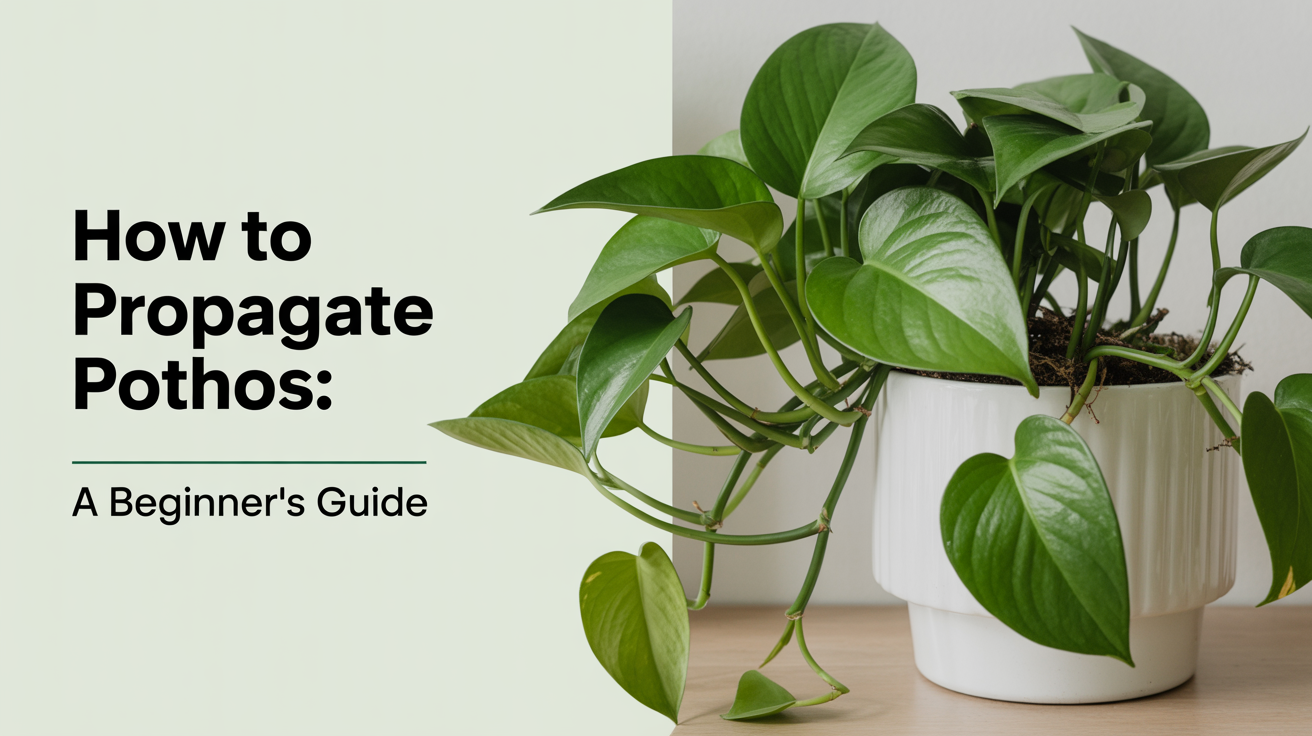
Pothos (Epipremnum aureum) is one of the easiest houseplants to multiply. Snip a stem below a node, drop it in a jar of water, and roots usually appear within two weeks. That's the short version. NC State Extension's plant profile on pothos notes the plant tolerates a wide range of indoor conditions and roots easily in water, which is part of why it roots so reliably for beginners. This guide covers where exactly to cut, what to look for as the roots develop, how to move your cutting to soil, and what goes wrong (and why).
At a Glance
- Every cutting needs at least one node, the small brown bump on the stem, no node means no roots.
- Cut just below a node, leave 1–3 leaves, and remove any leaf that would sit underwater or at the soil line.
- Water propagation shows root progress in 10–14 days; soil propagation roots in 3–4 weeks but hides its progress.
- Move water-rooted cuttings to soil once roots reach 1–2 inches, longer roots turn brittle and snap during planting.
- Change propagation water every 5–7 days to prevent bacterial rot and cloudy, smelly water.
- Pothos is mildly toxic to cats, dogs, and humans if chewed, keep cuttings away from pets during rooting.
Understanding Pothos Anatomy Before You Cut
Successful propagation starts with knowing what you're looking at on the vine.
Nodes are the small brown bumps or slightly swollen joints along the stem, spaced a few inches apart. This is where roots emerge. A cutting without at least one node will not root, no matter how long you leave it in water.
Aerial roots are the brownish nubs that sometimes protrude from the stem between leaves. These speed things up because they are already partially developed root tissue. If your cutting has one, great. If not, a healthy node works just as well.
Leaves photosynthesize and keep the cutting alive while roots form, but too many leaves put stress on the stem. One to three leaves per cutting is a good range.
Internode length, the gap between one node and the next, is worth a glance before you cut. Short, tight internodes (an inch or less) usually come from a vine that got good light and are a sign of vigorous growth. Long, stretched-out internodes (2–3 inches or more) often mean the parent plant was reaching for light. Cuttings from either will root, but a cutting from a well-lit, compact section of vine tends to fill out into a fuller-looking plant faster once potted.
Where to Cut Pothos
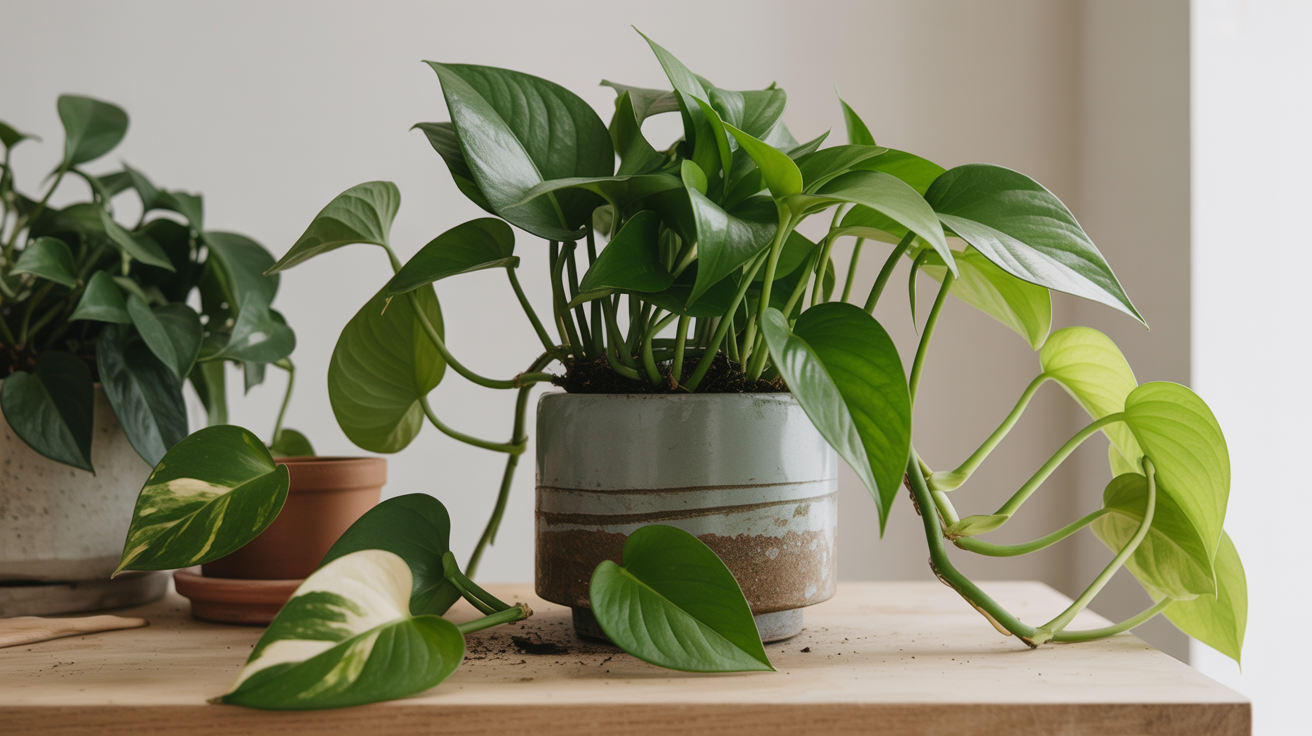
Use clean scissors or pruning shears. Wipe the blades with rubbing alcohol first, especially if you've been working with other plants, to avoid transferring any pathogens.
Make your cut just below a node, leaving about 1/4 inch of stem beneath it. This small stub gives the emerging roots something to grip without wasting too much stem length.
A usable cutting is typically 4–6 inches long and has 2–3 leaves and at least one visible node. Remove any leaves that would sit underwater or at the soil line; submerged leaves rot and cloud the water quickly.
Tip: The long trailing sections of a pothos vine are ideal for propagation. A single 18-inch runner can yield three or four cuttings. Cut it into segments, each with one to two nodes, and root them all at once.
Cutting Yield by Vine Length
Here's roughly what to expect if you're propagating from an established, trailing plant.
| Vine length | Approx. nodes available | Usable cuttings (4–6 in. each) |
|---|---|---|
| 12 inches | 4–5 | 2–3 |
| 18 inches | 6–7 | 3–4 |
| 24 inches | 8–9 | 4–5 |
| 36 inches | 12–14 | 6–8 |
How to Propagate Pothos in Water
Water propagation is the most popular method because you can watch the roots develop, which helps you time the transfer to soil correctly.
What you need
- A clean glass jar or small vase
- Room-temperature tap water (let it sit for an hour to off-gas chlorine, or use filtered water)
- Your prepared cuttings
Steps
- Fill the jar so the node sits below the waterline but the leaves stay above it.
- Place it somewhere with bright indirect light. A windowsill with a sheer curtain works well; direct sun heats the water and encourages algae.
- Change the water every 5–7 days. This keeps oxygen levels up and discourages bacteria.
- Watch for root nubs within 10–14 days. Full roots suitable for soil transfer are typically 1–2 inches long, which takes about 3–5 weeks.
The roots that grow in water are slightly different in structure from soil roots (they're adapted to a low-oxygen, aquatic environment), so transfer them before the roots get too long. Roots longer than 3–4 inches become brittle and are more likely to snap during planting.
For a broader look at water propagation across species, the techniques in our guide to propagating plants in water step by step apply directly to pothos as well.
How to Propagate Pothos in Soil
Soil propagation skips the water stage entirely. The roots that form go straight into their permanent medium, which means less transplant stress.
What you need
- A small pot with drainage holes (3–4 inches is plenty)
- Well-draining potting mix (standard indoor mix works; adding a small amount of perlite improves drainage)
- A chopstick or pencil
Steps
- Moisten the potting mix so it holds together when squeezed but doesn't drip.
- Poke a hole with the chopstick to avoid scraping the node as you insert the cutting.
- Push the cutting in deep enough that at least one node is buried.
- Firm the soil around the stem gently.
- Cover loosely with a clear plastic bag or put the pot in a spot with high humidity. A bathroom shelf works if there's decent indirect light.
- Keep the soil consistently moist (not waterlogged) for the first 3–4 weeks.
To test for root development, tug the stem very lightly after three weeks. Resistance means roots have anchored. No resistance means give it more time.
Pothos Propagation: Water vs. Soil at a Glance
| Factor | Water | Soil |
|---|---|---|
| Time to first roots | 10–14 days | 3–4 weeks |
| Visibility of progress | High (you can see roots) | Low (must tug-test) |
| Transplant stress | Moderate (water-to-soil shift) | Low (roots already in soil) |
| Best for beginners | Yes | Yes, but less feedback |
| Humidity requirements | Low | Moderate (keep soil moist) |
Potting Up Your Rooted Cuttings
Once water-rooted cuttings have 1–2 inch roots, pot them into a small container with a well-draining mix. Bury the roots gently, firm the soil, and water thoroughly.
For the first two weeks after potting, keep the plant in bright indirect light and water when the top inch of soil feels dry. New leaf growth is the clearest sign the plant has adjusted, usually a small new leaf unfurls within 3–4 weeks if the transition went smoothly.
If you're propagating multiple cuttings for a fuller-looking pot, plant three to five rooted stems together. Pothos naturally grows as a vine, and multiple stems give a bushier appearance right away.
Once the new plant is established, roughly 6–8 weeks after potting, treat it like any mature pothos: bright indirect light, water when the top inch or two of soil is dry, and a diluted balanced fertilizer every 4–6 weeks during spring and summer. Skip fertilizer entirely for the first two months, the plant is still building out its root system and doesn't need the extra salts.
Pothos are generally considered mildly toxic to cats, dogs, and humans if ingested, causing irritation to the mouth and digestive tract. The ASPCA's plant profile for pothos lists oral irritation, drooling, difficulty swallowing, and vomiting as the typical symptoms, caused by insoluble calcium oxalate crystals in the sap. If you have pets or small children, keep cuttings out of reach during the rooting period, and confirm any plant's specific toxicity profile before bringing it into your home.
Troubleshooting Common Problems
Cutting is wilting in water. A tiny amount of wilt is normal for the first day or two while the stem seals the cut end. If it persists beyond 48 hours, check that at least one node is submerged and that the leaves are not rotting from contact with water.
Roots aren't forming after three weeks. Check the cutting for a node. No node, no roots. Also consider light: a dark corner slows things down. Move the jar closer to a window.
Slippery, smelly water. Bacterial growth. Change the water immediately and rinse the jar with diluted white vinegar before refilling. Going forward, change water more frequently (every 4–5 days instead of weekly).
Leaves yellowing on the cutting. Some yellowing on the lowest leaf is normal. If multiple leaves yellow, the cutting may be too stressed. Cut back to two leaves maximum and return to bright indirect light.
Soil cuttings stay limp for weeks. The node may not have rooted yet, or the soil may be too wet. Let the soil dry slightly (not bone-dry), remove the plastic bag, and wait another week before tug-testing.
Cutting rooted but isn't producing new leaves. A cutting can sit with healthy roots for several weeks before pushing new growth, especially one potted in fall or winter when the plant's overall metabolism slows. As long as the existing leaves stay firm and green, give it time rather than assuming something's wrong.
If you find yourself troubleshooting frequently and want to branch out to other easy propagators, our guide to propagating succulents from leaves and cuttings walks through a very different propagation method that is equally forgiving for newcomers.
Frequently Asked Questions
How long does it take for pothos cuttings to root?
In water, expect visible root nubs in 10–14 days and transplant-ready roots (1–2 inches) in 3–5 weeks. In soil, roots form in 3–4 weeks but are harder to observe. Warm temperatures (65–80°F) and bright indirect light both speed things up.
Can you propagate pothos from a leaf without a stem?
No. A leaf pulled from the vine with no stem attached has no node and cannot produce roots. You need a stem section with at least one node. A single-node cutting with one leaf (sometimes called a "one-node cutting") is the minimum viable propagation unit.
Can pothos live in water permanently?
Yes. Pothos can grow indefinitely in water as long as you add a few drops of liquid fertilizer every 4–6 weeks (the water provides no nutrients on its own) and change the water regularly. The roots adapt to aquatic conditions over time, though a plant kept in water long-term tends to grow more slowly than one eventually moved to soil.
Why do my pothos cuttings rot in water?
Rot almost always traces back to submerged leaves or stagnant water. Remove all leaves that touch the water line, change the water every 5–7 days, and use a clean jar. A narrow-necked vase that holds the stem upright and keeps leaves well above the water is ideal.
Is there a best time of year to propagate pothos?
Spring and early summer, when the plant is in active growth, give the fastest results. Cuttings taken in late fall or winter root more slowly because the plant's metabolism slows. That said, pothos is one of the few houseplants that propagates reliably year-round indoors, especially under grow lights.
Does pothos propagation work the same way for all varieties?
Yes. Golden pothos, Marble Queen, Neon, Manjula, N-Joy, and Cebu Blue all propagate the same way. The process is identical regardless of leaf color or pattern. Note that variegated cuttings may produce leaves with less variegation if kept in low light, since the plant needs light to develop color in the lighter patches.
Can I propagate a pothos cutting that has no leaves at all?
A bare node cutting (just a short piece of stem with a node, no leaf) can technically root, but it has no way to photosynthesize while it does, so success rates are lower and the process is slower. Keep at least one leaf on a cutting whenever possible; it's the difference between a cutting that can sustain itself and one that's running on stored energy alone.
If you want to try propagation with a very different growth structure, our guide on propagating a snake plant covers three distinct methods, including a leaf-section technique that has no equivalent in vining plants like pothos.