Indoor Setup
How to Set Up a Plant Shelf or Indoor Garden
Learn how to set up a plant shelf or indoor garden with the right lighting, spacing, and grow-light basics for a thriving display at home.
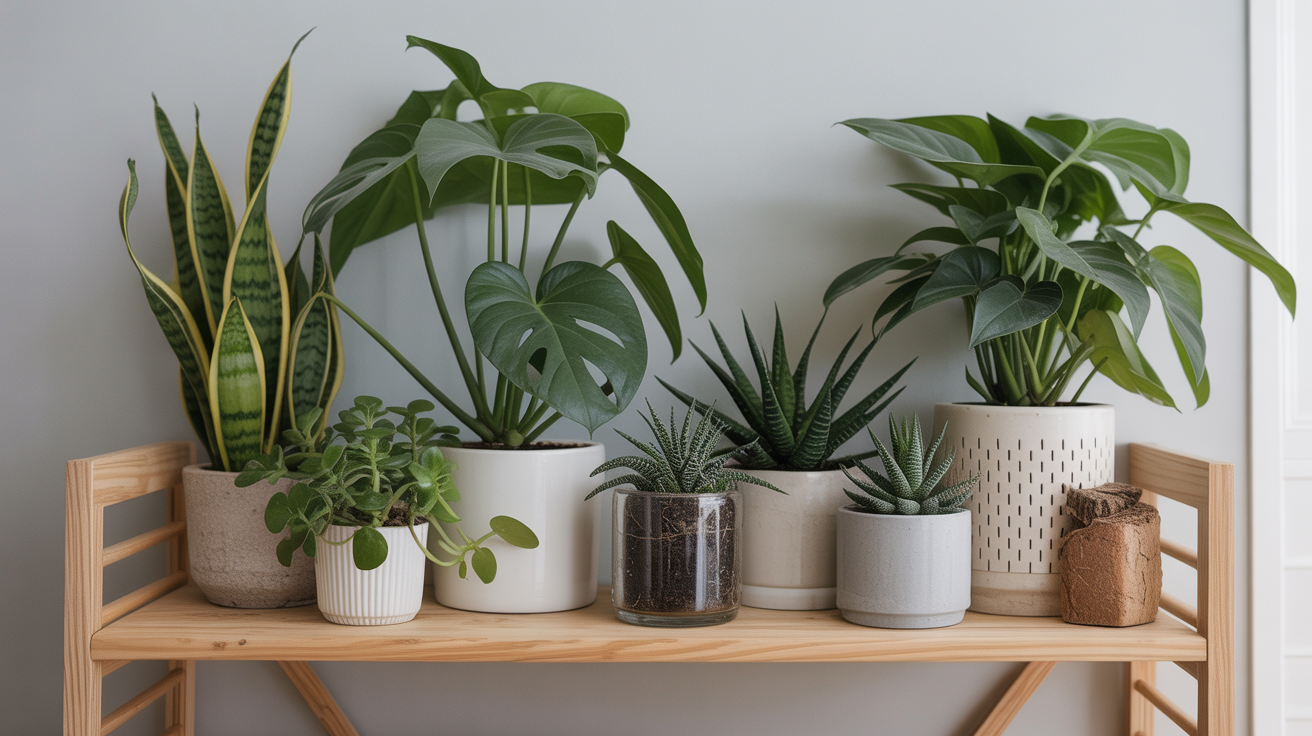
A well-planned plant shelf can turn a bare wall into something that actually looks intentional, while giving your collection room to breathe (and grow). The good news is that you don't need a dedicated sunroom or a south-facing wall to pull it off. Most homes have at least one spot that can support a thriving display, and a few straightforward decisions about structure, light, and plant selection make the whole thing much easier.
At a Glance
- Check the shelf's weight rating before loading it. Five or six potted plants can easily add up to 25-35 pounds per level, more than many decorative floating shelves are rated for.
- Assess your actual light before choosing plants: a sharp hand-shadow test tells you more than guessing from across the room.
- Under four hours of usable natural light per day means most non-succulent plants need a grow light, run 12 to 14 hours daily.
- Group plants by light and water needs shelf by shelf, not by how they look together.
- Every pot needs drainage or a removable cachepot. Standing water in a sealed container is the single most common way to lose a shelf plant.
- Rotate and inspect on a schedule. A shelf concentrates plants, and pests spread between neighbors faster than on plants spaced around a room.
Choosing the Right Shelf Structure
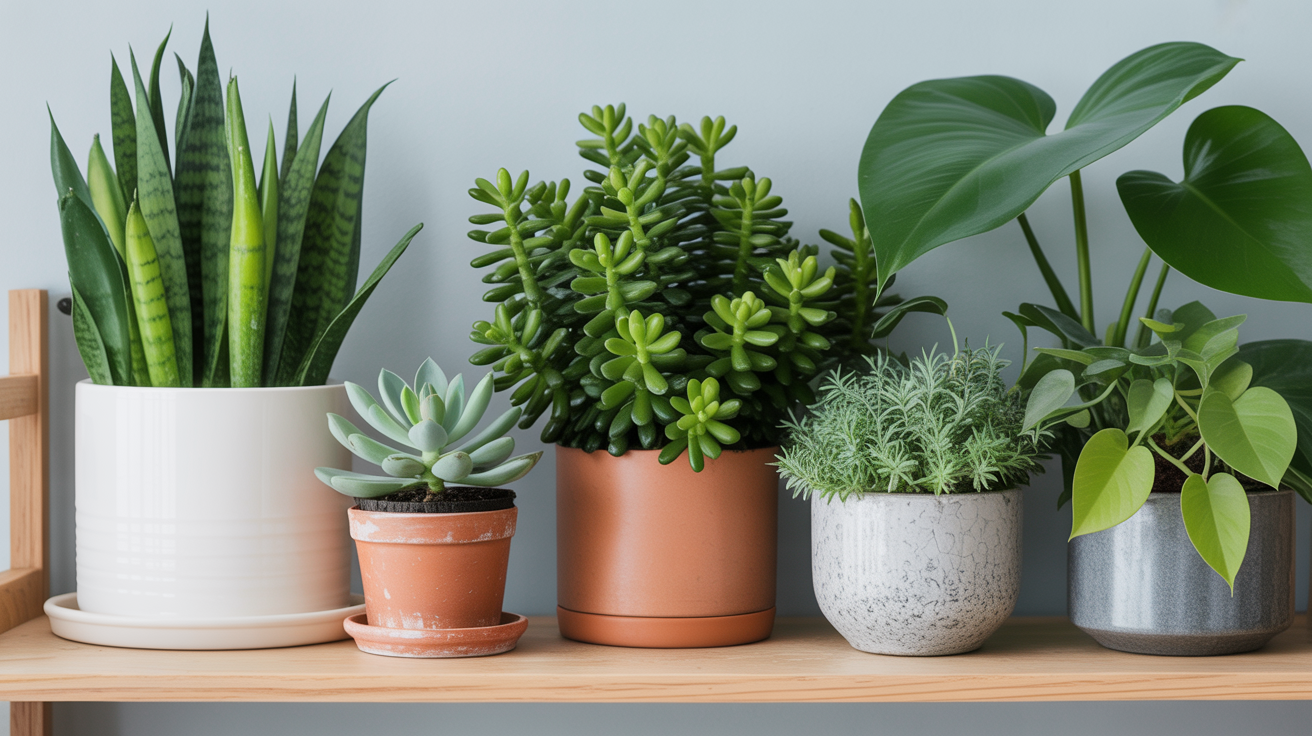
The shelf itself sets the ceiling on everything else, so it's worth thinking through before you buy plants or lights.
Load capacity matters more than you'd expect
A 6-inch pot filled with moist soil and a ceramic pot can weigh 4 to 6 pounds (1.8 to 2.7 kg). Multiply that across five or six plants on one shelf and you're looking at 25 to 35 pounds (11 to 16 kg) per level. Standard floating shelves rated for books often max out at 20 to 30 pounds, so check the manufacturer's weight rating before you load them up. Purpose-built plant shelves and sturdy freestanding units with metal frames tend to handle heavier loads without flexing.
A quick worked example: three 8-inch pots at roughly 8 pounds each (soaked soil, ceramic pot, plant) plus three 6-inch pots at 5 pounds each comes to 39 pounds on one shelf. That's already past the rating on most decorative brackets, which is why a dedicated plant étagère or a wall-mounted shelf rated for at least 40 pounds per level is worth the extra cost over a generic floating shelf.
Shelf depth and spacing between levels
A depth of 10 to 12 inches (25 to 30 cm) fits most standard nursery pots without hanging them over the edge. For spacing between shelf levels, 14 to 18 inches (35 to 46 cm) gives medium-sized plants room and leaves space to hang a grow-light strip beneath the shelf above. If you plan to grow taller plants (a small fiddle-leaf fig, a large snake plant), leave at least 24 inches (60 cm) for that tier.
Freestanding versus wall-mounted
Freestanding units are easier to move and rearrange as your collection changes. Wall-mounted shelves save floor space and can anchor a room visually, but they require studs or suitable wall anchors and are harder to reposition. In rentals or on drywall without stud access, freestanding is usually the safer pick.
Assessing Your Light Before You Place Anything
Light is the single factor that determines whether a plant shelf thrives or slowly declines, so assess it honestly before deciding on placement or plant selection.
Reading your natural light
Hold your hand about 12 inches (30 cm) above a piece of white paper near the shelf location in the middle of a sunny day. A sharp, well-defined shadow means bright light. A faint shadow that's hard to see means low light. Most homes have low to medium light once you move 6 feet (1.8 m) from a window. If your shelf is more than 8 feet (2.4 m) from the nearest window, or sits in a north-facing room, you'll either need to pick only low-light tolerant plants or add supplemental lighting.
For plants that need bright indirect light (most tropicals, most aroids), the sweet spot is within 3 to 5 feet (1 to 1.5 m) of an unobstructed east- or west-facing window. South-facing windows provide the most light in the northern hemisphere, but direct afternoon sun through south glass can scorch leaves on shelves that sit close to the pane.
When to add grow lights
If your space gets fewer than four hours of indirect natural light per day, a grow light moves from optional to necessary for most non-succulent plants. Do grow lights actually work? Yes, for the majority of common houseplants, a full-spectrum LED strip or bar light running 12 to 14 hours a day compensates well for low ambient light. University of Minnesota Extension sets foliage houseplants at 12 to 14 hours of supplemental light per day and flowering houseplants at 14 to 16 hours, which lines up closely with that range.
For a plant shelf, LED bar lights designed for under-cabinet use are a practical choice. They mount beneath the shelf above and point down at the plants below, replicating overhead sunlight rather than side lighting. That same UMN Extension guide categorizes low light as roughly 50 to 250 foot-candles, medium light as 250 to 1,000 foot-candles, and high light as above 1,000 foot-candles, so aiming for the low end of the medium range at leaf level covers most tropical foliage plants without needing a horticultural light meter. A cheap lux meter (under $20) removes the guesswork; 1,000 lux is roughly 93 foot-candles, so a shelf reading in the low thousands of lux sits comfortably in medium light.
Picking Plants That Work Together
A shelf isn't just a place to stash plants. Grouping by similar care needs saves time and reduces the odds of losing something to overwatering its neighbor.
Matching light requirements shelf by shelf
The top shelf, closest to a ceiling light or with the most ambient light, suits plants that prefer brighter conditions: pothos, heartleaf philodendron, spider plants, and trailing tradescantia. Middle shelves work for medium-light tolerant species like peace lilies, Chinese evergreens, and ferns. Lower shelves, especially under a grow light, can house low-light plants. If you're using grow lights throughout, you have more flexibility, but you still want to keep moisture-loving ferns away from succulents that want to dry out completely between waterings.
Thinking about size and growth habit
Trailing plants earn their place on upper shelves where their vines can spill downward. Upright plants with a contained form (snake plants, small dracaenas, cast iron plants) anchor lower shelves without blocking light from their neighbors. Avoid putting fast-growing plants that spread horizontally in tight spaces where they'll crowd out everything beside them.
For rooms where light is genuinely low, a handful of reliable options make a shelf look lush without constant struggle. The best low-light houseplants for dark rooms covers species that hold up in challenging spots.
Quick Reference: Matching Shelf Tier to Light and Plants
Use this as a starting point, then adjust based on your own hand-shadow test and hygrometer or lux readings.
| Shelf tier | Typical light level | Grow light need | Good plant choices |
|---|---|---|---|
| Top (closest to ceiling light or window) | Bright indirect, 1,000+ lux | Rarely needed near a window | Pothos, heartleaf philodendron, spider plant, tradescantia |
| Middle | Medium indirect, 300-1,000 lux | Helpful if over 5 feet from a window | Peace lily, Chinese evergreen, ferns, calathea |
| Bottom (or any tier under a grow light) | Low ambient, under 300 lux | Necessary for anything but true low-light species | ZZ plant, snake plant, cast iron plant, pothos under a light bar |
| Any tier, succulent-only | Bright direct or high-output grow light | LED grow light 12+ hours if no direct sun | Echeveria, haworthia, jade plant |
Setting Up the Shelf: Practical Steps
Once you've chosen the location and the plants, the actual setup comes down to a few decisions that affect both how it looks and how easy it is to maintain.
Potting and drainage
Every pot on a plant shelf should have drainage holes, or be sitting inside a cachepot that you can remove and empty after watering. Water pooling in a sealed bottom pot invites root rot within weeks. Saucers under drainage-hole pots work, but on a shelf they're easy to forget until they overflow. Consider self-watering inserts for shelves where you can't easily tip and drain.
The mix inside the pot matters just as much as the drainage hole. Clemson HGIC recommends peat-lite blends, peat moss combined with perlite or vermiculite, because they let water and air pass through readily while still retaining adequate moisture. A dense, garden-soil-based mix on a shelf holds water far too long between waterings and is one of the more common reasons shelf plants develop root rot even when the pot itself drains fine.
Choosing the right pot size keeps watering frequency manageable. Choosing the right pot for your plant explains why a pot only 1 to 2 inches (2.5 to 5 cm) wider than the root ball is usually better than going large. Clemson HGIC's repotting guidance backs the same range, recommending a pot just 1 to 2 inches larger in diameter than the current one when sizing up.
Temperature and airflow
Most common houseplants prefer temperatures between 60 and 80°F (16 and 27°C) and don't love sitting near cold drafts or heating vents. Shelves against exterior walls in winter can create cold microclimates, especially near single-pane windows. Check the wall temperature with your hand on a cold day before committing to that spot.
Airflow matters, too. Stagnant air encourages fungal problems and pests. A small fan set to low a few hours a day does a lot to keep the microclimate healthy on a densely planted shelf.
Watering without disaster
Dense plant shelves are easy to overwater because it's tempting to do a sweep and water everything on the same day. Instead, check each pot individually by pressing a finger 1 to 2 inches (2.5 to 5 cm) into the soil. Water only the pots that feel dry at that depth, or fully dry for succulents and drought-tolerant species. Bottom watering (setting pots in a tray of water for 20 to 30 minutes) works well on shelves because it avoids water splashing on lower leaves or running off the shelf edge.
A practical pitfall worth naming: watering top to bottom lets runoff from an upper shelf drip onto the leaves of whatever sits below it. Water bottom shelves first, or stagger watering days so a freshly watered top shelf isn't dripping onto a plant you just finished checking.
Maintaining the Display Over Time
A plant shelf looks best when it's edited periodically. Remove yellowing or dying leaves as you spot them. Rotate pots a quarter turn every few weeks so all sides receive even light exposure and plants don't lean hard toward the light source. Dust on leaves blocks photosynthesis, so wiping broad leaves with a damp cloth every month or so keeps them working efficiently.
Shelves also concentrate plants in one spot, which concentrates pests. Inspect the undersides of leaves when you water. Catching spider mites or fungus gnats early, before they spread across the whole shelf, is much easier than treating a full outbreak. A shelf with six or more plants touching leaves is genuinely higher risk than the same plants spaced a foot apart, so leaving a couple of inches between neighboring pots is worth the slightly less packed look.
Frequently Asked Questions
How many plants can I fit on one shelf?
There's no fixed number, but a good rule of thumb is to leave at least 2 to 3 inches (5 to 8 cm) of space between pots. Plants that touch neighbors share pests easily and don't get enough airflow around their foliage. For a 36-inch (90 cm) shelf, three to five medium plants (4 to 6-inch pots) is usually plenty.
Do I need grow lights if my shelf is near a window?
Not always. If the shelf sits within 3 to 4 feet (1 to 1.2 m) of a bright east- or south-facing window, many houseplants will do fine without supplemental light. If the shelf is farther from the window, or your windows face north, a grow light bar running 12 to 14 hours a day covers the gap for most tropical houseplants.
Can I mix succulents and tropical plants on the same shelf?
You can put them on the same shelf physically, but they'll need different watering schedules. Succulents want their soil to dry out completely between waterings and often need very bright light (4 to 6+ hours of direct sun or very high lux). Tropical houseplants generally prefer more frequent watering and indirect light. Keeping them separated by a shelf tier makes maintenance easier.
How do I keep a plant shelf from looking cluttered?
Vary pot heights using small stands or a stack of books under a cachepot. Use a limited color palette for pots (two or three tones that complement each other). Group plants in odd numbers, which tend to look more natural than even-numbered rows. And edit ruthlessly: a shelf with eight plants that all look healthy beats one with fifteen that are struggling.
What's the easiest plant to start a shelf with?
Pothos is probably the most forgiving option for a first plant shelf. It tolerates a wide light range (bright indirect to low light), doesn't mind if you miss a watering, and trails attractively from an upper shelf. Golden pothos, marble queen, and neon pothos are all widely available and handle the variable conditions of a new shelf setup without much complaint.
How much does a basic plant shelf setup cost to start?
A simple freestanding metal or wood shelving unit runs $30 to $80. A compact LED grow-light bar adds another $20 to $40 per tier if natural light falls short. Add pots, a bag of peat-lite potting mix, and a basic lux meter or hygrometer, and a modest three-tier setup for six to eight plants typically lands somewhere between $100 and $200 total, before the cost of the plants themselves.
Should grow lights run on a timer?
Yes, almost always. A mechanical or smart outlet timer keeps the light schedule consistent even when you forget, which matters more than most people expect. Plants respond to day-length cues, and an erratic on-off schedule is less effective than a steady 12 to 14 hours at the same time every day. Timers also mean you're not running lights overnight, which wastes electricity without benefiting the plants.