Plant Profiles
Peace Lily Care Guide
Complete peace lily care guide covering light, watering, humidity, and why your plant droops or won't flower. Practical tips for healthy plants indoors.
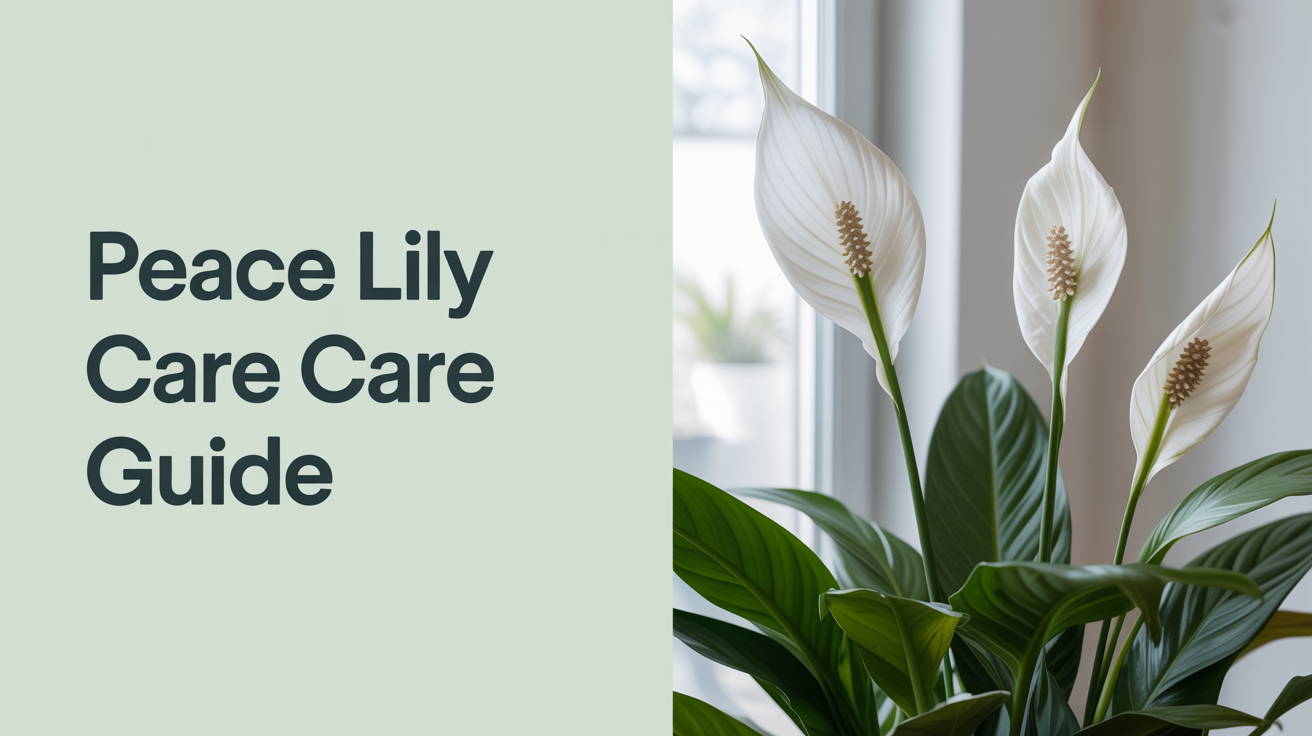
The peace lily (Spathiphyllum spp.) is one of the few houseplants that genuinely tolerates low light, produces white flowers indoors, and tells you when it's thirsty by drooping in a very obvious way. That combination makes it forgiving for beginners and satisfying for anyone who likes a plant that communicates clearly. This guide covers everything you need to keep one healthy, from the right watering schedule to why yours might be refusing to bloom.
At a Glance
- Peace lilies tolerate low light better than almost any other flowering houseplant, but they only bloom reliably with bright, indirect light.
- Water when the top inch of soil is dry, roughly every 7 to 10 days in the growing season; the plant droops dramatically when thirsty and perks back up within an hour or two of watering.
- A droop despite moist soil points to overwatering and possible root rot, not thirst. Check the roots if a good drink doesn't fix it.
- They prefer 40 to 60% humidity and temperatures between 65°F and 85°F (18°C to 29°C), and dislike cold drafts.
- Fertilize lightly (half-strength, every six weeks) from spring through summer, and skip it entirely in winter.
- Every part of the plant is toxic to cats, dogs, and people if eaten, so placement matters around pets and small children.
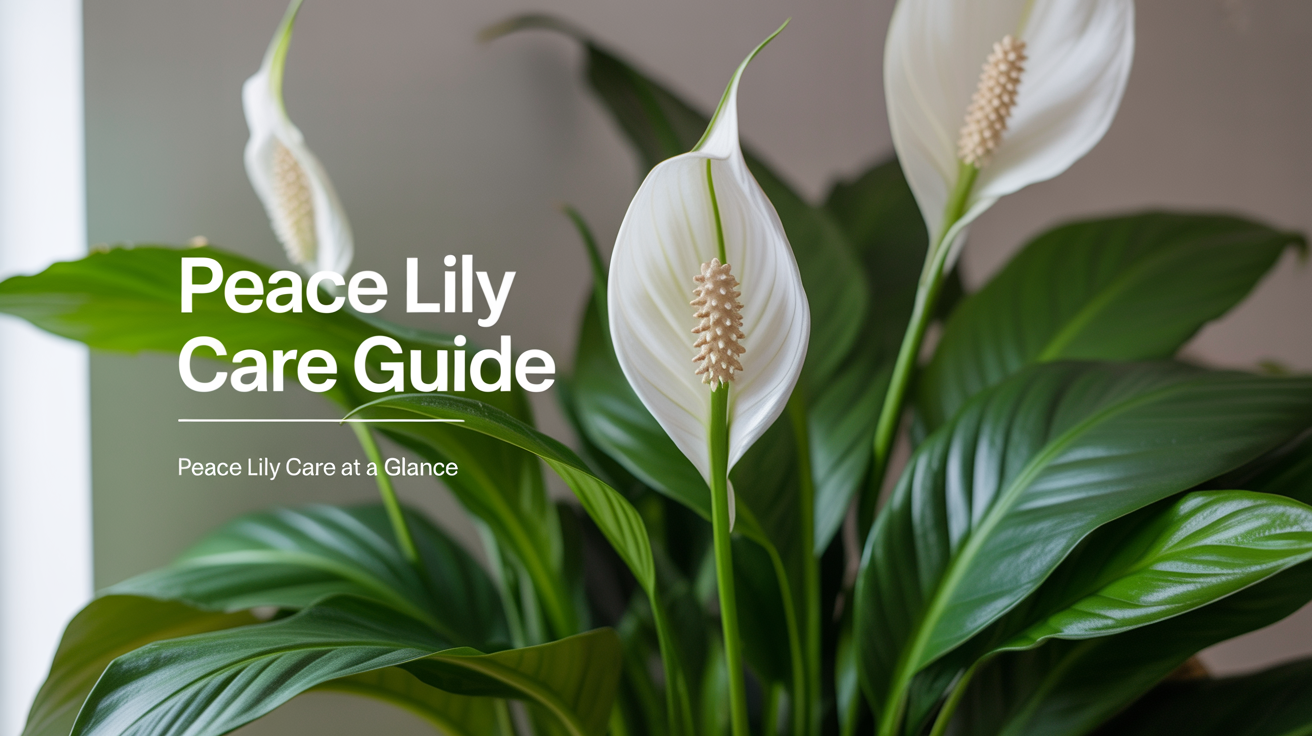
Peace Lily Care at a Glance
| Factor | What a peace lily needs |
|---|---|
| Light | Low to medium indirect light for survival; bright indirect light (3 to 5 feet from a window) for reliable blooming |
| Water | Every 7 to 10 days in the growing season, less in winter; water when the top inch of soil is dry |
| Soil | Standard potting mix with a little perlite; slightly acidic, pH 5.8 to 6.5 |
| Humidity | 40 to 60%; tolerates 30 to 40% with more tip browning |
| Temperature | 65°F to 85°F (18°C to 29°C); avoid below 55°F (13°C) and cold drafts |
| Fertilizer | Balanced liquid fertilizer at half strength every 6 weeks, spring through summer only |
| Repotting | Every 1 to 2 years; blooms better slightly root-bound |
| Toxicity | Toxic to cats, dogs, and people; calcium oxalate crystals cause oral irritation |
Light Requirements
Peace lilies are native to the tropical forest floor, which means they evolved under a canopy that filters most direct sun. NC State Extension's plant profile on Spathiphyllum notes the genus is native to Mexico, tropical America, Malesia, and islands of the western Pacific, which explains its tolerance for the dim, filtered conditions of a forest understory. Indoors, that translates to low to medium indirect light. A spot a few feet back from a north or east-facing window works well. A west window is fine if the plant is shielded from the afternoon sun by a sheer curtain.
How Much Light Is Too Much
Direct sun, even for an hour or two, scorches the leaves quickly. You'll see pale, papery patches or a washed-out yellow-green colour across the whole leaf rather than at the tips. Once burned, those patches don't recover, so it's easier to avoid the problem than to fix it. If a plant has already been scorched, trim the worst leaves off at the base rather than leaving damaged tissue in place; it won't green back up, and removing it lets the plant redirect energy to new growth.
Low Light and Blooming
Here's the trade-off: a peace lily will survive in genuinely dim conditions (a poorly lit hallway, a windowless office with only fluorescent overhead lighting), but it will rarely flower there. Blooms require more energy than the plant can produce in very low light. If flowering is your goal, place it within three to five feet of a bright, indirect window. The more light it receives without touching direct sun, the more reliably it blooms.
Watering and Soil
How Often to Water
Water when the top inch of soil has dried out. For most homes, that's roughly every seven to ten days during the growing season (spring through summer) and less often in winter when growth slows. A peace lily in a small terracotta pot in a warm, dry room may need water every five days; the same plant in a glazed ceramic pot in a cooler room may go two weeks between waterings.
The easiest method is to press a finger an inch into the soil. If it comes back mostly dry, water thoroughly until it drains from the bottom of the pot, then let the excess drain completely. Never leave the pot sitting in standing water, as the roots will rot.
The Droop Signal
Peace lilies droop when thirsty, and they do it dramatically. The whole plant goes limp, leaves pointing toward the floor. Most of the time, a good drink fixes it within an hour or two. However, a plant that wilts despite consistently moist soil is signalling overwatering and root problems, not thirst. If the soil is wet when the plant droops, check the roots. Healthy roots are white or cream; brown, mushy roots indicate rot.
Water Quality
Peace lilies are somewhat sensitive to fluoride and dissolved salts in tap water. Brown leaf tips are sometimes traced back to fluoride buildup over time. University of Maryland Extension's guide to indoor plant watering points out that when salts build up to a high level in the soil, they draw water back out of the root tips and damage them directly, which is the same mechanism behind fluoride-related tip browning in sensitive species like peace lily. Letting tap water sit overnight allows chlorine to off-gas, which helps. If you're on city water with high fluoride, switching to filtered water or collected rainwater usually clears the tip browning within a few months of new growth.
Soil and Drainage
A standard indoor potting mix works fine as long as it drains well. Adding a small amount of perlite (about one part perlite to three parts potting mix) improves drainage without sacrificing too much moisture retention. Peace lilies like slightly acidic soil, somewhere around pH 5.8 to 6.5, though they're not fussy enough to need precise testing.
Temperature and Humidity
Temperature Range
Peace lilies prefer 65 to 85°F (18 to 29°C) and will tolerate a fairly wide indoor range. The main things to avoid are cold drafts and temperatures below 55°F (13°C). A peace lily sitting near a drafty window in winter or directly in front of an air conditioning vent in summer will show stress through yellowing or blackened leaf edges. Move it away from any vent or cold glass pane.
Humidity
As tropical plants, peace lilies appreciate higher humidity, ideally 40 to 60%. Most homes run drier than that, especially in winter when heating dries the air. The plant won't die in average indoor humidity (30 to 40%), but the leaf tips tend to brown more readily. A pebble tray filled with water placed under the pot adds a little local humidity as the water evaporates. Grouping plants together has a similar effect. A small humidifier near the plant is the most reliable fix if your space is particularly dry, especially through a heated winter when indoor air can drop into the teens or 20s percent relative humidity.
Fertilizing
Peace lilies are light feeders. During spring and summer, a balanced liquid fertilizer (such as a 20-20-20 formula) diluted to half strength once every six weeks is enough. Fertilizing more frequently or at full strength tends to cause brown leaf tips from salt buildup and doesn't speed up growth noticeably.
Skip fertilizer entirely from October through February. The plant is growing slowly or not at all, and feeding it during this period just accumulates salts in the soil without benefiting the plant.
If you want to encourage flowering, a fertilizer with a slightly higher phosphorus number (the middle number in the N-P-K ratio) in early spring may help, though more light is usually the bigger factor. A plant that's still not blooming after a season of good light and light feeding is more likely limited by light than by nutrients, so check the window distance again before reaching for a different fertilizer.
Repotting
Repot a peace lily every one to two years, or when roots start circling the bottom of the pot or pushing through the drainage holes. Peace lilies bloom more reliably when slightly root-bound, so there's no need to move up to a dramatically larger pot. Going up one pot size (two inches wider in diameter) is enough. Spring is the best time to repot.
If the plant has grown large, you can divide it at repotting time. Each division needs at least two or three leaves and a portion of the root mass. Pothos care guide for beginners touches on repotting and root division in a similar context if you want a comparison across beginner-friendly species.
Why Is My Peace Lily Not Flowering
This is the most common question about peace lilies, and the answer is almost always insufficient light. Peace lilies sold in garden centers are often treated with gibberellic acid to force them into bloom for sale. Once that effect wears off, the plant only re-blooms on its own if it's getting enough indirect light.
If your peace lily is in a low-light corner and hasn't flowered in a year or more, move it closer to a bright window (still avoiding direct sun). Give it a few months at the new location before expecting flowers. If light isn't the issue, check that you're feeding it lightly in spring and that it's not severely root-bound to the point of being stressed.
Some peace lilies simply take a rest between bloom cycles. A healthy plant in good light typically blooms in spring, sometimes with a second flush in fall. A plant that blooms once and then goes a full year without flowers again isn't necessarily unhealthy; check the light and feeding basics before assuming something is wrong.
Toxicity
Peace lilies contain calcium oxalate crystals and are toxic to cats, dogs, and people if ingested. The ASPCA's toxic and non-toxic plant list confirms peace lily is toxic to both dogs and cats, with the insoluble calcium oxalates causing oral irritation, intense burning of the mouth and lips, excessive drooling, vomiting, and difficulty swallowing. Contact with the sap can also cause mild skin irritation in people. Keep the plant out of reach of pets and small children, and wash your hands after handling the leaves or roots. This is worth knowing before you place one in a home with curious animals, and if you suspect a pet has chewed on the leaves, contact ASPCA Animal Poison Control or your veterinarian rather than waiting for symptoms to develop.
For other low-light options that are non-toxic to pets, the snake plant care complete guide is worth a read, though snake plants carry their own toxicity notes, and the monstera deliciosa care guide covers a popular but also pet-toxic choice.
Frequently Asked Questions
Why is my peace lily drooping even though I just watered it?
If the soil is still wet and the plant is wilting, the roots may be damaged from overwatering. Pull the plant from its pot and check the roots. Healthy roots are firm and cream-white. Brown, soft, or foul-smelling roots indicate rot. Trim any rotten roots with clean scissors, let the root ball air out for an hour, and repot in fresh, dry soil. Water sparingly until the plant shows signs of recovery.
How do I get my peace lily to bloom again?
More indirect light is the most reliable trigger. Move the plant to within three to five feet of a bright window with no direct sun exposure. A half-strength dose of balanced liquid fertilizer in early spring can also help. Expect to wait several months after improving conditions before flowers appear.
Why do my peace lily's leaf tips turn brown?
Brown tips have a few possible causes: low humidity, fluoride in the water, and over-fertilizing are the most common. Try switching to filtered water, misting the plant or using a pebble tray to raise local humidity, and cutting back on fertilizer frequency. Some tip browning is also normal on older leaves as the plant ages.
How often should I water a peace lily in winter?
Significantly less often than in the growing season. Growth slows considerably in winter, so the soil stays moist longer. Check the soil every ten to fourteen days and water only when the top inch is dry. Overwatering in winter is the fastest way to cause root rot, since the plant isn't actively taking up water.
Can a peace lily live in a room with no windows?
It will survive under bright artificial lighting (such as full-spectrum LEDs left on for twelve to fourteen hours a day), but it won't thrive or flower without some natural light. In a truly windowless space with only dim overhead lighting, the plant will slowly decline. It's one of the most shade-tolerant houseplants available, but it still needs some reasonable light source to stay healthy long-term.
Is a peace lily safe to keep if I have a cat that chews on plants?
Not without precautions. Peace lily is toxic to cats, and a determined chewer can still get a mouthful even from a plant on a shelf. Most ingestions cause mouth pain and drooling rather than life-threatening poisoning, but any suspected chewing is worth a call to your vet or ASPCA Poison Control. If you have a persistent chewer, a hanging planter, a closed room, or a non-toxic alternative like a snake plant is a safer bet.