Plant Profiles
Pilea (Chinese Money Plant) Care Guide
Everything you need for healthy pilea care: light, watering schedules, temperature ranges, and how to propagate pilea pups step by step.
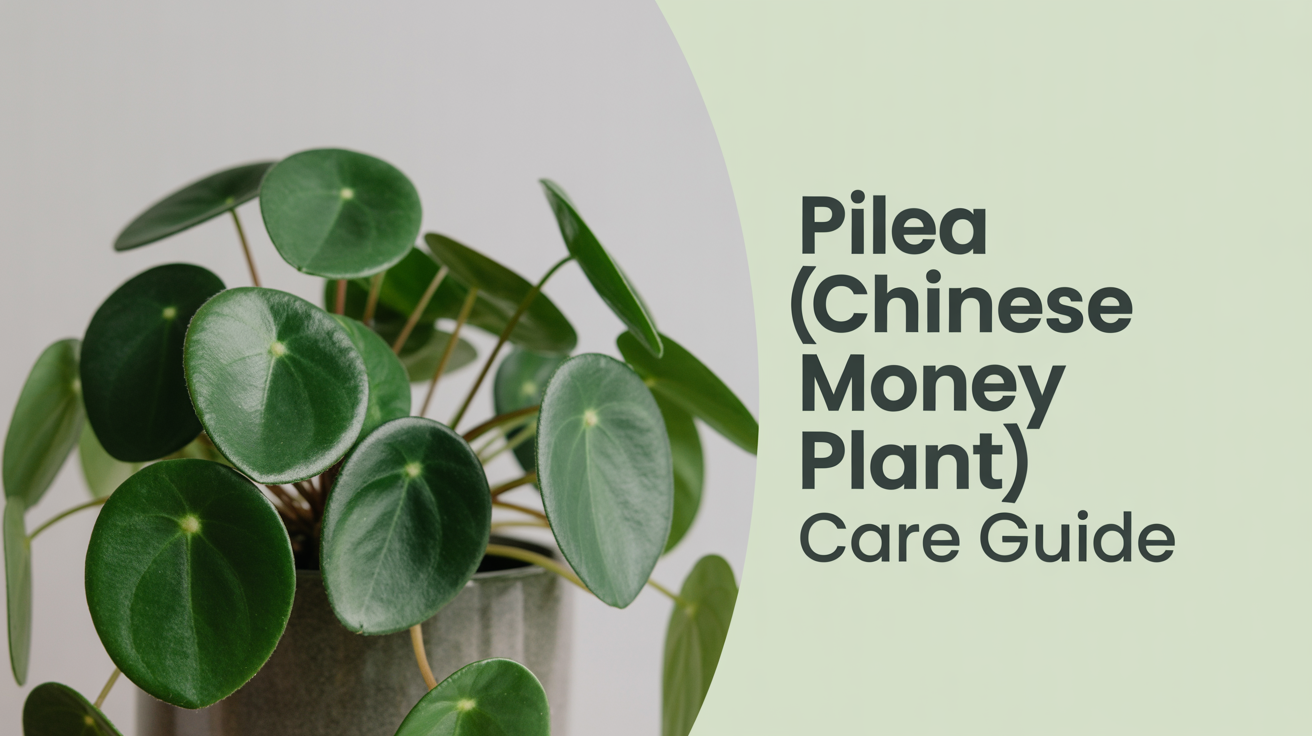
Pilea peperomioides, the Chinese money plant, is one of those plants that earns its spot on a shelf quickly. The coin-shaped leaves on long, slender petioles catch the eye, and once you know the basics of pilea care, keeping it healthy is straightforward. This guide covers everything: light, water, soil, temperature, how to handle the baby pups your plant will eventually send up, and what's actually known about its safety around pets.
One naming mix-up is worth clearing up before you shop. "Chinese money plant" refers to Pilea peperomioides, the round-leafed plant covered in this guide. "Money tree" usually refers to Pachira aquatica, a completely different plant with a braided woody trunk and hand-shaped leaves, sometimes sold with the same nickname because both are associated with good fortune. The two have almost nothing in common care-wise: pilea wants bright light and a quick-drying mix, while money tree tolerates lower light and a denser potting soil. If a listing photo doesn't match coin-shaped leaves on thin petioles, you likely have the other plant.
At a Glance
- Pilea wants bright, indirect light. A north or east windowsill, or a spot a foot or two back from a south or west window, both work well.
- Water only when the top inch (2.5 cm) of soil is dry: roughly every 7-10 days in the growing season, stretching to every 14-21 days in winter.
- NC State Extension lists pilea as safe for pets and children, and several of its close relatives that the ASPCA has evaluated individually are also non-toxic to dogs and cats.
- Terracotta pots and a perlite-heavy mix both help prevent the single most common failure mode: root rot from soil that stays wet too long.
- Healthy, mature plants send up pups around the base that you can remove and root in water within 2-4 weeks, giving you new plants for free.
Care at a Glance by Season
| Care factor | Spring-summer | Fall-winter |
|---|---|---|
| Light | Bright indirect, brief early morning direct sun tolerated | Same; consider a grow light if days are short |
| Watering | Every 7-10 days | Every 14-21 days |
| Fertilizer | Balanced liquid, half strength, monthly (April-August) | None (October-February) |
| Temperature | 60-77°F (15-25°C) | Keep above 50°F (10°C) |
| Humidity | Average home humidity (40-60%) is fine | Watch for crisping edges; add a pebble tray if the air is dry |
Light: What Pilea Actually Needs
Pilea peperomioides is native to the Yunnan province in China, where it grows under the forest canopy on rocky hillsides. That background tells you a lot. The plant wants bright, indirect light for most of the day, with some direct rays tolerable only in the early morning. NC State Extension describes its ideal exposure as bright indirect sunlight, with dappled sun or two to six hours of partial shade also acceptable.
A north- or east-facing windowsill usually works well. South- or west-facing windows can work too, but position the plant a foot or two back from the glass so it gets diffused light rather than direct afternoon sun. Harsh midday and afternoon sun bleaches the leaves and can cause dry, crispy patches.
Signs Your Pilea Needs More Light
- Leaves stretch toward the window on long, thin stems
- The plant leans dramatically to one side (rotate the pot a quarter turn each week to counteract this)
- New leaves come in noticeably smaller than the older ones
A grow light works well during winter months if your windows are limited. Position the bulb about 12 inches (30 cm) above the plant and run it for 12-14 hours per day.
Watering: The Most Common Mistake
Overwatering is the fastest way to lose a pilea. The roots need to dry out partially between sessions, so check the soil before you reach for the watering can. NC State Extension's profile notes the plant is susceptible to root rot if overwatered and recommends avoiding wetting the foliage directly, since standing moisture on the leaves also encourages leaf spot.
How Often to Water
During the growing season (roughly March through September), water when the top inch (2.5 cm) of soil is dry. For most homes, that works out to every 7-10 days. In winter, growth slows and the plant needs far less moisture, so stretch that interval to every 14-21 days.
Water thoroughly when you do water: pour slowly until it drains freely from the bottom of the pot, then empty the saucer so the roots are not sitting in pooled water. That cycle of thorough watering followed by complete drainage matters more than sticking to a fixed schedule.
Signs of Over and Underwatering
Overwatered pilea usually shows yellowing lower leaves and stems that feel soft at the base. If you catch it early, pull the plant from its pot, let the roots dry out for a day on newspaper, then repot into fresh soil.
Underwatered pilea droops, with leaves that curl slightly inward and feel thin rather than firm. A thorough soak usually revives it within a few hours.
Soil, Pot, and Fertilizer
Choosing a Soil Mix
Pilea does best in a well-draining mix rather than standard potting soil straight from the bag. A simple recipe: two parts peat-free potting mix to one part perlite. The perlite creates air pockets that let excess water drain and let the roots breathe. NC State Extension's guidance points the same direction: a moist, well-drained potting mix with good drainage overall.
Avoid heavy, dense mixes or anything that stays wet for more than a day or two after watering. Garden soil is not suitable indoors.
Pot Choice and Repotting
Terracotta pots work particularly well for pilea because the clay wicks away moisture, which reduces the risk of root rot. Plastic and glazed ceramic pots work too, but you will need to water slightly less often since those materials retain moisture longer. Whatever pot you use, drainage holes are non-negotiable.
Pilea grows quickly and usually needs a new pot every 1-2 years. The signal: roots circling visibly at the bottom of the pot or poking out of the drainage holes. Go up one pot size (roughly 2 inches / 5 cm larger in diameter) rather than jumping to a much bigger container. Oversized pots hold more soil than the roots can use, which keeps the mix soggy for too long.
Fertilizer
Feed with a balanced liquid fertilizer (a 10-10-10 or 5-5-5 ratio works well) once a month from April through August. Dilute to half the recommended strength, as pilea is sensitive to salt build-up from concentrated fertilizer. Skip feeding entirely from October through February.
Temperature and Humidity
Pilea peperomioides prefers temperatures between 60-77°F (15-25°C). It handles brief dips to around 50°F (10°C) but struggles below that and may drop leaves. Keep it away from exterior doors, cold drafts, and heating vents, all of which cause temperature swings the plant dislikes.
Average home humidity (40-60%) suits pilea fine. You do not need to mist it or run a humidifier unless your home is unusually dry in winter. If the leaf edges begin to crisp or curl during the cold months, low humidity may be a factor. A small pebble tray with water placed near (not under) the pot can help.
Pilea Pups Propagation
One of the most satisfying things about pilea is that healthy plants produce pups, small plantlets that push up through the soil around the base of the mother plant. Propagating these pups is simple and gives you new plants to keep or pass along to friends. NC State Extension points to spring or early summer as the best window for this, when the mother plant is actively growing and recovers fastest from having a pup removed.
How to Remove and Root a Pup
Wait until a pup is at least 2-3 inches (5-8 cm) tall and has at least two leaves before removing it. Use a clean, sharp knife or scissors to cut the pup away from the mother plant at soil level, getting as close to the base as possible. Some pups will already have a small stub of root attached; others will not, and both are fine to work with.
Place the pup in a small glass of water, with just the base submerged and the leaves above the waterline. Keep it on a bright windowsill and change the water every few days. Roots usually appear within 2-4 weeks.
Once the roots reach 1-2 inches (2.5-5 cm) long, pot the pup into the same well-draining mix used for the mother plant. Keep the soil a little more consistently moist for the first two weeks while the plant adjusts, then return to the standard watering routine.
Pilea can also be propagated from stem cuttings. Cut a healthy stem just below a node (the point where a leaf attaches), remove the bottom leaves, and root in water or directly in moist soil. Stem cuttings root reliably but take a bit longer than pups. If you enjoy growing pothos or other easy-to-propagate plants, the same water-rooting method works here.
Common Problems and Fixes
Yellow leaves: Usually a sign of overwatering, though occasionally a nitrogen deficiency. Check soil moisture first before adjusting your fertilizer routine.
Curling leaves: Can point to underwatering, low humidity, or too much direct sun. Rule out each cause in turn rather than changing everything at once.
Droopy plant overall: Most often underwatering, though consistent sogginess and root rot can produce the same symptom. Unpot the plant and check the roots if the soil has been staying wet for extended periods.
Brown spots: Direct sun burns, cold drafts, or fluoride in tap water are the usual culprits. Switching to filtered water or letting tap water sit overnight before use can help if the spots keep appearing.
Pests: Fungus gnats can appear in overwatered pilea. Letting the soil dry out more between waterings breaks their life cycle over a few weeks. Mealybugs occasionally show up in the leaf axils; dab them off with a cotton swab dipped in rubbing alcohol.
No pups after more than a year: Check that the plant is getting bright enough light and isn't severely root-bound. A plant that's stalled in a small pot for years often puts energy into surviving rather than producing offsets.
Chinese money plant care is not dramatically different from other popular foliage plants. If you are already growing a monstera or a snake plant, pilea slots in well under the same bright-indirect-light setup and tolerates similar watering habits.
Frequently Asked Questions
Why does my pilea lean toward the light?
All pileas do this. The plant grows toward the nearest light source, which is almost always the window. Rotating the pot a quarter turn once a week keeps the growth more symmetrical. If you forget for a few weeks, the lean becomes noticeable, but consistent rotation will gradually correct it.
How do I know when to water my pilea?
Stick your finger about an inch (2.5 cm) into the soil. If it feels dry, water thoroughly. If it still feels damp, check again in a day or two. The exact interval depends on your pot size, soil mix, temperature, and light level, which is why checking the soil directly is more reliable than a fixed schedule.
Can pilea peperomioides grow in low light?
It survives in lower light but does not thrive there. Growth slows considerably, leaves come in smaller, and pups are less likely to appear. If you only have a low-light spot available, a grow light positioned close to the plant will make a real difference in how actively it grows.
Is pilea toxic to cats or dogs?
Pilea peperomioides doesn't have its own individual listing in the ASPCA's toxic and non-toxic plant database, but NC State Extension lists it as safe for pets and children. Several of its close relatives that the ASPCA has evaluated individually back that up: both friendship plant (Pilea involucrata) and aluminum plant (Pilea cadierei) are listed as non-toxic to dogs and cats. Taken together, that's a strong track record for the genus, though heavy consumption of any plant material can still cause mild digestive upset, so keeping it out of reach of a determined chewer is still sensible.
My pilea isn't producing pups. What's wrong?
Young plants rarely produce pups in their first year. Older plants in good health and bright light tend to be the most prolific. Make sure the plant is getting enough light, is not severely rootbound, and is on a regular feeding schedule during the growing season. Repotting into fresh soil sometimes triggers new growth and pup production after a month or two.