Plant Profiles
Calathea Care: How to Keep Its Leaves Flat and Colorful
Learn calathea care essentials: water quality, humidity needs, and indirect light that keep leaves flat, vibrant, and free from brown tips.
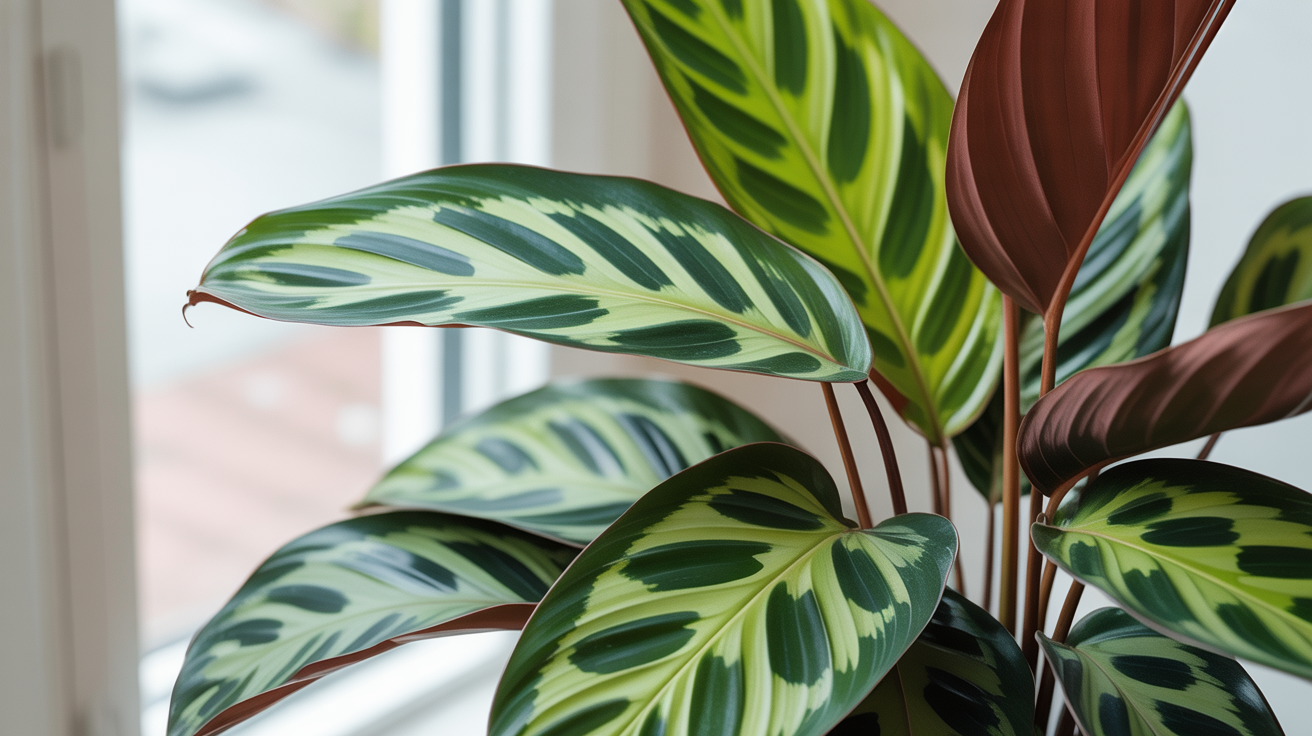
Calatheas have a reputation for being difficult, and some of that reputation is earned. The leaves are breathtaking: deep greens feathered with silver, cream, or rose markings, undersides painted a rich burgundy. Yet the same plants that look stunning at the nursery start curling and browning on a windowsill within a few weeks. The reason is almost always one of three things: tap water minerals, humidity below what the plant expects, or too much direct sun. Get those three variables right and calathea care becomes far more manageable than the internet would have you believe.
At a Glance
- Curling leaves point to dry soil or dry air first; check the soil before assuming it's a humidity problem.
- Calatheas want 50-70% relative humidity, well above the 30-50% most homes sit at in winter.
- Tap water minerals (chlorine, chloramine, fluoride) are the single most common cause of brown, crispy tips.
- Bright, indirect light is ideal; even an hour of direct afternoon sun can bleach the leaf markings.
- Leaves rising in the evening and flattening at dawn (nyctinasty) is normal, healthy behavior, not a symptom.
- Repot only every one to two years, moving up just one pot size, since oversized pots hold excess water the roots can't use.
What Kind of Plant Is a Calathea?
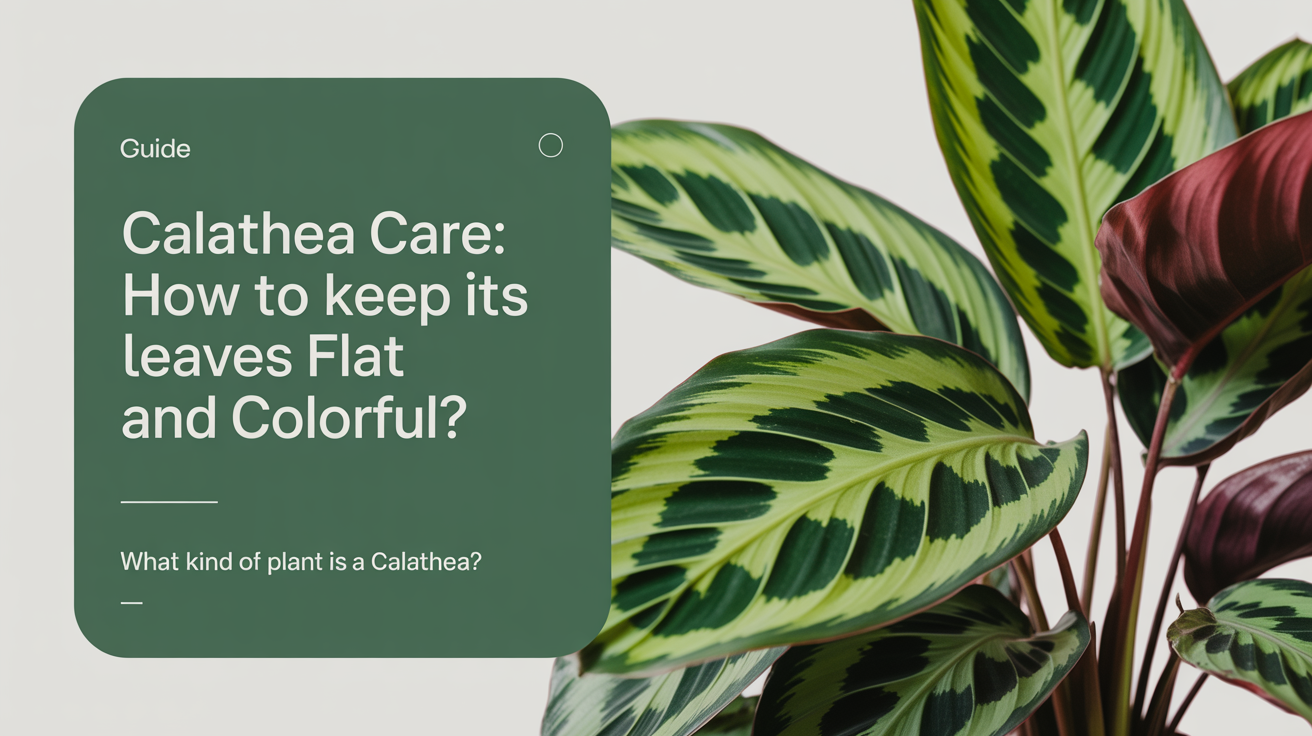
Calatheas are native to the tropical rainforests of Central and South America, which tells you a lot about what they need. On the forest floor they receive filtered light through a canopy, high humidity from frequent rain, and consistently warm temperatures. Their roots sit in soil that drains freely but never dries completely.
You may also see calatheas sold under the genus Goeppertia, which is the updated botanical name for most species that were formerly classified as Calathea. For practical care purposes the two names refer to the same group of plants.
The common name "prayer plant" is often applied to calatheas, though it technically belongs to the closely related genus Maranta. Both fold their leaves upward in the evening and flatten them out again at dawn, a movement called nyctinasty. If you notice your calathea's leaves rising at night and lowering in the morning, the plant is healthy and behaving exactly as it should.
Light: Bright but Never Direct
Calatheas prefer bright, indirect light. A spot a few feet back from a north- or east-facing window is often ideal. They can tolerate lower light better than many houseplants, which makes them useful in rooms that don't get strong sun. For more options on plants that suit darker spaces, see our guide to the best low-light houseplants for dark rooms.
What calatheas cannot handle is direct sun. Even an hour or two of direct afternoon rays will bleach the markings, fade the color, and scorch the leaf edges. If you're placing one near a south- or west-facing window, pull it back from the glass or filter the light with a sheer curtain, ideally three feet or more back from a south-facing pane.
Signs of too much light: washed-out patterns, pale leaves, crispy patches that appear on the parts of the leaf facing the window.
Signs of too little light: very slow growth, leaves that stay tightly furled even during the day, and a gradual loss of the contrast in the markings. The plant won't die quickly in low light, but it won't look its best either. A calathea that's been in a genuinely dim corner for months may also produce noticeably smaller new leaves than the ones it arrived with, which is another cue to move it closer to a window.
Water Quality and Watering Cadence
Water is where many calathea owners go wrong, and it's usually not about how much they're watering but about what's in the water.
Why Tap Water Can Be a Problem
Tap water in many areas contains chlorine, chloramine, and fluoride. Calatheas are sensitive to these additives and to high mineral content in general. Over time, salts accumulate in the soil and the leaf tips start showing brown, crispy margins. The tips won't recover once they've browned, but switching to better water will stop new damage.
The simplest fix is to use filtered water or to let tap water sit in an open container for 24 hours (this off-gasses chlorine, though it does not remove chloramine or fluoride, since fluoride does not evaporate). Rainwater collected in a clean bucket is excellent. Distilled water works too, though some growers find it's too stripped of minerals long-term. University of Maryland Extension's guide to watering indoor plants specifically recommends rainwater or dehumidifier condensate as low-mineral alternatives to tap water for salt-sensitive houseplants, which lines up with what calathea growers find works in practice.
How Often to Water
Water your calathea when the top inch of soil is dry, but before the soil dries out completely at depth. Stick a finger into the soil up to the second knuckle: if it feels damp, wait a few days. If it feels barely moist or dry, it's time to water.
In most homes this works out to watering every 7 to 10 days in spring and summer, and every 10 to 14 days in fall and winter when growth slows. These are guidelines, not a schedule. Soil dries out faster in warm rooms with low humidity and slower in cool, humid ones. Always check the soil rather than watching the calendar.
Water thoroughly until it drains from the bottom of the pot, then let the pot drain fully before putting it back on its saucer. Sitting in water is one of the fastest ways to develop root rot on a calathea. If you notice the same plant wilting shortly after a thorough watering rather than perking up, that's usually a sign the roots have already been compromised. Our guide on treating root rot covers how to check and what to do next.
Humidity: The Make-or-Break Variable
This is the variable that trips up more calathea owners than any other. Most homes sit at 30 to 50% relative humidity, especially in winter when central heating dries the air. Calatheas want 50 to 70%, closer to the high end if possible.
At low humidity, leaves curl inward along the midrib as the plant tries to reduce moisture loss. The leaf tips and edges go crispy. No amount of correct watering will fully compensate for air that's too dry. University of Maryland Extension notes that most indoor environments lack sufficient humidity for houseplants, particularly in winter, and lists grouping plants and running an automatic humidifier among the more effective countermeasures, ahead of misting.
Raising Humidity Without a Humidifier
A small cool-mist humidifier placed near the plant is the most effective solution, and the cost of a basic unit has dropped to the point where it's worth considering if you keep multiple humidity-loving plants. Run it for a few hours a day rather than continuously, and position it so the mist doesn't blow directly onto the leaves, which can encourage fungal spots.
If you'd rather not buy a humidifier, grouping plants together raises the local humidity slightly as they transpire. Setting the pot on a tray filled with pebbles and water (making sure the pot sits above the water line, not in it) provides a modest boost, typically a few percentage points right around the foliage. Misting is often recommended but has limited effect and can leave water spots on the foliage or encourage leaf disease if the leaves stay wet.
For a deeper look at humidity strategies across different plant types, our guide on how to raise humidity for indoor plants covers the options with more detail.
Reading the Leaves: What Curling and Browning Mean
Calathea leaves are unusually expressive. Once you understand what each symptom points to, diagnosing problems becomes much faster.
| Symptom | Most Likely Cause | What to Check First |
|---|---|---|
| Leaves curling inward along the midrib | Low humidity or dry soil | Finger-test the soil, then check a hygrometer if soil is fine |
| Brown, crispy tips and margins | Tap water minerals or dry air | Switch to filtered/rainwater; raise humidity |
| Leaves staying tightly furled all day | Too little light | Move a few feet closer to a bright window |
| Washed-out, pale markings | Too much direct light | Pull back from the glass or add a sheer curtain |
| Yellowing before browning, mushy stems | Root rot from overwatering | Check roots; repot into fresh, well-draining mix |
| Sudden curling after a move | Cold draft or heating vent | Relocate away from vents and drafty windows |
Calathea Leaves Curling
Curling along the length of the leaf (rolling inward from the sides) is almost always a humidity or watering issue. Check the soil first: if it's bone dry, the plant is thirsty. Water it thoroughly and watch whether the leaves flatten over the next day or two. If the soil is adequately moist but the leaves are still curling, low humidity is the more likely cause.
Curling can also happen when the plant is exposed to cold drafts or placed near a heating vent. Calatheas want temperatures between 65 and 80°F (18 to 27°C) and dislike sudden temperature swings.
Crispy Edges and Brown Tips
Brown, crispy leaf tips are the most common complaint from calathea owners. The causes, in rough order of likelihood: tap water with high mineral or fluoride content, air that's too dry, the plant sitting in the direct path of a heating or air-conditioning vent, or underwatering.
Brown edges that spread from the margin inward can also indicate root rot from overwatering or a pot without drainage, though the leaves usually yellow before they brown in those cases.
Temperature, Soil, and Repotting
Keep calatheas away from temperatures below 60°F (15°C). They're not frost-tolerant at all, and even cool windowsills in winter can stress them. Avoid placing them directly against cold glass.
A well-draining potting mix that still retains some moisture works well. A standard indoor potting mix lightened with perlite (roughly 70% mix to 30% perlite) gives calatheas the balance they need. Pure coco coir can also work as a component, though Clemson Cooperative Extension's guidance on indoor plant soil mixes recommends rinsing coco coir thoroughly before use, since it can carry enough residual salinity out of the bag to compound the tip-browning problem calatheas already struggle with. Avoid heavy soils that compact and stay waterlogged.
Repot in spring every one to two years, or when roots are visibly circling the bottom of the pot. Move up only one pot size at a time. A pot that's too large holds excess soil that stays wet longer than the roots can use, which invites rot. If you're unsure what "one size up" should look like for your particular pot, our guide on choosing the right pot for your plant walks through matching pot diameter to root mass.
Frequently Asked Questions
How often should I water my calathea?
Check the top inch of soil and water when it feels dry but before the soil dries completely at depth. In most home conditions this means watering roughly every 7 to 10 days in the growing season and slightly less frequently in winter. Soil conditions and room humidity affect drying speed, so the soil check is more reliable than a fixed schedule.
Why are my calathea leaves curling?
Curling leaves usually point to one of three things: the soil has gone dry, the air is too dry (below 50% humidity), or the plant is near a heat source or cold draft. Check the soil moisture first, then assess the humidity around the plant. If both seem fine, look for vents or drafts in the area.
Do calatheas need a humidifier?
Not strictly, but they perform much better when humidity stays above 50%. A small cool-mist humidifier is the most reliable way to achieve that, especially in winter when indoor air dries out. Grouping plants together and using pebble trays can help but rarely raise humidity as effectively as a dedicated unit.
Why are the tips of my calathea turning brown?
Brown tips are most often caused by tap water that contains fluoride or chlorine, or by air that's consistently too dry. Switching to filtered or rainwater and raising the humidity around the plant will stop new browning from developing, though existing brown tips won't reverse.
Is calathea the same as a prayer plant?
The names get used interchangeably, but they're different genera. Prayer plants are Maranta, while calatheas are Calathea (or Goeppertia, their updated botanical name). Both fold their leaves at night and share similar care needs, but the markings and growth habits differ. If someone tells you prayer plant care indoors applies directly to calatheas, they're mostly right on the basics, though calatheas tend to be a bit more sensitive to water quality.
My calathea's leaves fold up during the day, not just at night. Is that a problem?
Usually yes, if it's happening consistently in daylight rather than as part of the normal evening fold. Daytime curling that doesn't relax is more often a stress response to dry soil, dry air, or a recent move than normal nyctinasty. Check the soil and humidity before assuming it's just how the plant behaves; a calathea that's actually comfortable spreads its leaves flat during the day.
Are calatheas safe to keep around cats and dogs?
Most calathea species are considered non-toxic to cats and dogs, but confirm the specific species you own on the ASPCA's toxic and non-toxic plant list rather than assuming, since common names in the trade sometimes cover more than one genus.