Indoor Setup
How to Choose a Grow Light for Houseplants That Actually Works
Confused by wattage and spectrum claims? Learn how to choose a grow light that actually helps your houseplants, without the marketing noise.
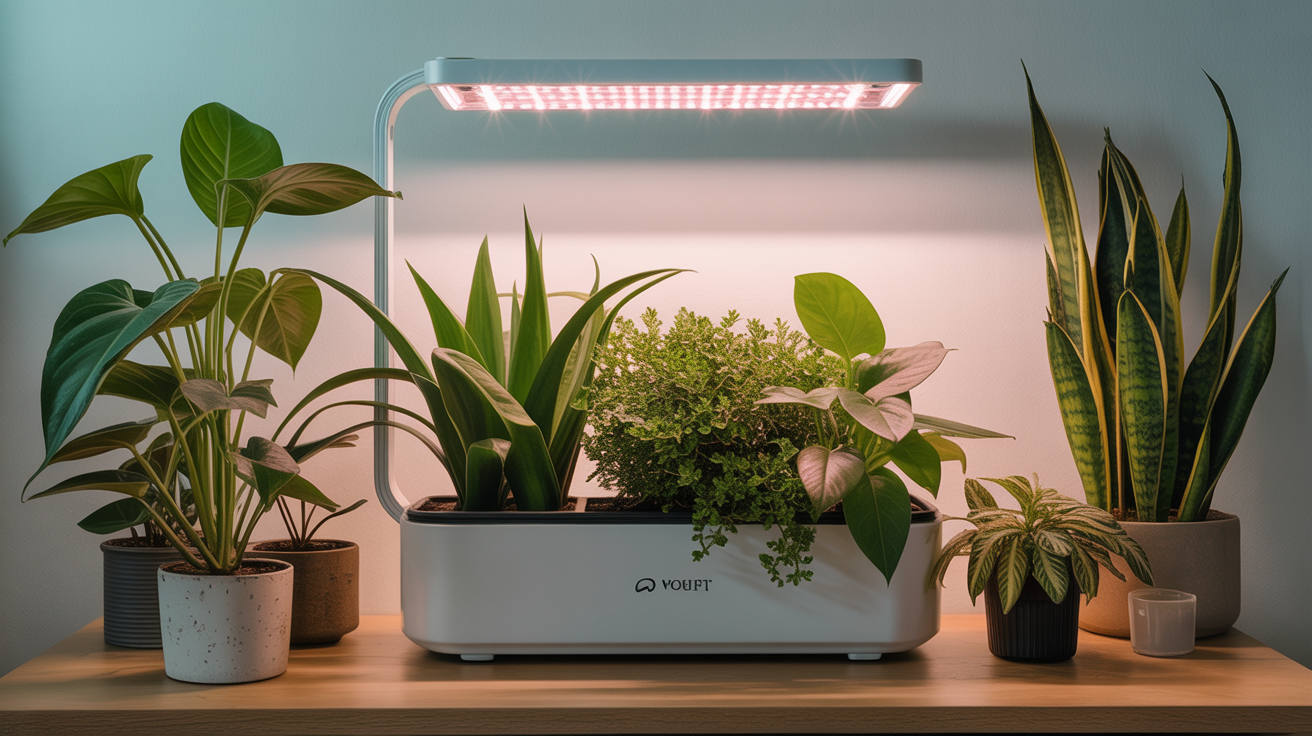
You have decided your plants need help. Maybe the fiddle leaf fig has stopped pushing new leaves, or your pothos is stretching toward the window like it's trying to escape the apartment. So you go shopping for a grow light and hit a wall of numbers: watts, lumens, PAR, full spectrum, 6500K, "sunlight replacement." None of it tells you what you actually need to know, which is simple: will this light make your plant grow. Here is how to choose a grow light without falling for the marketing copy.
What Actually Matters When You Choose a Grow Light
Strip away the jargon and three things determine whether a grow light works: how much light reaches the leaf, what color that light is, and how many hours a day it runs. A $15 clip-on LED with the right distance and run time will outperform a $60 fixture mounted too far away or left on for three hours a day. Manufacturers print wattage and lumen numbers because they're easy to compare on a product page, but neither tells you what's actually landing on the leaves. Distance does that.
Light Intensity: Why Distance Matters More Than Wattage
Light intensity drops off fast as you move away from the bulb. This is the most common reason a grow light "doesn't work": the plant is sitting eight or ten inches further away than the light was designed for, getting a fraction of the intensity it would up close.
As a rough guide:
- Six to twelve inches away: the effective range for most small clip-on LEDs and single bulbs. A pothos, peperomia, or small succulent on a desk does well here.
- Twelve to eighteen inches away: light bars and stronger fixtures are built for this range, suited to a full shelf or something larger like a snake plant.
- Beyond eighteen inches: intensity has usually dropped enough that even a decent light barely counts as supplemental. At that distance you need a stronger light, not a longer run time.
This is why two people can buy the exact same lamp and get different results. One clips it six inches above a pothos and sees new growth in a month. The other sets it on a nearby shelf, two feet away, and wonders why nothing's changing. If you're still working out whether your plant needs a light at all, read how much light do houseplants really need first.
Spectrum and Color Temperature: What the Numbers Actually Mean
"Full spectrum" gets used loosely, but for a houseplant it generally means the light covers both blue wavelengths (which support compact, leafy growth) and red wavelengths (which support flowering and vigor), rather than being weighted toward one end like an old-school "grow light purple" bulb.
Color temperature, measured in Kelvin, is a simpler number to shop by. Look for something in the 5000K to 6500K range, often labeled "daylight" or "cool white." That range approximates daytime sun and works well across nearly every common houseplant. You don't need to chase an exact figure. A bulb at 5000K and one at 6500K will both do the job; a bulb at 2700K (warm, yellowish, the kind sold for cozy living room lamps) will not, no matter how bright it looks to your eye.
A "full spectrum" grow light and actual full sun are not the same thing. Outdoor sunlight is far more intense than almost any indoor fixture, even one held close. A grow light fills gaps, especially in the darker months, rather than replacing a bright south window. If a plant is struggling in a dark room, pairing the light with more forgiving plant choices helps; see the best low light houseplants for dark rooms.
LED vs Fluorescent: Which One Should You Buy
Most grow lights sold for home use today are LED, for good reason. LEDs run cool enough to sit close to leaves without scorching them, use relatively little electricity, and last a long time before needing replacement. Fluorescent tube fixtures, the kind you might remember from a basement seed-starting setup, still work and are often cheaper up front, but they run warmer, take up more space, and dim gradually in ways that are hard to notice until growth slows. Unless you already own fluorescent fixtures, LED is the more practical pick, and it's easier to find LED options in the 5000 to 6500K range.
How Long to Run Your Grow Light Each Day
Run time matters as much as intensity. Most houseplants do well with 10 to 14 hours of supplemental light a day, mimicking a long summer day. Less than that and a marginal setup won't do much; more than 16 hours with no dark period can stress some plants, which need darkness as much as light.
The easiest fix is a cheap outlet timer. Set it once and stop thinking about it. Remembering to switch a light on and off manually is where most setups quietly fail, not because the light was wrong, but because the schedule was inconsistent.
Clip-On LED, Bulb-in-a-Lamp, or Light Bar: Matching the Fixture to Your Setup
The right format depends on how many plants you're lighting and where they live.
| Setup | Best fixture | Typical use case |
|---|---|---|
| One plant on a desk or side table | Clip-on LED | Small pothos, peperomia, single succulent |
| One plant in a floor lamp spot | Bulb-in-a-lamp (screw-in LED grow bulb) | Larger floor plant like a fiddle leaf or rubber plant, using a lamp you already own |
| A shelf of several plants | Light bar mounted under the shelf above | Propagation stations, small collections, a windowsill row |
| A dedicated grow cart or multi-tier rack | Multiple light bars, one per shelf | Serious collections, seed starting, plants that need consistent strong light year-round |
A clip-on is genuinely enough for one or two plants that just need a boost, especially in winter. Where people get into trouble is lighting an entire shelf with a single clip-on aimed at the middle, leaving the plants on either end in near darkness. If you're planning a shelf setup from scratch, read how to set up a plant shelf or indoor garden before buying lights.
When a Cheap Light Is Enough, and When It Isn't
A basic clip-on LED at the right distance and color temperature is genuinely enough for most low to medium light apartment plants getting a seasonal boost: pothos, philodendron, or peperomia that already tolerate lower light and just need a nudge through the darker months.
Where a cheap light falls short is plants with high light demands even indoors, such as succulents grown for compact form, citrus trees, or anything you're hoping will flower. Those often need a dedicated horticultural fixture with higher output, positioned close and run a full 12 to 14 hours, and even then may not fully replace a bright window. If you're not sure a grow light will solve the problem at all, read do grow lights work: a beginner's guide first, since some struggling plants have a watering or humidity issue no amount of light will fix.
Common Grow Light Buying Mistakes
A few mistakes come up over and over:
- Placing the light too far away. The number one issue. A fixture rated for six to twelve inches does very little at two feet.
- Buying based on wattage alone. Wattage tells you about power draw, not how much usable light reaches the plant. Two lights with identical wattage can produce very different results depending on the LEDs and fixture design.
- Choosing a warm white bulb because it looks nice. A cozy 2700K bulb might match your decor, but it won't support growth the way a 5000 to 6500K bulb will.
- Running the light around the clock. More hours isn't better past 14 to 16, and it skips the dark period plants need.
- Expecting a small light to cover a large area. A single clip-on won't light an entire bookshelf. Match fixture size to the space, not just the plant count.
Frequently Asked Questions
Do I need a full spectrum grow light for houseplants, or will any LED work?
Not every LED is suitable. A plain white LED sold for household lighting may lack enough blue and red wavelengths, and its color temperature is often too warm. Look for a bulb labeled "full spectrum" or "daylight" in the 5000K to 6500K range.
What wattage grow light do houseplants need?
Wattage alone isn't reliable since it varies by LED technology and fixture design. For a single small plant, a low-wattage clip-on LED is enough at close range. For a full shelf, check the manufacturer's suggested coverage area rather than wattage alone, and use distance and run time to fine-tune results.
How close should a grow light be to my plant?
For most small clip-on and single-bulb fixtures, six to twelve inches from the top of the plant works well. Stronger light bars can sit twelve to eighteen inches away. If leaves nearest the light look bleached or crispy, move the fixture back; if growth stays slow and leggy, move it closer.
Can I leave a grow light on all day and night?
It's not recommended. Most houseplants respond best to 10 to 14 hours of light followed by a dark period, similar to a natural day and night cycle. A cheap plug-in timer takes the guesswork out of this and keeps the schedule consistent.
Is a fluorescent grow light as good as LED for houseplants?
Fluorescent tubes can still support growth, and older setups using them work fine. LEDs have mostly replaced them for home use because they run cooler, use less electricity, and last longer, which matters when a fixture sits a few inches from delicate leaves for months at a time.