Styling & Display
Statement Plants That Anchor a Room
The best large indoor plants for anchoring a room, with care specifics for each so your floor plant for the living room actually thrives.
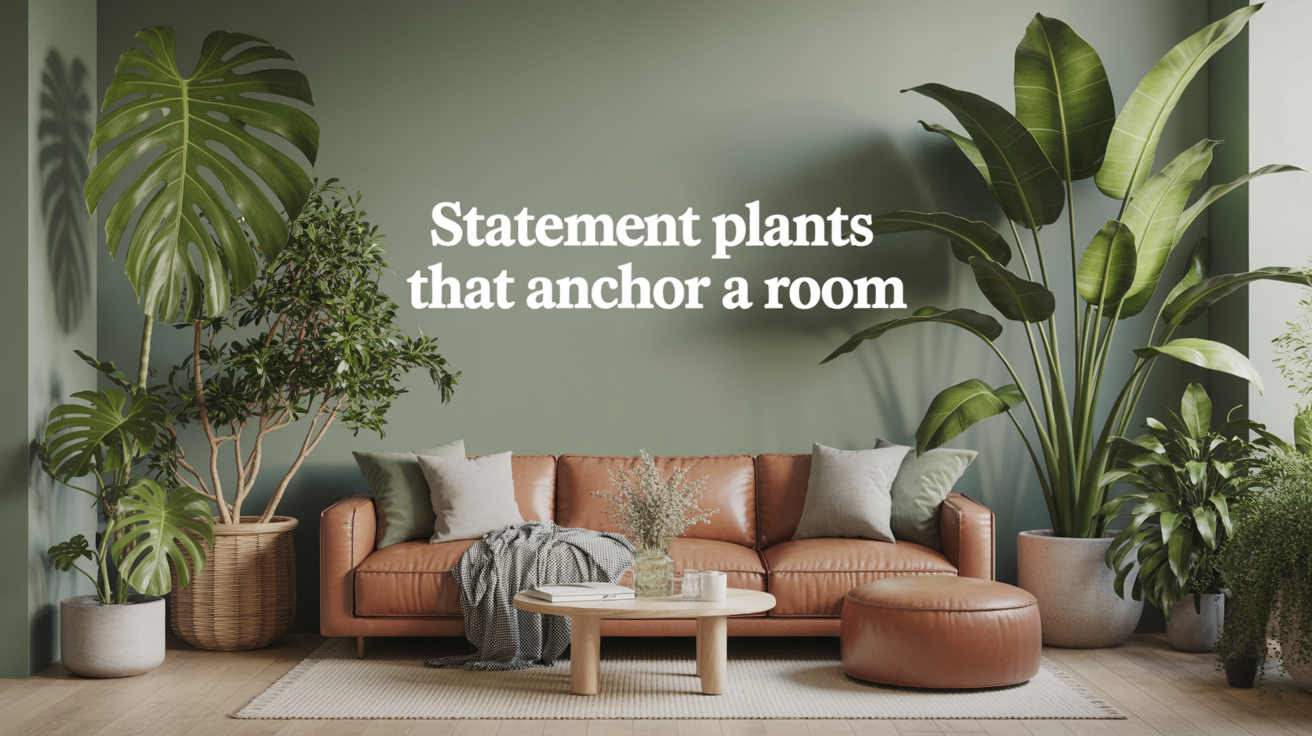
A tall, full plant in the corner of a room does something furniture rarely manages: it gives the eye somewhere to land that feels alive. Large indoor plants create a kind of visual weight that pulls a space together without requiring a renovation. If you've been staring at a bare corner or an underused stretch of floor, a statement plant is often the simplest fix.
This guide covers the best big houseplants for anchoring a room, how to position them for the most effect, and the care specifics each one actually needs to stay healthy at size.
At a Glance
- Fiddle-leaf fig, monstera, and rubber plant are the three most forgiving statement plants for a first try; bird of paradise and variegated dracaenas need noticeably more light.
- Give any floor plant at least 6 hours of bright, indirect light unless the species is specifically listed as low-light tolerant (dracaena, cast iron plant).
- Leave 12 to 18 inches (30 to 45 cm) of clearance between a large plant and upholstered furniture so leaves don't rub and the plant can fill out.
- Most floor-plant deaths trace back to wrong light, not wrong watering: match the plant to the spot before you buy it.
- Check the drainage hole each spring; a plant that's outgrown its pot needs to move up 1 to 2 inches (2.5 to 5 cm) in diameter, not more.
- Several popular statement plants, including dracaena, are toxic to cats and dogs. Check a species before placing it somewhere pets can reach.
The Best Large Indoor Plants for a Statement Look
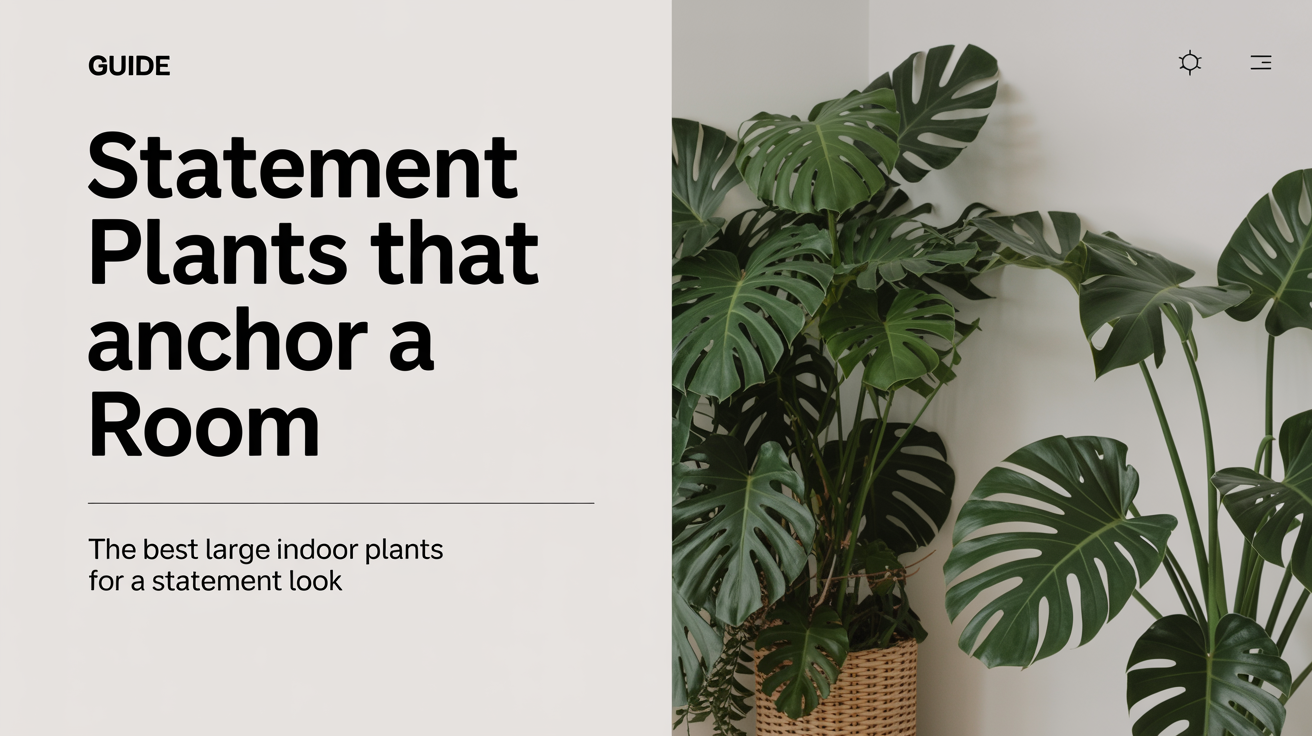
Not every plant scales well indoors. Some get rangy and lose their shape; others stay too compact to read from across a room. The ones below have the presence to hold their own as floor plants in a living room, dining room, or entryway.
Fiddle-Leaf Fig (Ficus lyrata)
The fiddle-leaf fig became popular because it photographs well, and it does look genuinely striking in person. The broad, violin-shaped leaves are deep green and bold enough to hold attention. A mature specimen can reach 6 feet (1.8 m) indoors over several years.
Care specifics: fiddle-leaf figs want bright, indirect light for at least 6 hours a day. Direct afternoon sun scorches the leaves; low light causes browning along the edges and slow deterioration. Keep the temperature between 60 and 85°F (15 to 29°C) and away from heating vents, which dry the air quickly. Water when the top 2 inches (5 cm) of soil are dry, roughly every 7 to 10 days in summer and less frequently in winter. They hate being moved once they've adjusted, so pick a spot and commit to it. For a deeper walkthrough of the plant's quirks, see our full fiddle-leaf fig care guide.
Monstera deliciosa
Monstera is forgiving in a way that fiddle-leaf figs are not, which makes it a better pick for most households. The split, perforated leaves are distinctive and the plant puts on size steadily. Given a moss pole or something to lean against, it can reach ceiling height over a few years.
Care specifics: Monstera tolerates medium indirect light but grows faster and develops more leaf fenestration in bright indirect light, though NC State Extension notes it prefers "moderate brightness" over direct sun, and that variegated cultivars need more light than solid-green ones to hold their pattern. In its native habitat the vine can climb up to 70 feet by scrambling up trees; indoors it typically tops out around 6 to 8 feet with support. Water every 1 to 2 weeks, letting the top half of the soil dry out before watering again. Preferred temperatures run from 65 to 85°F (18 to 29°C). The large leaves collect dust, which reduces photosynthesis over time, so wipe them down monthly with a damp cloth. Our Monstera deliciosa care guide covers moss-pole training and fenestration in more detail.
Bird of Paradise (Strelitzia reginae or S. nicolai)
The bird of paradise has a genuinely architectural quality. The paddle-shaped leaves on long, upright stems give it a tropical silhouette that reads as a statement from across the room. Strelitzia nicolai, the white bird of paradise, grows taller and fuller indoors than the orange-flowering reginae and is the one most often sold as a houseplant.
Care specifics: this plant needs as much bright, direct or near-direct light as you can give it indoors. A south- or west-facing window is the right home. Without enough light, the leaves yellow and the plant stalls; it's one of the few "statement" plants that genuinely struggles more than a foot or two back from a bright window. Water thoroughly when the top 2 to 3 inches (5 to 7.5 cm) of soil are dry, and reduce watering in winter when growth slows. It prefers temperatures above 60°F (15°C) and will suffer below 50°F (10°C).
Rubber Plant (Ficus elastica)
The rubber plant is one of the most reliable big houseplants. It grows upright, holds its shape, and the dark burgundy or deep green leaves catch light in a way that looks intentional rather than just green. It reaches 4 to 6 feet (1.2 to 1.8 m) indoors without much fuss.
Care specifics: rubber plants prefer bright indirect light but adapt to medium light better than most ficus varieties. Water when the top inch or two (2.5 to 5 cm) of soil is dry, roughly every 10 to 14 days during active growth. They're sensitive to cold drafts and should not sit near windows that let in winter air. The white sap that seeps from cut or damaged leaves can irritate skin, so wear gloves when repotting or pruning.
Dracaena (Dracaena marginata or D. fragrans)
Dracaenas have a different kind of visual quality: they're more structural and upright than leafy, which works well in a narrow corner or next to furniture with strong vertical lines. Dracaena marginata develops a bare trunk over time, topped with a spray of narrow, reddish-edged leaves. D. fragrans, the corn plant, produces wide, strap-like leaves from a central cane.
Care specifics: dracaenas are among the most forgiving floor plants for living rooms. They handle low to medium light, though the variegated varieties hold their color best in brighter conditions. Water sparingly: let the soil dry almost completely between waterings, roughly every 2 to 3 weeks in winter. They're sensitive to fluoride in tap water, which shows up as brown leaf tips. If your tap water is heavily treated, using filtered or rainwater helps.
Comparing the Statement Plants
| Plant | Mature indoor height | Light needed | Beginner-friendly? | Pet safe? |
|---|---|---|---|---|
| Fiddle-leaf fig | Up to 6 ft (1.8 m) | Bright indirect, 6+ hrs | Moderate | No |
| Monstera deliciosa | 6 to 8 ft (1.8 to 2.4 m) with support | Medium to bright indirect | Yes | No |
| Bird of paradise | 6 to 10 ft (1.8 to 3 m) | Bright, near-direct | Difficult | No |
| Rubber plant | 4 to 6 ft (1.2 to 1.8 m) | Bright indirect | Yes | No |
| Dracaena marginata/fragrans | 4 to 8 ft (1.2 to 2.4 m) | Low to medium | Yes | No |
None of these five are on the ASPCA's non-toxic list, which is worth knowing before you commit to one as a centerpiece in a home with pets. More on that below.
How to Position a Large Statement Plant
Buying the right plant matters less than placing it well. A large plant tucked into a poorly lit corner or shoved against a wall with no breathing room loses most of its effect.
Corner placement and framing
Corners work for large plants because the walls create a natural frame. The plant fills what would otherwise be a dead zone. For the best result, the plant's canopy should reach at least partway up the wall, not sit below the windowsill. If the corner is dark, choose a more tolerant variety like a dracaena or cast iron plant rather than forcing a sun-hungry bird of paradise into a spot where it will struggle.
Distance from furniture
Leave 12 to 18 inches (30 to 45 cm) between a large plant and any upholstered furniture. Leaves that rub against a sofa or curtain get damaged, and the plant can't expand naturally. That breathing room also makes watering easier and gives the plant a more considered look, like it was placed rather than wedged in.
Plant stands can lift a shorter statement plant to a height where it reads better in a tall-ceilinged room, or bring a wide-base pot up off the floor to protect hardwood.
Light before aesthetics
The single most common mistake with big houseplants is choosing a plant for a spot rather than choosing a spot for a plant. Before you decide where a statement plant will live, spend a few days noting how much light that area actually receives. A fiddle-leaf fig will slowly decline in a dark corner no matter how good it looks there initially. Styling a houseplant well starts with matching the plant to the light conditions you actually have, not the ones you wish you had.
Keeping Large Indoor Plants Healthy Long-Term
A big plant that looks great at purchase but drops leaves or stalls for months isn't doing the job you bought it for. A few maintenance habits make the difference.
Repotting and root health
Floor plants in living rooms are often left in the same pot for too long. When a plant becomes root-bound, water runs straight through the pot without absorbing, and growth slows noticeably. Clemson Cooperative Extension recommends checking the drainage hole each spring and sizing up "1 or 2 inches larger in diameter" than the current pot whenever roots circle the root ball or emerge from the drainage holes. Fast-growing statement plants like monstera and fiddle-leaf fig may need this every year during their first few years in your home; slower plants like dracaena can go two to three years between repottings. Use a well-draining mix; heavy soil that stays wet causes rot at the base. Our full guide to repotting a houseplant without killing it covers the step-by-step process, including how to handle a plant that's outgrown a decorative pot it can't easily be pulled from.
Fertilizing during the growing season
During spring and summer, a balanced liquid fertilizer applied monthly at half strength keeps growth steady and leaves looking full. Stop fertilizing in autumn and winter when growth naturally slows. Our guide on fertilizing houseplants the right way breaks down which nutrient ratios suit foliage plants like these versus flowering ones.
Cleaning and pest checks
Dust on large leaves is easy to ignore but it adds up. A monthly wipe with a damp cloth keeps leaves clean and gives you a chance to check the undersides for spider mites, scale, or mealybugs. Catching a pest problem on a large plant early, before it spreads across dozens of leaves, is much easier than dealing with a full infestation. See how to clean houseplant leaves the right way and common houseplant pests and how to spot them for the specifics.
Are Statement Plants Safe Around Pets?
Most of the plants on this list are not pet-safe. According to the ASPCA's toxic and non-toxic plant database, dracaena species contain saponins that can cause vomiting (sometimes with blood), depression, loss of appetite, and excessive drooling in cats and dogs if chewed. Fiddle-leaf figs, monstera, rubber plants, and bird of paradise are similarly listed as toxic to cats and dogs, generally causing oral irritation and drooling rather than anything life-threatening in small amounts, but ingestion by a curious puppy or kitten still warrants a call to your vet or the ASPCA Animal Poison Control Center.
If you have pets that chew on foliage, keep large statement plants on a stand out of reach, or choose a genuinely pet-safe alternative in a similar scale, like a parlor palm or a large Boston fern. Our guide to pet-safe houseplants that are easy to grow has more options sized for smaller households too.
Frequently Asked Questions
How much light do large indoor plants need?
It depends on the species. Bird of paradise and fiddle-leaf figs need 6 or more hours of bright light, with some direct sun tolerated. Rubber plants and monsteras do well in bright indirect light. Dracaenas are the most flexible and manage in lower light, though they grow slowly there. Measure the light in your room before choosing rather than assuming a spot is bright enough.
How often should I water a floor plant for the living room?
Most large houseplants in the 6 to 10 inch pot range need watering every 7 to 14 days during the growing season and less often in winter. Stick your finger 2 inches (5 cm) into the soil. If it's still moist, wait. If it's dry, water thoroughly until it drains from the bottom. Pot size, soil type, and room humidity all shift the timing, so the finger test is more reliable than a fixed schedule.
Can a big statement plant work in a small room?
Yes. A single tall, upright plant like a dracaena cane or a slender fiddle-leaf fig can make a small room feel taller rather than crowded, because it draws the eye upward. The problem with small rooms is usually low light, not lack of floor space. Choose a species that tolerates the actual light level in your room, and use one plant rather than several.
What's the easiest large indoor plant for beginners?
A dracaena marginata or a rubber plant are both forgiving choices. Dracaenas tolerate irregular watering and low light better than most big houseplants. Rubber plants are robust and grow quickly in decent light. Monstera deliciosa is also reliable once established, tolerating a wider range of light and watering habits than fiddle-leaf figs.
Why do my large plant's leaves keep dropping?
Leaf drop on large houseplants usually traces to a sudden change in location (after purchase or moving furniture), overwatering, or cold drafts. Fiddle-leaf figs are the most notorious for this. After bringing a plant home, give it two to four weeks to adjust. If dropping continues, check the soil for persistent wetness and make sure no cold air is hitting it from a vent or window.
How much does a mature statement plant cost compared to a small one?
A 6-inch pothos might run $10 to $15, while a 6-foot fiddle-leaf fig or bird of paradise in a 10-inch nursery pot typically costs $60 to $150 depending on fullness and region, since it took a grower several years to reach that size. Buying a smaller specimen and growing it yourself costs far less but takes 2 to 4 years to reach the same scale, which is worth factoring in if you want the anchor effect immediately rather than eventually.